
Wakefield Harriers embracing the challenge of nurturing homegrown talent as well as support network

OVER THE years, a number of international and, in some cases, Olympic athletes have come through the Wakefield District Harriers and Athletic Club system.
The most recent Olympian was Amy-Eloise Markovc, who competed in the 5,000m in Tokyo in 2021.
Prior to that there was high jumper Martyn Bernard, who competed at Beijing in 2008, where sprinter Emily Freeman was also in action.
The club who they competed for at meetings over the years is always on the lookout for unearthing future potential in track and field.


As with most amateur sports clubs and associations, however, that aim of helping youngsters fulfil their athletic dreams - whether it be in track and field, road running or cross-country - is only made possible thanks to the volunteers that give up their own time so freely in order for such organisations to operate.
At the moment, Wakefield has around 200 active members, ranging from Under-11s through to seniors.
Last weekend saw the club stage its last meeting of the outdoor season, with focus now switching to the indoor schedule as well as cross country and road running.
Chris Bedford, himself a former sprinter, is the club’s president, while also coaching sprinters at 100m, 200m and 400m.
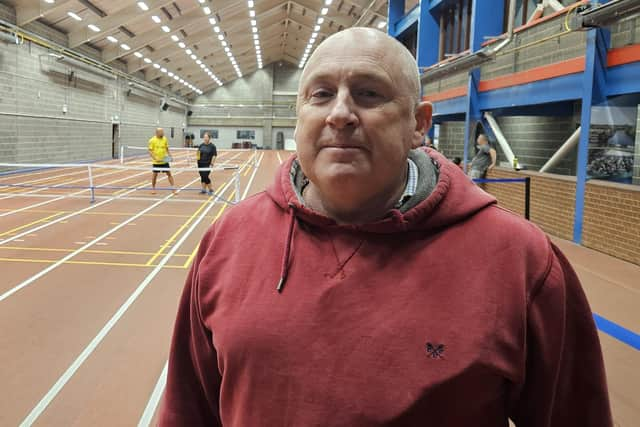
He says the club is in a healthy position but admits the challenge of finding volunteers and, perhaps more importantly, coaches, to help oversee the athletes, is a constant one.
“Every sports club that I’ve had dealings with membership has decreased,” said Bedford. “And with membership decreasing, volunteers have decreased, coaches have decreased, officials have decreased.
“And we need coaches, officials, as well as other volunteers to help run a meeting, like the one we held last Saturday. But it is a decreasing pool.”
For Freeman, a semi-finalist in the 200m in Beijing back in 2008, Wakefield provided both the necessary level of competition she needed to develop as an athlete, as well as a number of positive role models to look up to - something she regards as invaluable for any up-and-coming athlete.

“Wakefield was a good stepping stone to give me that level of competition when I needed it, being able to compete against athletes who were better than me,” she said.
“My early experiences were positive and it meant that I stayed in the sport. It was friendly, safe - a positive, encouraging environment and the right vibe of enjoyment over anything else really.
“I had a lot of positive role models in the club, which I always looked up to.”
The Harriers are based out of Wakefield’s Thornes Park Stadium, which has recently undergone a much-needed refurbishment, including a new £75,000 blue all-weather running track and new floodlighting, enabling use of the facility throughout the winter months.

It hires the track from Wakefield City Council, who own and refurbished the site, for two training nights and any outdoor meetings it stages. The general public, for a small fee, have use of the facility outside of those hours.
While it is necessary to encourage volunteers to step up and help out, one thing Bedford says is another challenge is the drop-off in athletes as they move through the age categories.
“There is a huge drop off in terms of participation - on and off the track. But we do okay, we break even but you always want more.
“It is a constant process of trying to get more volunteers and coaches. We have monthly committee meetings where we discuss how we can improve this, that or the other. We always need more people.
“In terms of athletes, at Under-13, we have about 100 athletes, at Under-15 around 50, under-17s it's probably half again and then half again at Under-20, then at senior we are scratching around sometimes.
“Retaining athletes is an issue, people get jobs, develop other interests - but it’s the same with a lot of sports, we’re no different.”
Having given so much of his own time over the years to the club, Bedford says the rewards of seeing athletes develop and become successful make it all worthwhile.
“You get immense satisfaction,” he added. “As I moved up through the ranks of floor-sweeper, teamaker and sweet seller, the time I first got to give out medals was priceless - just seeing all the hard work pay off and the reward for the athletes after putting all that time in.”
For more information on Wakefield District Harriers log on to: http://www.wakefield-harriers.co.uk/index.htm