
Aarhus: 'I visited Denmark's second city - it's a place easy for travellers to enjoy'
Scott Antcliffe discovers Denmark’s second city, Aarhus, where its culture, coastline and a thriving food scene all perfectly combine to provide a calming, relaxing and informative break.
Aarhus has long lived in the shadow of Copenhagen, but Denmark’s second city is quietly carving out a reputation of its own – and nowhere is that more evident than on the plate.
There’s an immediate sense of energy about Aarhus.
Compact, youthful and effortlessly stylish, it’s a city where students, chefs and creatives share the same streets – and increasingly, the same ideas about food.
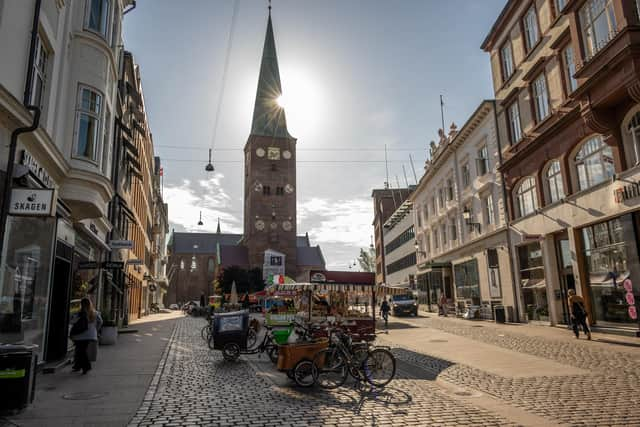

Set on the east coast of Jutland and home to just over 350,000 people, Aarhus feels both manageable and cosmopolitan.
It is easy to reach, too, with good transport links and a direct rail connection to Copenhagen in around three hours.
But it is what’s happening on the ground – particularly in its kitchens – that makes it worth the journey.
Food has become central to Aarhus’ identity.
Across the city, chefs are drawing on the surrounding countryside and coastline, working closely with local producers and embracing a strong farm-to-table ethos.
The result is a dining scene that spans everything from refined Nordic cuisine to casual, inventive street food – all delivered with a distinctly relaxed, unpretentious feel.
That blend of creativity and accessibility is reflected in places like Roberta Society, where I stayed during my visit.
Housed in a former postal building in the city centre, it’s more than just a hotel – part cultural hub, part social space.
The interiors lean heavily into design and art, with a laid-back atmosphere that encourages guests to linger. It feels very much in keeping with the city itself: contemporary, welcoming and quietly confident.
From there, Aarhus is easy to explore on foot – or, like the locals, by bike.
Cycling along the harbour front, you pass a mix of modern architecture and open water, with the city unfolding at an easy pace. It’s a reminder that Aarhus doesn’t try too hard; it simply works.
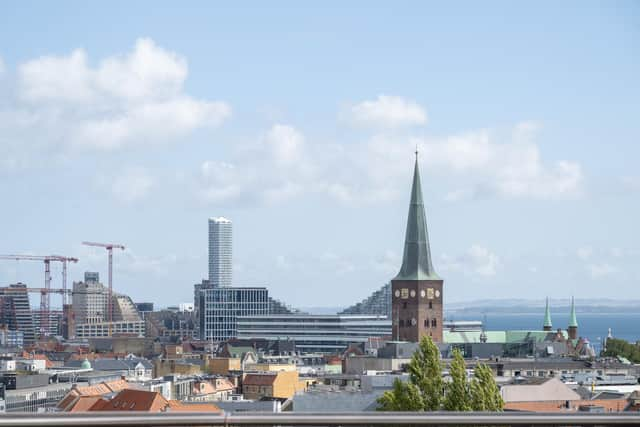
That same understated confidence carries through to its food scene. Lunch at Restaurant Bavn, set high above the city in the Lighthouse building, offers a different perspective altogether.
With stunning views across the bay and surrounding forests, it’s a striking setting – but the food remains the focus.
Modern, clean and rooted in Nordic traditions, the menu reflects the region’s seasonal produce without overcomplicating it.
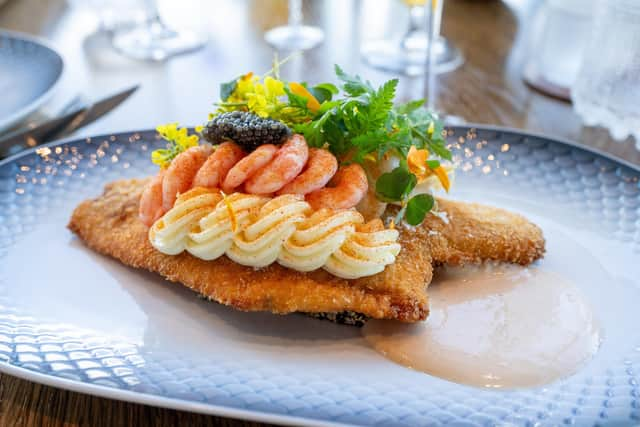
We enjoyed some Smørrebrød – the undisputed champion of Danish lunch-traditional open-faced sandwiches with local produce, including pickled herring, fried plaice fillets and liver pâté topped with salted beef.
Back at street level, the contrast is just as compelling. Wandering through the Latin Quarter – Aarhus’ oldest neighbourhood, with its cobbled streets and colourful facades – you get a sense of the city’s history layered beneath its modern edge.
It’s the kind of place where independent cafés and small boutiques sit comfortably alongside centuries-old buildings, creating a lively, vibrant atmosphere but also feels lived-in.
Dinner that evening at Restaurant Nögen offered a different take on Danish dining – one that speaks to the future as much as the present.
Built around the idea of reducing food waste, the restaurant creates dishes using surplus ingredients, turning what might otherwise be discarded, into something thoughtful and refined. It’s a concept that could feel worthy, but here it’s simply part of the experience: seasonal, flavour-led and quietly inventive.
If that points to where Aarhus is heading, the city’s annual Aarhus Food Festival shows just how far it has come.
Held each September at Tangkrogen, it brings together more than 250 producers, chefs and food organisations, attracting around 28,000 visitors.
Tastings, workshops and live cooking demonstrations create a lively, inclusive atmosphere – a celebration of both traditional Danish flavours and the innovative ideas shaping the country’s food culture.
Even outside the festival, that spirit is easy to find. Parks fill with locals enjoying picnics, bakeries turn out impeccably crafted pastries, and markets showcase the region’s produce.
It’s a city that takes food seriously but never loses sight of the simple pleasure of it. The gazebos provided perfect cover from the scattered showers that I experienced that day.
A visit to ARoS Aarhus Art Museum (www.aros.dk) – including the recently opened Salling gallery – adds another layer to the experience.
Like the city’s restaurants, it blends innovation with accessibility, offering something that feels both contemporary and grounded.
The new Salling Gallery is a space for contemporary artists who work within video, installation and performance areas.
On the ARoS roof is Olafur Eliasson’s ‘Your Rainbow Panorama’, a 150 metre-round, coloured glass walkway offering a 360-degree rainbow view across the city and bay.
What makes Aarhus stand out is not just the quality of its food, but the way it all fits together.
This is a place where high-end dining, sustainability and everyday eating coexist naturally, shaped by a young, engaged population and a strong connection to the land around it.
For travellers, that translates into a city that feels easy to enjoy.
You can move from a refined lunch with panoramic views to a casual café in the Latin Quarter, or from a cutting-edge restaurant to a waterfront bicycle ride – all within the space of a day.
Aarhus may not have the name recognition of Denmark’s capital, but that’s part of its appeal. It feels less crowded, more approachable, and perhaps more reflective of how modern Denmark lives and eats.
For anyone interested in where food is heading – without losing sight of where it comes from – Aarhus makes a compelling case.
www.visitaarhus.com