
'I stayed at The White Lotus season four luxury hotel in Cannes – it costs £25,000 a night'
Season four of the White Lotus moves to the luxury of the French Riviera. Pol Allingham visits Cannes ahead of the film festival and delves into its cinematic history, finding hidden treasures on the way.
The White Lotus is jetting off to Cannes for season four, once again putting the spotlight on the ultra-wealthy.
While the show – which follows the exploits of the guests and staff at a fictional luxury global resort hotel chain – involves some pretty unpleasant characters, it’s hard to fault the glitzy Cannes location.
Filming for the hit HBO anthology series is under way at the Hotel Martinez, but staff at the five-star Hyatt hotel won’t tell me much.

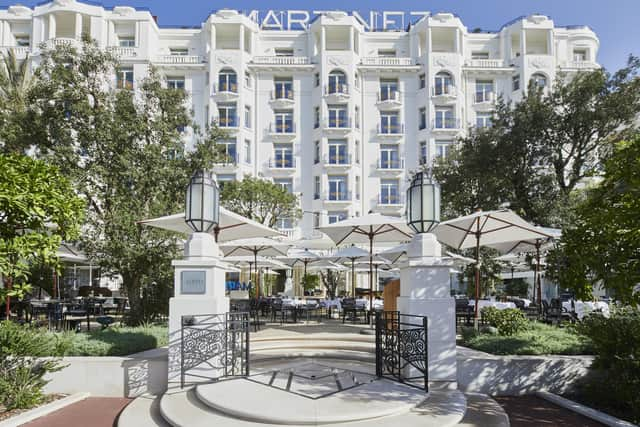
Hotel Martinez makes sense as the setting. Built in 1929, it is part of the silver screen’s history and a short walk from the film festival’s Palais des Festivals site.
Its blue-carpeted spiral staircase has peppered many a celebrity’s camera roll during Cannes Film Festival, which runs May 12-23 this year.
“Just before the red carpet, we say, they use the blue carpet,” says Marie-Claire Boudaud, the director of communications.
“You see all the celebrities with nice dresses here on the stairs, lots of photographers take pictures,” she tells me. People staying on the first floor will get the lift up and walk down just for the snap.
Mads Mikkelsen and Andie MacDowell are hotel regulars, Marie-Claire says. Tom Cruise and Angelina Jolie have stayed, and previous film festival guests include Adrien Brody, Elle Fanning, and Jane Fonda.
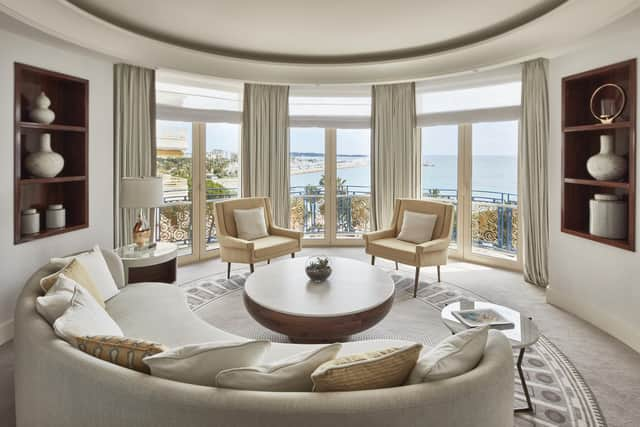
The hotel is all about luxury, particularly part of the top floor – once tiny homes for hotel staff, it is now a four-bedroom four-bathroom suite that can go for to €30,000 (£25,999) a night in peak season – one of the largest suites in Europe, Marie-Claire says.
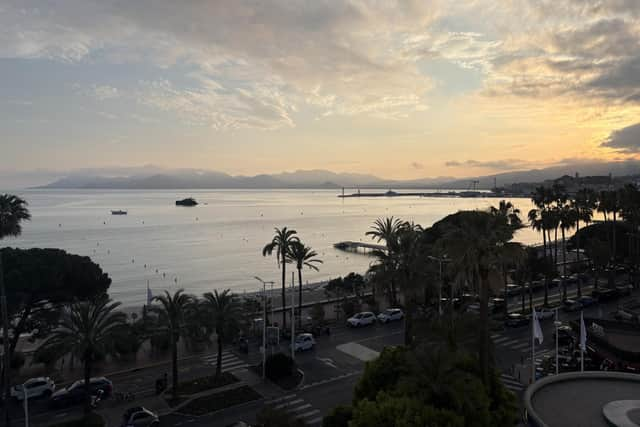
Each sunset lights the sea below my balcony to the sound of Boulevard La Croisette’s evening hum.
The room’s signature blue and white decor is calming and fresh, with a large double bed and immaculate ensuite, created by luxury designer Pierre-Yves Rochon.
The hotel’s neighbours on La Croisette include Prada, Jimmy Choo, Versace and Valentino.
I zip past the stores in an iconic electric 1960s-style Citroen Mehari that was handmade for the hotel and is available to guests. Palm trees fly overhead and one of the concierges is behind the wheel.
Its La Palme d’Or restaurant boasts Cannes’ only Michelin star and hosts the traditional dinner for the film festival’s jury.
Cinephile chef Jean Imbert curates a menu from the jury president’s filmography. This year’s is Park Chan-wook, behind The Handmaiden and Oldboy – the first South Korean to take the title.
Jurassic Park and The Wolf Of Wall Street number plates hang on the restaurant’s wall, as well as boxing shorts from Raging Bull. Dinner guests seeking privacy can book a room with a Gladiator trident.
The standout, though, is its Martinez Bar, for an array of refined small plates and cocktails, and the greatest negroni I’ve ever tasted – the mix ages in a small barrel for three months.
“I love my bar more than me,” says manager Delphine Grossmann, “It is the first time that I built something by myself.”
Delphine was previously at La Mamounia, Marrakech – one of the world’s best hotels and Winston Churchill’s favourite. She was the first woman to ever run its bar.
The invitation-only Cannes film festival launched in 1946 and is considered the world’s most prestigious. To cater for the event, Hotel Martinez will about double staff numbers.
Attendees in tuxedos and gowns stroll Cannes’ streets in daytime – a strange sight, says my tour guide Florence de Barros Conti, who also runs luxury concierge agency Decide.
But there’s also a lesser known side to Cannes. After a 20-minute boat ride from the opulent city, we’re paddling in the Med off an island inhabited by monks.
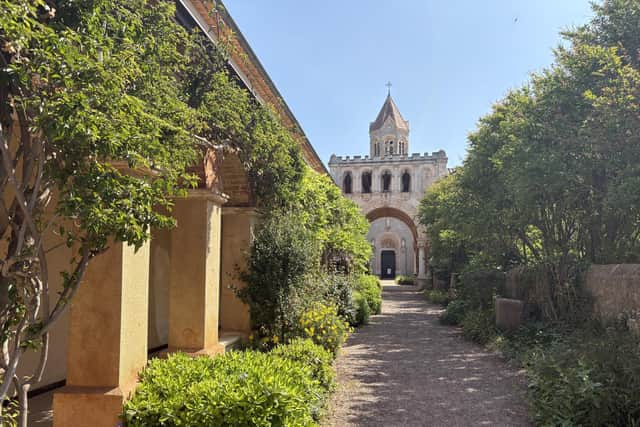
An 11th century fortified tower stands on the peninsula ahead, beside us looms a graffitied Nazi-built bunker and in the woodland behind are ruined Napoleonic furnaces once used to make cannonballs.
The tourist board is seeking Unesco heritage status for the island Saint-Honorat, in the Lerins archipelago off Cannes.
Meanwhile, historians have debated keeping the German bunker because of its builders’ crimes. They decided to keep the bunker, but it has not yet been restored.
Militarism, religion and nature collide here, where the 21 Cistercian monks, living in the Abbaye de Lerins, cultivated an eight-hectare vineyard for wine and liqueurs. The island’s monastery was founded in around 400AD. It is one of the oldest monastic hubs in the West.
The abbey’s gates are closed for midday prayer and so we start our hour-long walk around the island’s perimeter, stopping at some of its seven chapels.
We’re buffeted by sweet honey wafts of Pittosporum, and Florence shows me plant after plant: wild fennel and asparagus, Cistus flowers, laurel and pines.
Bizarrely, pheasants shout. They come to escape the guns during hunting season, Florence says, and the male I spot dashing through the vines is fatter and probably older than any I’ve seen in the UK.
Lunch is panzanella then salmon with pesto pasta, both laden with ricotta, at La Tonnelle’s tables on sand overlooking the sea. Wine is monk-made.
Saint-Honorat overlooks the larger inhabited Saint Lerins island, Sainte-Marguerite, home to the mystery of the Man in the Iron Mask, which is notorious among locals.
Visitors to that island can swim to an underwater eco-museum with six two-metre high submerged statues made by Jason deCaires Taylor. They are faces cast from Cannes residents and have drawn aquatic life back to Sainte-Marguerite’s shore.
Rates at the Hotel Martinez start from €340 (£295) a night for two people, including breakfast.
hyatt.com/unbound-collection