
'I travelled to the heart of classical Spain and was blown away by its beauty'
Lindsay Sutton saw another side to Spain on a recent visit, the classical, historical side which brought an air of peace and tranquillity to the trip and discovered like-minded travellers.
There is something quite awesome about seeing the Alhambra citadel for the first time. There it stands, in all its majesty, perched high above the city of Granada in the heart of what they call ‘Classical Spain’.
There’s no denying that the North African Arab invaders who built this impregnable fortress had one message for their new subjects - and that was: ‘Don’t mess with us.’
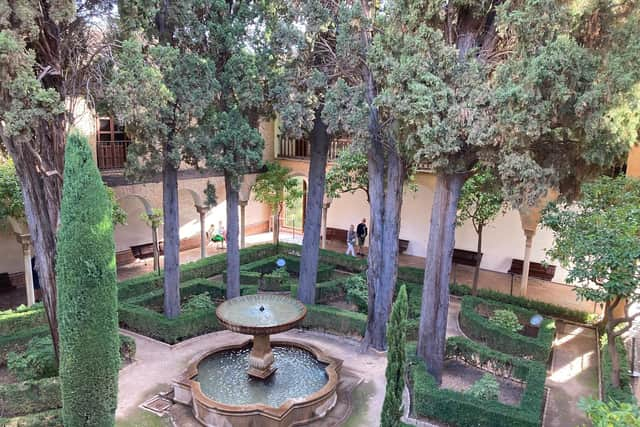
And yet you soon discover that there’s also something quite peaceful and serene about the Alhambra. The imposing fortress may look intimidating - but once inside, it’s an oasis of calm and tranquility.

Its courtyards and palaces exude a feeling of style and good taste. It’s a wonder of its time - built all those years ago, during the 8th Century, yet enduring through the ages as an architectural gem.
It leaves you wanting to know more, in fact, a visit to ‘Classical Spain’ is a real ‘more than’ experience.
The Alhambra is more than just a symbol of relatively benign rule by North African Moors over the land that is present-day Spain.
More than just a formidable fortress to protect an empire established when the Moors crossed the Mediterranean.
What they brought with them was a sophisticated culture that prized tolerance and scientific discovery.
Their homes, palaces, and places of prayer in inland Andalusia - just 45 minutes from southern Spain’s Costa del Sol - reflect that calm and confident approach.
All these years on, their gardens and courtyards still exude that same sense of purpose. You knew who was in control, but Muslims, Christians and Jews all lived and worked side by side for 700 years.
And when you indulge in a six-day tour of ‘Classical Spain’ with seasoned operator Riviera Travel, you get a real insight into life under benign Arab rule.
It’s a delight to savour the great sights and cities of southern Spain - far away from a sun, sea and sangria holiday on the coast.
A classic vacation in every way, and in our case led by the classically-named Cleopatra, a tour manageress who did Riviera Travel proud.
It was a hugely rewarding experience, visiting the fascinating cities of Ronda, Seville, Cordoba and Grenada.
We flew in to Malaga to head inland to the peaceful Ilunian Hacienda Hotel, an oasis perched on the hills way above the more frantic Fuengerola and torrid Torremolinas.
A couple of hours in the quiet and characterful nearby town of Mijas Pueblo, set the scene.
Then a night at the hotel, which has a beautiful garden and swimming pool, balcony bedrooms looking to the Med, and excellent meals. A perfect start.
Next day, the two-hour coach ride to Ronda saw all 23 guests on board experience a sense of excited expectancy. And Ronda didn’t disappoint.
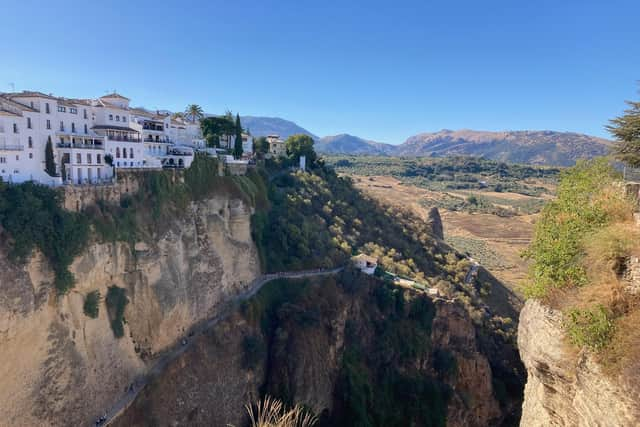
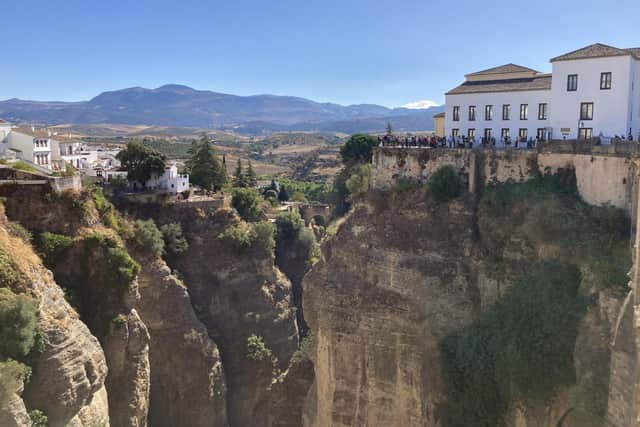
The cliff-top city, which straddles a near 100-metre deep gorge, is connected by an arched bridge that takes your breath away. It’s sensational to look out on to sheer cliffs that plunge down to the river far below.
On the one side is the Moorish-inspired community, complete with beautiful gardens mountain views, and the classic Spanish bullring that attracted the likes of Ernest Hemingway and Orson Wells.
On the other side, across the famous Punta Nuova bridge, is the ‘new town’.
That’s the 15th Century Medieval collection of colourful streets and often-steep alleyways, which open out onto tree-lined plazas, in which to take a leisurely lunch.
Next stop is Seville, with big city attractions, old and new.
Tourists flock to the Alcazar Palace, originally an old fortress and protected gardens turned residence from the Moorish era; then through the centuries of later wealth from Spain’s American colonies; and now a tourist attraction and a royal palace for Spain’s modern-day monarchy.
Seville is also a green city, mainly due to its underground water supplies. It has 50,000 orange trees, with 90 per cent of the produce going to the UK for marmalade. Not many people know that!
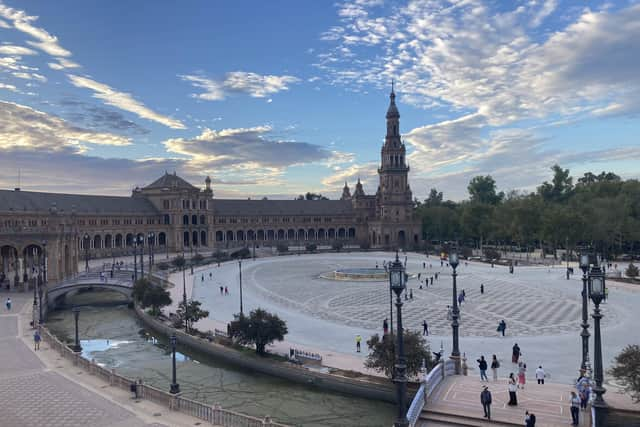
The city’s 84-acre Parque de Maria Luisa offers walkways, bordered by exotic plants and trees, completely free.
It was the site for the 1929 and 1992 Iberian-American Expositions, with the spectacular buildings still there, representing the trans-Atlantic countries involved.
Both the films Star Wars and Lawrence of Arabia were part shot here, which adds to the cache.
In town, there’s a huge, modern curved structure, built to look like a giant fig fruit, but nicknamed ‘The Mushroom’, because that’s what locals say it resembles.
It’s just a short walk from the Hotel Don Paco, which has a rooftop pool and bar to get the overview of the bustling city. A night of authentic flamenco music and dancing is a stunning experience.
Then it’s on to Cordoba, journeying near the Spanish hilltop home of Michael Portillo.
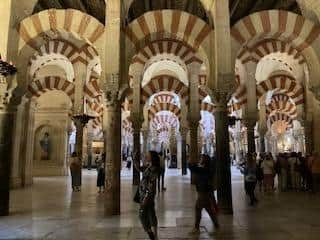
The highlight in Cordoba is the Mezquita, a former Moorish mosque complex, second only to Mecca in size.
Its architecture is hugely impressive, and rivalled the splendour of buildings in Damascus, Baghdad and old Constantinople. Little wonder it has UNESCO status.
Today, it is a Catholic cathedral, established after the Christian Reconquista.
The final expulsion of the Moors came in Granada in 1492, the very year that Columbus set sail on his first journey to the Americas. It was the end of seven centuries of Arab rule, and the beginning of a new era of discovery.
It’s fair to say that Riviera Travel customers are a good set of people - usually older, with a curiosity for the more meaningful side of life. Interesting people, with interesting pasts, seeking interesting places.
Prepared to spend a bit extra to get four-star hotels; additional, added-value experiences; plus good food and drink in characterful venues where you can meet locals and observe local life.
No-one was disappointed. You will not want for interest and good conversation on Riviera’s Classical Spain tour.
For information and other tours - www.rivieratravel.co.uk