
'I went to the French Alps on the trail of a rare bird with a huge wingspan'
George Lithgow went on a walking and hiking adventure in France’s Annecy Mountains in search of a rare bird with a wingspan bigger than a door.
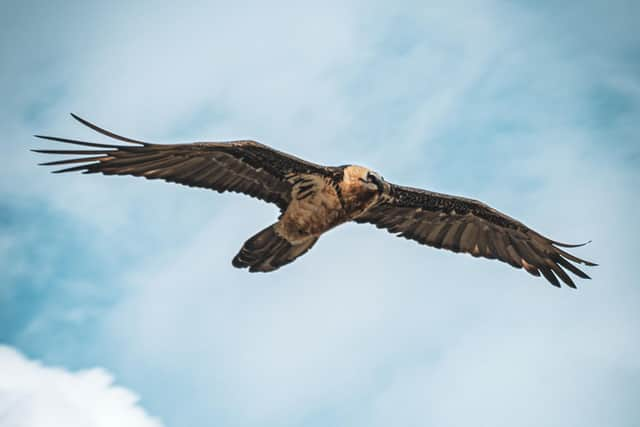
With a wingspan bigger than a door, a maximum flying height of 7,300 metres and a diet mostly consisting of bones, the bearded vulture is no ordinary animal.
The largest bird of the Alps, I’ve heard stories about them, but have never been lucky enough to see one.
My walking trip with Inntravel to the Annecy Mountains in the Haute-Savoie region of southeastern France promises a tantalising chance of spotting one.
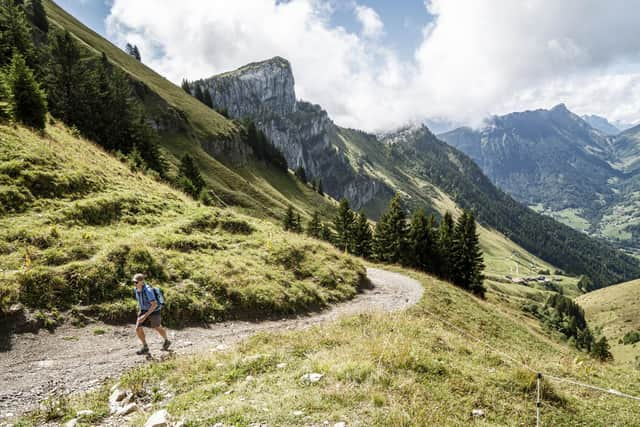

I’ll be walking for three days from the Aravis range from village to village, staying in chalet-style hotels and ending in the medieval lakeside town of Annecy.
The prospect of seeing a bone-crushing vulture occupies my thoughts during the taxi journey from Geneva Airport to village of La Clusaz, some 1,100 meters above sea level.
Arriving at night, my first sight of the mountains comes the following morning, and it’s worth the wait.
Forested slopes rise above the wooden-tiled houses while the dramatic limestone peaks of the Aravis rise up in the background. The first day’s walk will take us along the foot of this main chain.
Surrounded by the sounds, sights and smells of the Alps, my walking boots are laced and my rucksack on.
It’s a fairytale scene: sweeping wildflower meadows, the gentle jingle of cow bells, thick pine forests and an impossibly huge clear sky.
My group and I crunch along the gravel path keeping the main chain of the mountains on our right. A series of peaks like jagged teeth rising higher and higher. Patches of snow still cling to the shadier spots.
This seems like the perfect place to see a bearded vulture, and I keep my eyes glued to the sheer slopes, but no luck. There is plenty of interesting wildlife here though.
A ring ouzel hops around among the flowers, black eedstarts stand guard next to their nest and cuckoos call to each other across the valley.
An adder slips off the path ahead of me, and later, I spot a pair of chamois – a species of goat-antelope – grazing on a distant slope.
We stop for a lunch break at Col Des Annes below the chain’s highest peak, the 2,750m Pointe Percee – named for the hole which pierces it close to the summit.
From here it’s almost all downhill to our first overnight stop of Le Chinaillon.
We pass plenty of the aptly named Abondance cattle on our descent, and there is Reblochon at every turn on this journey – the iconic Alpine farmhouse cheese.
It is served with breakfast, lunch and dinner in the these parts. The cheese’s origin is all about saving money.
Farmers were taxed on the milk their cows produced, so to minimise the apparent yield, they partially milked their herds before coming back for an illicit secondary milking, using this richest part of the milk to make Reblochon, meaning to re-milk.
Our second day of walking begins with a gentle climb out of the river valley passing under a dramatic cliff.
This I feel, might be my best chance to spot an elusive bearded vulture – the 2,408m Pic De Jallouvre peak is known to be home to several breeding pairs. My eyes are again stuck to the skies.
Named after the tuft of black bristles under their beak, bearded vultures were once found in all the mountain ranges of southern Europe before intensive hunting and changes in farming practices led to their extinction in the region.
Efforts to reintroduce them began in the late Seventies, and in the space of just 40 years, the population in the Alps has been re-established.
As our route starts to enter thick woodland I am losing hope of seeing one, and turn around to take one last look at the rock face.
Thousands of metres above, a dark rectangular shape is tracing its way along the clifftops. The enormous silhouette and absence of any kind of flapping makes it seem impossible that this could be a bird.
As I look closer, I almost dance with joy when I see the unmistakeable appearance of a bearded vulture.
The final day’s walk feels like a victory lap. We’re joined by local guide David Praire, managing director of Grand Angle Voyages, the travel company founded by his parents 40 years ago.
David is well and truly a mountain man – he first summitted Mont Blanc aged 12. I tell him the walking has been hard-going because we are not used to the high altitude.
He points out that altitude effects only start to kick-in at 2,000m – and I realise we’re just unfit by Alpine standards.
After a morning of steep forest climbing, David lives up to the French foodie reputation by producing a superb picnic of charcuterie, baguettes, pate, fruit and of course, more Reblochon.
“A French person cannot ever go on a hike without a saucisson,” he says.
Arriving at the Col of Mt Veyrier I’m hit by the awe-inspiring view down to Lake Annecy 800m below. The prospect of a swim in the cool blue water is torturous as we traverse the ridge in 30C heat.
We wind slowly down turn after turn through the woods but the lake does not seem to be getting any closer.
Finally, hours later and after a hard day’s walking, the rocky track turns into the smooth, flat lakeside-path which soon leads us to a perfect swimming spot where I plunge into the clear water.
How to book
Inntravel’s new for 2026 self-guided The French Alps and Lake Annecy walking trip costs from £1,566pp, based on 2 sharing, including 7 nights’ B&B accommodation, 3 dinners, route notes and luggage transfers. Call 01653 617001. Visit www.annecymountains.com for regional information.
Our new ‘Travel Destinations’ series includes trips to France, Tuscany, Norway, Lake Como and the delightful simplicity of a short cruise • Plus: More travel in The Yorkshire Post Magazine on Saturday.