
South Korea: 'I spent nine days exploring South Korea - it is so much more than K-pop'
Rosie Shead goes beyond K-Pop with a journey through South Korea’s past and present from The Demilitarized Zone to the awe-inspiring and legendary haenyeo.
As K-pop stars fill stadiums across the world and K-dramas flood international streaming sites, tourism is booming in south Korea and as a first-time visitor I’m glued to the minibus window, soaking it all in.
My nine-day journey with G Adventures offers the opportunity to explore many sides of the country, as I journey from Seoul, where ancient palaces nestle under towering skyscrapers, to the southern beachy paradise of Jeju island.
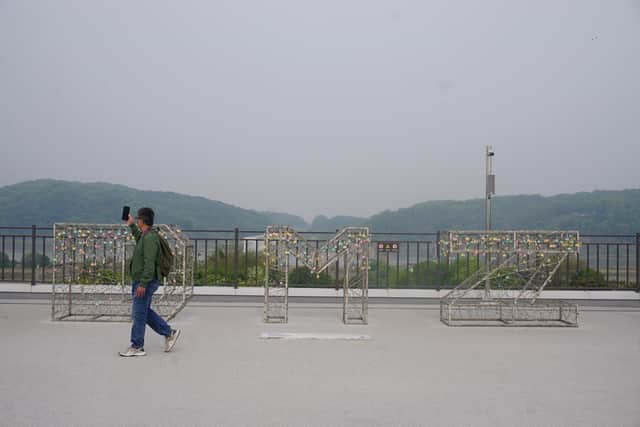
The Demilitarized Zone (DMZ), the four-km wide stretch of no-man’s land between North and South Korea – is my first stop.

Around a one-hour drive from Seoul, the DMZ has become somewhat of a tourist attraction – drawing those who want to remember family members affected by the division and others fascinated by the chance to glimpse across the border.
Coaches queue as two soldiers get on board to check our passports before we travel further into what looks like scrubland surrounded by rusty barbed wire fences.
“I feel tense coming here”, our guide Hyunhwa says, as she explains that her grandfather was from North Korea and she wishes to be able to visit his hometown one day.
We don hard hats before entering the Third Tunnel of Aggression, one of a series of tunnels dug by the North in an attempt to infiltrate the South which was discovered in 1978.
Hyunhwa tells us it’s been estimated that 30,000 armed soldiers could pass through this tunnel alone in just one hour during the Korean War.
Despite being among the most heavily guarded borders in the world, the tension is somewhat reduced on the South Korean side by tourists holding iced coffees and peering through binoculars from observatories, while posters featuring cheerful cartoon chickens that read “do not enter suspected minefields” line the surrounding roads.
While the signage speaks of hopes for reunification and mourn the millions who died in the conflict, DMZ branded t-shirts can be purchased in the gift shops along with camouflage-print pencil cases shaped like grenades, makes for a conflicting experience.
Back in Seoul, I explore the maze of shopping options the capital has to offer.
In the historical neighbourhood of Insadong, there are treasure troves of artisan gifts and vintage clothes while fluorescently lit Myeongdong is buzzing with late-night shoppers perusing high-street fashion outlets and rifling through face masks at giant skincare stores (the popularity of Korean skincare has exploded worldwide).
At Gwangjang food market, stacks of crispy kimchi pancakes teeter among buckets of seafood, and mountains of handcut noodles.
One morning, I join a Taekwondo class where Master Kang Sung Kwon puts me through my paces as I learn about South Korea’s national martial art.
Leaving Seoul, I make my way south and stop at Gyeongju, the ancient capital of the Silla Dynasty.
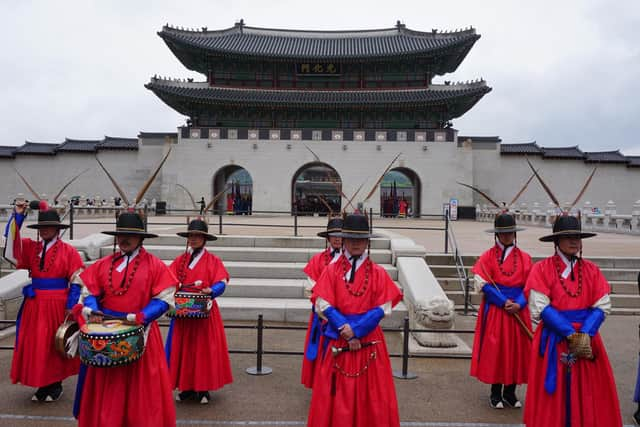
Here, groups of tourists float around wearing traditional hanboks – vibrantly coloured dresses with wide, floor-length skirts and wrap-around cropped jackets.
That night, I stay in a traditional hanok.
Built using natural materials, the cosy one-storey buildings have curved tiled roofs with sliding wooden doors and, to my delight, a heated floor which keeps me warm as I sleep on the padded mat.
From the mainland, I fly from Busan to Jeju – an island of sandy beaches and turquoise waters – a favourite of honeymooners.
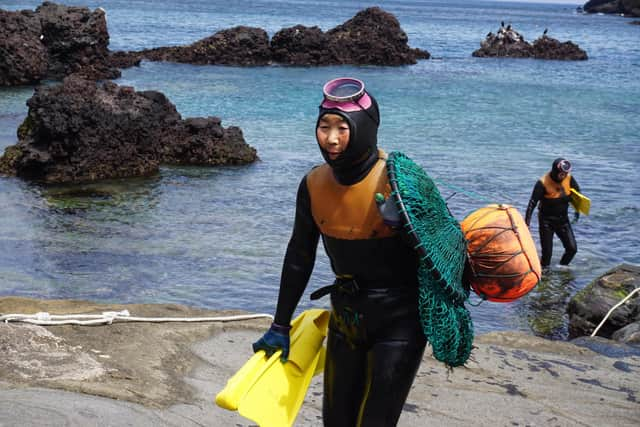
I am here to learn about the legendary haenyeo – female free divers who dive up to 20 metres on a single breath to harvest shellfish and other sea creatures.
Entering the UNESCO list of intangible cultural heritage in 2016, the haenyeo way of life has been declining since the peak in the 70s when there were more than 23,000 working divers, compared to some 2,400 now.
Although their kit has advanced over the centuries, from homemade cloth diving garments to smooth neoprene wetsuits, the haenyeo’s traditional methods and philosophies have endured.
“The haenyeo culture itself is always that we are a protector of the ocean, we are in it together,” says Taeun, a local haenyeo.
Working to a lunar calendar and harvesting sustainably to help preserve the local ecosystem, the women work in harmony with nature – taking only what they need to make a living and eat.
At 34 years old, Taeun is the youngest member of her diving collective, and the oldest is 74. Some haenyeo famously work well into their 80s, passing on their knowledge to the generations below.
As a vegetarian, I can’t try the delicacies caught by the women or, indeed, a lot of the favourite dishes of this meat and fish-loving nation.
But there is one plant-based staple that has appeared at every restaurant we’ve visited, at every meal we’ve had and at every time of day.
“I could survive without rice,” our guide Hyunhwa says thoughtfully, “but without kimchi, I would die.”
Back in Busan where the pungent scent of chilli paste wafts through a small kitchen studio, I arm myself with red plastic gloves and a red apron, ready to tackle South Korea’s national dish.
“A lot of people think that cabbage is kimchi,” our instructor Heeyoung says, “but actually kimchi refers to fermented vegetables, so you can make kimchi with any kind of seasonal vegetable that you have.”
There are some 300 different documented varieties of kimchi in South Korea, with spice mixes and flavours varying between regions.
The sour, salty staple is incorporated into an array of dishes including pancakes, rice and stews as well as being served as a side.
Traditionally, kimchi was made as a communal effort by neighbours after the napa cabbage harvest and then left to ferment in ceramic pots buried underground.
Nowadays, most households keep theirs in a designated kimchi fridge – a testament to the Korean’s unwavering love of the dish.
“As long as you have kimchi, you will feel happy,” Hyunhwa says, as I make a mental note.
Visit gadventures.com for full itineraries. This trip was supported by the Korea Tourism Organization, visit visitkorea.or.kr.