
Blur's Dave Rowntree: It's virtually impossible for young bands - Brexit has been an absolute disaster
As Dave Rowntree heads to Yorkshire to discuss Blur’s early days and his pictures which documented them, he tells Chris Burn their long road to global success couldn’t be repeated today.
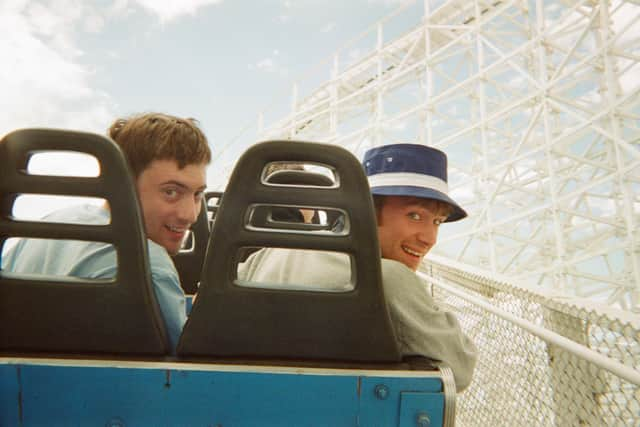
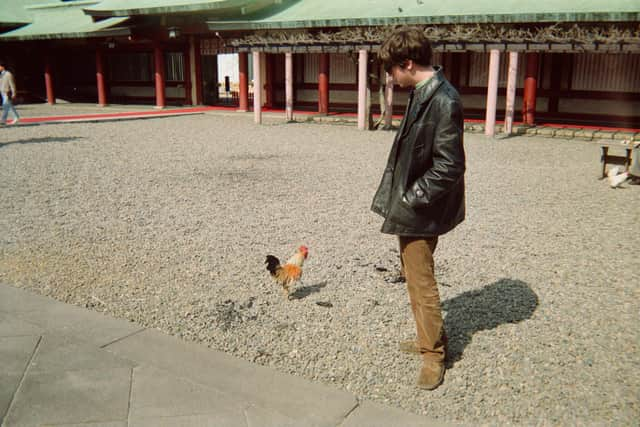
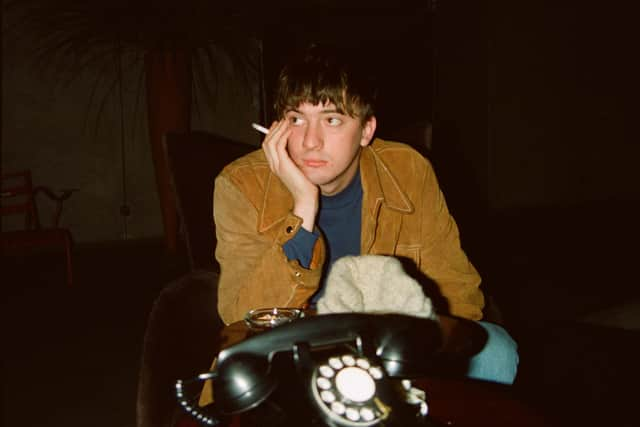
When Blur signed their first record deal in 1990, drummer Dave Rowntree presciently bought a camera to record the band’s journey at the start of what was to be a rise to global fame and fortune.
They’ve now been published in a new book called ‘No One You Know’ in homage to the sign placed on their first tour bus.
With the benefit of hindsight, the images are fascinating literal snapshots of a band on the cusp of worldwide fame but Rowntree, who is going to be speaking about the book and his time in Blur at a series of venues in Yorkshire and Lincolnshire this week, says their eventual success was far from inevitable.

“Looking back now, it is easy to make the mistake of thinking ‘They were a special band who had something and it grew and grew and look where they are now’,” he reflects.
“The first few years of the band, we couldn’t get arrested, the music we were making was incredibly unfashionable. Nirvana had just released Nevermind so nobody was interested in English music and singing about Englishness at all. Nobody was interested in anything we were doing.
“Indie music was so unfashionable it had to have its own chart. It was a running joke in the music press the idea these bands might actually be successful. It isn’t true we signed and then there was this inevitable rise; it wasn’t at all clear anything was going to happen beyond what we were doing at the time. That’s why I took the photos.
“It was the first time in the studio, first time in America, in Japan, a lot of European countries, the first tour bus, the first TV show and video. We came to take it in our stride after a while but it was incredibly exciting the first time we did it. And it wasn’t at all clear that it wasn’t going to be the last.
“Almost all bands get signed, release something, it does ok, they get dropped and go back to their day jobs. That is the career trajectory for almost all bands all over the world. We were insanely ambitious, we were determined it wasn’t going to happen to us but it didn’t mean it wasn’t going to.
“It wasn’t until five years later we went from playing incredibly unfashionable music to the music we were making being mainstream.”
The band’s fortunes changed with the 1994 release of Parklife which became one of the defining records of the Britpop era and went on to win four Brit Awards. Blur soon became embroiled in a famously-bitter chart battle with fellow indie band Oasis.
“The spat with Oasis propelled both our bands to being household names in the UK and worldwide fame,” says Rowntree.
Rowntree’s book explains that bandmate Graham Coxon was “the hub of the Blur wheel” with the band being formed in Colchester out of three of Coxon’s friendships; with schoolfriend Damon Albarn; university roommate Alex James and “me; a ginger hippie with a predilection for playing gigs in his pyjamas”.
Rowntree says the first time he saw Albarn perform he was desperate to work with him and “nagged Graham incessantly” for more information about him.
He explains: “It was his songs, it was the missing link in the local music scene. Lots of people could play their instruments but nobody was a songwriter.
“The contrast when I saw Damon play. Most of his time is spent writing songs. When we’re on tour, of an evening he will go back to the hotel room with his acoustic guitar and write a couple of songs before he goes to bed.
“He gets up in the morning and writes songs. At home, he’s got a small studio where he writes. If he isn’t doing anything else, he’s writing, writing, writing.
“He’s always got six months worth of songs he can use on whatever project he is going to do next.
“That what was leapt out - his songs shone out with proper verses, proper choruses, proper hooks and words that were about something. It was a huge lightbulb moment for me.”
Rowntree says it was not until Alex James joined the band as bassist that everything clicked.
“It was immediately clear when Alex joined that indefinable chemistry that dominates interpersonal relationships happened. It is very hard to say what it meant or why it happened, these things are beyond the ken of humankind.
“But that chemistry happened and immediately we were much, much better than we had been before. Everything stepped up a gear and we were signed within a few months of that.”
Like Blur’s success, the publication of his picture book was also far from guaranteed. The pictures he took were stored in a metal box that Rowntree lost for decades.
“It turned up 25 years later after the photos were taken in a box of junk I was about to throw away. It was about a year before the first lockdown.”
During Covid, Rowntree started posting the pictures on Twitter as he took part in online ‘listening parties’ organised by The Charlatans’ Tim Burgess.
“Tim was kind enough to ask me to do three Blur albums for the listening parties. I was desperate for things to tweet so I started to go through my old boxes of junk, including the box of photos.
“I started posting a few of those and the Blur hardcore fans suddenly realised I was posting pictures they had never seen before and got very excited. It was them who suggested I do a book.”
He says he was initially “quite reticent” to do so.
“In my memory, the photos were nothing special. It wasn’t until I actually sat down with [journalist] Miranda Sawyer, who ended up being the editor, and went through them. She said, ‘You’re mad, these are definitely good enough to book in a book’. I said, ‘Alright then’.
“The reception has been unremittingly positive. People are really interested in hearing the stories of how the band came about. In those days, things were quite heavily edited and the story of the band was the story the press office put out.
“These pictures are the real story of how it all started. That’s what I talk a lot about in the shows of how the band started, how we became famous and the kind of stuff we got up to in the early days.”
Blur’s ongoing appeal was highlighted by two huge reunion shows they performed at Wembley Stadium in 2023 - gigs that Rowntree says were “utterly magical”.
“Wembley is a funny venue. Even though it has got 90,000 people in it, it is actually quite a small footprint. It’s not much bigger than the football pitch it is set around,” he says.
“You can actually see everybody in the audience, especially when you come on and it is still daylight - you can see the expressions on 90,000 people’s faces.
“You can see them smiling, laughing, dancing and when they cheer at the end of a song, it is like 90,000 people right in your face. It is the most incredible sound. Because you can see everyone the atmosphere is extraordinary, it is a real small gig atmosphere despite being a massive great stadium. It is like nowhere else on earth.”
He jokes: “At Wembley, I realised ‘we might be onto something here’, we could do this for a living.”
Rowntree says there is currently “nothing in the diary at all” for Blur but says the bandmates are in a good place.
“We’ve never been as happy as we are now. Being in Blur now is the best it has ever been, we can play really small gigs, we can play big gigs, we can pick and choose what we do.
“We concentrate on our friendship with each other and if any music happens, that’s brilliant too.”
While it is a world away from Wembley Stadium, Rowntree has deliberately chosen venues similar to the ones Blur were playing in during their early days for his book tour.
“I’m trying as much as I can to play the kind of venues we were playing in those days. The reality is I’m pulling far more people Blur did the first time. I think that’s a small victory for me.
“Venues are finding they are having to diversify. Many venues are becoming community assets run by really inspirational people who are passionate about music and community.
“My show is a little indiscreet, they are little behind the scenes. If people come expecting the same stuff they’ve read in the biographies, they might be slightly surprised.”
Rowntree says going back to venues he played in decades before has been an interesting experience.
“It’s really nice and the first time you walk into these places, the contrast between how big it actually is and how big you remember it being is really quite stark.
“I remember the first time we played Brixton Academy, I thought it was like aircraft hangar sized and there weren’t enough people in the world to fill it. A lot of these small venues seemed like really big venues back in the day.”
With many smaller music venues in the UK closing their doors in recent years and touring abroad becoming more difficult, Rowntree says the path Blur was able to take would be “virtually impossible” today.
He is particularly angry at Brexit, which he says has been an “absolute disaster” for the music industry and aspiring young bands in particular.
“In the early days we were playing to 20 to 30 people. The power of the music press in those days magnified the size of these bands. If you were on the front cover of NME, French promoters imagined you were quite a big band and put you in a bigger venue than at home. You’d be playing to 30 people in London and then fgo to Paris and play to 300 people who imagined we were somebody.
“That was pre-Brexit when you could do that kind of thing. I’m not entirely sure how young bands survive these days.
“It has become virtually impossible now. We relied on the 500 million audience of the EU to make a living. As is normal for UK bands, we were much bigger abroad than we were at home for a long time.
“For new bands now, the process is so long-winded and so expensive it is just impossible to tour abroad.”
Rowntree is doing his part to mitigate the challenge as chair of the Featured Artists Coalition which provides subsidies to promising musicians to help them tour “so they don’t lose money hand over first”.
But he admits that the funding - which in part comes from adding £1 to the cost of ticket of major shows like Blur’s Wembley gigs - can only deal with “the tip of the iceberg”.
Rowntree reflects: “It was always difficult - there’s always far more bands than there are opportunities for bands. If you can’t give up the day job, you’ll never be good enough to do it for a living because you have to be able to devote yourself to it full-time. But if you can’t make touring pay and there’s no money to be made out of recorded music these days, how on earth are you ever going to give up the day job and do it full-time?
“Brexit has been an absolute disaster for the music industry and it is new bands that suffer. How are we going to have a new generation of bands that can become Blur in the future, unless we can make touring pay?
“The subsidy is the tip of the iceberg really. We can only help out a very small number of bands and it has to be bands that can arrange a headline tour and have sold some tickets. It has to be people who have a foot on the ladder because there just isn’t enough money to go around.
“The industry has been very good by putting a £1 subsidy on tickets when they play a large venues like Wembley.
“If you are a young band starting out, you can forget about Europe. It is incredibly expensive and time-consuming to sort the visa out and there are all kinds of regulations in place in each country. Technically you are supposed to go home after every third gig. There are still massive waits at customs for lorries - does that mean guitars following behind in the equipment truck aren’t going to turn up in time for the gig?
“In the UK, there are fewer and fewer venues and the cost of everything has gone up - not just as a result of Brexit but it hasn’t been helped by Brexit. Lots of other factors are at play; the cost of petrol, hiring equipment, road crew, all that, has at least doubled. If you are in a band, you pay for everything.
"In the Blur days, you signed a record deal and the company would essentially loan you the money which you then paid back at exorbitant rates of interest. But that doesn’t happen anymore, record companies are only interested in signing bands who are already successful.
“The whole system has collapsed. It is no surprise that at the end of last year in Spotify’s most successful 100 records, there wasn’t a single UK record in them.
“This is a direct result of the political decisions taken and the consequences that flow from that.”
‘Not what I expected’
Rowntree stood as a Labour candidate in the last election and has previously been a Labour councillor.
He says of the current leadership speculation around Keir Starmer following poor local election results: “All I’ll say is, things haven’t gone as I imagined they would when I stood as a Labour candidate.
“Keir certainly knows he needs to step up. It is not enough to know it, you have to do the stepping up. That’s what everybody in the Labour party is still waiting for. But we shall see what happens.”
Dave Rowntree will appear at Pocklington Arts Centre on May 21, Otley Courthouse on May 22, Selby Town Hall on May 23, Stamford Corn Exchange on May 27 and Barton upon Humber Old Ropery on May 28.