
Bob Stanley: 'The Shadows were firestarters for the whole British rock movement'
Bob Stanley is hot off the farewell British tour by his pop group Saint Etienne when he sits down with a brew to talk to The Yorkshire Post via video from his home in Saltaire. Despite finding the concerts “quite emotional”, he says it has been “easily the best tour we’ve ever done”.
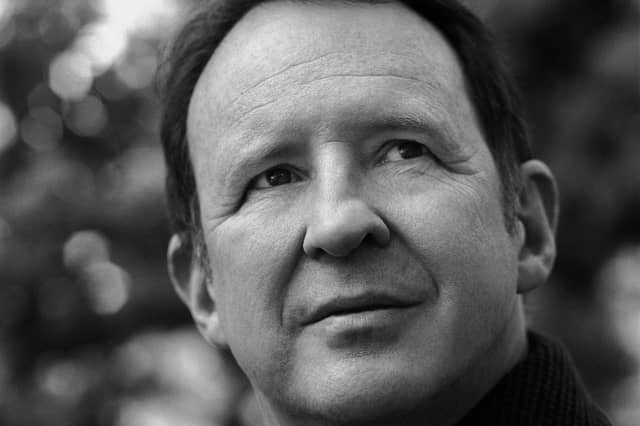


Further dates await in Australia and Europe – “Places we haven’t been to say goodbye, we’ll do then” – but after that, the 60-year-old’s touring days really will be over – bar one or two festivals and summer guest slots with the Pet Shop Boys. “If we get offered Glastonbury, we’re not going to say no,” he says wryly. (Ten days after we speak Saint Etienne’s appearance at Glastonbury is confirmed.)
With Saint Etienne off the road, Stanley plans to return to his other love: writing. Having started out as a music journalist for first the NME then Melody Maker, he’s become an acclaimed pop historian, with two weighty tomes, Yeah Yeah Yeah: The Story of Modern Pop and Let’s Do It: The Birth of Pop Music, regarded as among the best books on the subject.
Other works have focused on the Bee Gees and, with his partner Tessa Norton, The Fall.
His latest book tells the definitive story of The Shadows. Stanley explains his purpose was to restore the reputation of one of a band who’d blazed a trail for British rock ’n’ roll not only with their hits in the 1950s and early 1960s with Cliff Richard but also as an outfit in their own right, with five instrumental number ones in the era before The Beatles and the Rolling Stones.
“It literally goes back to my earliest memories,” Stanley says. “When I was a kid, my mum and dad had a stack of 45s, as they were called then, which they didn't want any more because they were listening to albums because they were more grown-up. They were things that they bought when they were teenagers, there was a lot of instrumentals like Duane Eddy and The Hurricanes and there was a copy of FBI by The Shadows, which was my favourite, it had a very exciting sound. I had no idea what FBI meant, it sounded exotic and interesting, and there was a beautiful slow song on the B-side called Midnight. There was also a copy of Dynamite by Cliff Richard and The Shadows, which was one of the earliest rock ’n’ roll singles, which was also very good.
“So it was there from the beginning. When I was about 10 or 11 the 20 Golden Greats album came out with the TV advert of the kid playing with the cricket bat and I bought that and that was it, really, I was in for the long haul.”
After the arrival of the Fab Four, The Shadows’ success tended to be overlooked, yet they played on 11 number one singles and had 34 hits under their own name in the UK. The compilation 22 Golden Greats sold a million copies in 1977 – the year punk rock broke. Lead guitarist Hank Marvin’s clean guitar playing on a red Fender Stratocaster was much loved by David Gilmour, Brian May, Mark Knopfler and Pete Townshend, while their signature tune, Apache, is known as ‘hip-hop’s national anthem’ due to its prevalence in rap tracks.
All in all, it was quite an achievement for four working-class young men from Newcastle-upon-Tyne and London.
“I think they were the first rock group in Britain – two guitars, bass and drums,” says Stanley. “In the early days of rock ’n’ roll you had people like Tommy Steele and Terry Dene and other people who are mostly forgotten now, they just had pick-up musicians. Cliff put The Shadows together – they were called The Drifters initially – and they were so successful they stuck together and became the first British rock group. So The Beatles or anybody who comes after is based on that blueprint.
“They had the first Stratocaster in Britain, they were the first people to use Vox amps which every beat group did after them. They were the first in line for a lot of things. I just wanted to remind people of that because they’ve not always been the best people at telling their own story – mostly out of modesty.”
In the introduction to his book, Stanley draws a comparision between Marvin – born Brian Rankin – and T Dan Smith, former leader of Newcastle-upon-Tyne Council who was known for his work to clear slum housing and his grand plans to transform the city into “the Brasília of the North” (before being jailed for a corruption scandal). Both, he argues, were modernisers with a singular vision.
“I think with The Shadows it’s more accidental,” he says. “With the first line-up, apart from Bruce (Welch), they’re all jazz musicians or that was their first love, then skiffle came along and then rock ’n’ roll. Jet Harris and Tony Meehan were both amazing musicians as jazz players before rock ’n’ roll happened, and then afterwards when they had Brian Bennett on drums, his first love has always been jazz. So they’re properly skilled musicians and Hank had this unique sound because he played single-note guitar.
“Duane Eddy played very deep bass or Link Wray played power chords, other American guitarists had a very different sound. Hank’s sound is so clean. Roy Wood described it as sounding like it’s been dipped in Dettol, which I really like – he meant it as a compliment, it’s just this very clear, clean sound. It sounds like optimism to me, it sounds very hopeful – that’s a really important part of their sound. It sounded like the future – certainly on Wonderful Land.”
Although the top ten hits dried up in the mid-60s, The Shadows kept going in ever-changing line-ups until 1990. Stanley believes Welch “came into his own” in ensuring the band continued to make music. “He was the member of the group, like Paul McCartney was in The Beatles, when everyone else was getting tired, he’d be going, ‘Come on we’ve got to do it’. I think he’s the reason they stuck together, and when he lost interest briefly at the end of the 60s, that’s the reason they split up for a little while. It was professionalism, I think.
“They always had an audience right the way through, they were always on TV. When I was a kid I thought Hank Marvin was a comedian because he used to be on Saturday night TV with Cliff Richard doing sketches, and I couldn’t marry that person up with the single of FBI that my dad had at all.”
The Shadows played their final show with Cliff Richard in 2009. Looking at their legacy, Stanley reflects: “Especially with Cliff, I think it’s almost like a parallel to The Beatles, Jimi Hendrix, Neil Young, punk or whatever. Cliff managed to stay contemporary for a really long time, right up to the 90s, but not in the same way. It’s similar to the Bee Gees’ story, I think, where they managed to sound contemporary enough to have hits right the way through their career and not sound embarrassing, they didn’t sound out-of-date or like they were retreading past glories. That’s incredibly impressive and very difficult to do.
“Paul McCartney stopped having hits in the early 90s, he put out solo singles but they didn’t sell; Cliff still could. It’s quite remarkable. People should talk about that when the time comes to talk abou that sort of thing.
“And The Shadows, I’m trying to do my bit for their legacy, but they are incredibly important as firestarters for the whole British rock movement, rock ’n’ roll and beat groups and everything that came after. They’re also terrific musicians. People wanted to be Hank Marvin but also wanted to be Jet Harris and Tony Meehan and Brian Bennet as well, they are very influential players. And they are very modest, down-to-earth people, they’re very funny, they still got a Goons sense of humour. They’re never going to be the best advocates for their own story because they’re just too modest – that was another reason why I wanted to try to elevate their position in pop history.”
The Shadows: The Definitive Story by Bob Stanley is published by New Modern, priced £25.
Bob Stanley will be talking about his book at Louder Than Words festival in Belfast which runs between January 15 and 17. https://www.eventbrite.co.uk/e/getting-louder-in-belfast-2027-weekend-pass-tickets-2000261964381?aff=oddtdtcreator