
Cabaret Voltaire: 'We were almost like documentary film makers'
Now midway through a year-long international victory lap to celebrate the golden anniversary of Cabaret Voltaire, Stephen Mallinder is heartened by the wave of affection for one of Sheffield’s most influential bands.
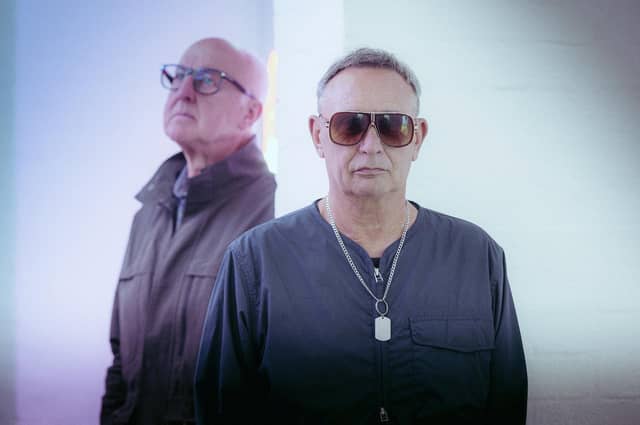


During a run of UK dates last October, that concluded at Sheffield Forge warehouse, Mallinder noticed a lot of love in the room. “I guess Richard (H. Kirk), Chris (Watson) and myself had always felt the long-standing respect and affection for us, but it was lovely to actually feel it (in a live setting),” he tells The Yorkshire Post. “I wasn’t quite sure how it was going to go but there was a massive positive feedback from people, in particular the vibe and the energy.
“It was just nice for people. I think that’s why we did it. It was intentional to do aspects of the back catalogue because I thought it was an opportunity for people to hear in a live situation through a PA and with the visuals, to just experience what it was, because it had been a long time. I didn’t want to play on any nostalgia, it was more of a celebration thing and people got that.”
Inevitably, there was sadness at the absence of Kirk, who died in 2021, but Mallinder says “it was also one of the motivations” for doing the tour. “He’s not there, I can’t turn back time, but I thought it was important that people could hear the work that we’d done together. I know Cabs was always about moving forward, but in other respects, knowing Richard had gone, it’s not; it’s about the heritage and what we’d achieved, so as an opportunity to do that it felt right."
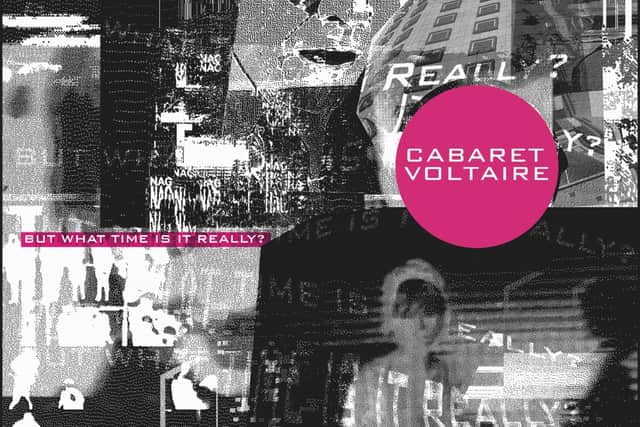
Originally Mallinder and Watson had not intended to include any new material in the set, but changed their minds to accommodate Watson’s track Tinsley Viaduct (as featured on their new live album, But What Time Is It Really?). Mallinder explains that they’d wanted to avoid his bandmate – who left Cabaret Voltaire in 1981 – just being there as a “token” presence who only played live on the material from the band’s early years.
“I gave Chris all the samples and stuff that I’d been doing from the records that he’d not been on and he built it in and played it in the set, but when we started out we wanted to make sure it worked for him, so we thought it would be nice to reflect on the stuff that he’d been doing,” he says.
Cabaret Voltaire’s roots go back to 1973. Mallinder has described their early experiments with analogue synthesisers, tape loops, clarinet and guitar as “punk before punk happened”.
“Punk happened in many respects because the music wasn’t really capturing and reflecting what they felt – and I think it was the same for us,” he says today. “Even though our influences were as broad as early Roxy Music and David Bowie and The Velvet Underground...and obviously the German music of Neu!, Can, Kraftwerk, we were making music that was a kick back against the music that existed at that time in the early 70s. It was very much a major label industry, big bands and big budgets, there was a massive, bloated pomposity about rock and pop and progressive music.
“As much as we were channeling certain influences, we were rebelling against the dominant forces in popular music at that time.”
The confrontational electro-rock of US duo Suicide was another favourite – particularly for Alan Vega and Martin Rev’s use of drum machines and “droney” organ sounds. “We’d seen Suicide in the early days and their first album was a massive influence. As well as the Velvets, there was the New York Dolls. We were aware of the stuff that was going on in New York, so we would go and see bands like Television and Patti Smith. There was certainly a New York vibe that Suicide represented and we were totally tuned into that kind of thing.”
Their early gigs in Sheffield could be provocative and sometimes violent, but Mallinder recognises that “it worked in our favour that there was controversy because that gave us attention”; within a couple of years “people were coming to gigs and were not shocked by what they saw because they kind of knew what to expect”, he says. “We were still full-on and quite extreme, but with punk happening, people started to put gigs on in pubs and the Now Society at the university, there was an infrastructure that allowed bands like ourselves and The Human League and early punk bands in Sheffield to really develop that scene. The controversy didn’t disappear but we started to grow our own audience.”
Acquiring their own studio space at Weston Works was key to development not only on Cabaret Voltaire but such fellow travellers as the Human League and Clock DVA. “It was more of a communal space,” Mallinder says. “We took it over entirely ourselves after about a year or so, but also because we were able to record bands, they were coming in and we were capturing some of those early Sheffield bands like I’m So Hollow. It was next door to The Beehive pub which was a social club for us as well. Mates would come back after the pub and you’d watch VHS and have a couple of beers and a smoke. It wasn’t a recording studio in a high-flung way, it was our own space.”
The band found a home at Rough Trade, who released Extended Play and Nang Nag Nag and a succession of albums. “We just released what is now 3X45 to mark their 50th anniversary,” Mallinder says. “When we were working with Rough Trade in the very early days it was still based in the shop just around the corner from Ladbroke Grove, we’d do gigs in London and we’d sometimes sleep upstairs in the office above the record shop. We were close to Geoff (Travis), he shared a flat at that time with Vivienne Goldman, there as a whole scene, so we were very much a big part of it and we worked closely with Pete Walmsley. We had a lot of support from Rough Trade, they were great people.
“It would’ve been very difficult to release records if it wasn’t for the fact that Rough Trade and Factory and these smaller independents set up, but also it was Rough Trade’s capacity to distribute and become a retail mechanism for music at that time, not just for us but for others as well, so they were significant.”
Cabaret Voltaire’s early records fused industrial music with politics and social commentary. Mallinder says they were interested in making art that said something about the wider world. “But we tried not to do it like a party political broadcast. We always were, and I still am, wary of bolting yourself onto any formal thing. We were almost like documentary film makers in some respects, we fed the zeitgeist back into our music through recordings from TV in the videos. We hoepfully recontextualised people’s worlds and the news and the politics and the economics of that world. We gave it back to them in a different form, hopefully recontextualising and making people think about it. We were quite aware that humans are political animals but the one thing we were always very cautious of was actually telling people (what they should think). We didn’t go down the Red Wedge (line) with Billy Bragg and all that kind of stuff. It’s fine, some people are comfortable wearing their politics on their sleeve. We were much more interested in ambiguity and not being tied to any dogma, but still not avoiding politics and issues of the day.”
But What Time Is It Really? is out now. Cabaret Voltaire play at Sheffield Octagon on October 25. https://www.facebook.com/CabaretVoltaireOfficial/