
Cate Le Bon: 'I wanted to avoid writing a record about heartache for as long as possible'
Some albums might be a breeze to make, but Michelangelo Dying, the seventh longplayer from Welsh singer-songwriter Cate Le Bon is not among them.
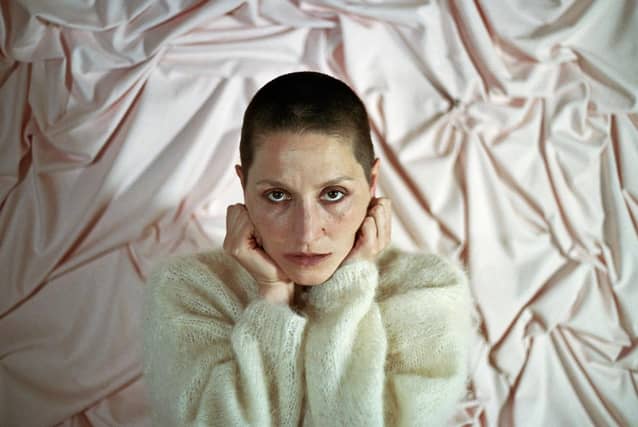


“I tried hard not to write it,” confides the 42-year-old musician from Carmarthenshire in a Zoom call to The Yorkshire Post.
“I didn’t really want to sit down and write a record about heartache. I wanted to avoid it for as long as possible, but I think when you’re trying to put a record together and that’s where your head and your heart is then it’s going to find a way out and I surrendered to it in the end.”
The end of a romantic relationship with an American musician had also meant uprooting herself from California when she’d lived for the past decade. Michelangelo Dying was made on her travels to the Greek island of Hydra and her old home city, Cardiff, and London plus a spell in Joshua Tree, California.
Le Bon admits it was challenging but once she lent into where the songs were directing her to go, she “just tried to empty a vacant mind and let it all come out”.
“I suppose I wasn’t really thinking about it belonging to anybody else but me at that moment in time, and I think working with people who I’m very close with personally creatively helps with that opening up and to not feel vulnerable. So it kind of happened in real time, the record and the lyrics.
“Everything was coming into formation as one thing, which I think was reassuring, too. Something as comforting and familar as music is to me leading me through something that was quite painful and difficult.”
Having “completely abandoned” herself in the relationship, the process of writing and recording Michelangelo Dying also proved a journey of self-discovery. “It’s like sitting down and meeting yourself after, I suppose, abandoning yourself for so long,” she says. “That can be quite turbulent as well.”
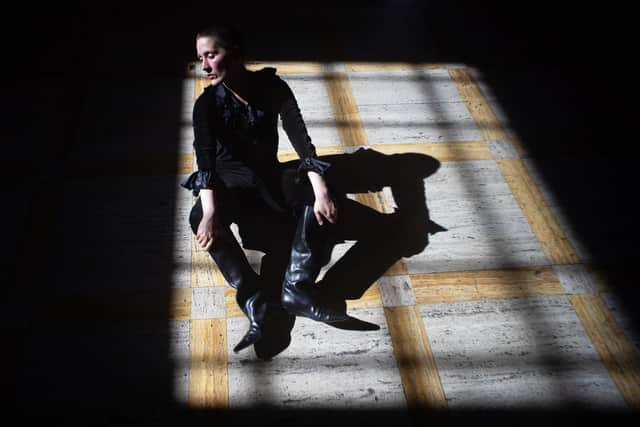
Liking “a place where you can escape when you’re making a record”, Le Bon roamed from Los Angeles to Hydra and Cardiff. “You go somewhere unemcumbered by routine and familiarity, so the sketches that I’d made in the workshop in Cardiff I took to Hydra and we had this lovely recording session on a beautiful island.
“It did feel like total escapism, we were in the sea a few times a day, it was if it was only Hydra existed in our minds, and I think that allows you to annihilate your identity a little bit, to really just be all-consumed by the record, and that’s a very quick way of getting you to that place where all you have to concentrate on is making this thing.
“Pompeii (her previous album), I was in a terrace house in Cardiff trying to figure out how to escape whilst being in this child’s bedroom. Then going to Hydra was my reward for having made Pompeii in lockdown in a terrace house in Cardiff. I promised we’d go somewhere nice for the next one.”
The parts she recorded in the California desert were perhaps the most intense. “When you feel like you have to leave someone you love and you have to leave a place you love, it’s heart-breaking, I suppose. But I took it back there because I think I needed the familiarity at that point.
“There were bits of gardening to do, but the record felt finished after I spent a month there in my friend’s studio. I was mostly on my own with Samur (Khouja). The album was so attached to, I guess, the healing process as well. I wasn’t finished with the record until it was finished with me.”
The imagery for the record was inspired by a Collette Lumiere art installation. “I saw it in a magazine, it’s called Real Dream and it’s of a woman lying naked in a room that is draped in fabric, next to a mirror,” Le Bon explains. “I was quite obsessed with the image in so many different ways.
“There’s this feeling that this woman was initially lost in this womb-esque room but then it felt to me that she was at peace and she’d been able to put something down – that’s how it translated to me.
“There was something that haunted me about this, in a good way. When Samur and I were talking about how I wanted the record to be, I could show him this installation and tell him that I wanted the record to sound like (that). That’s sort of the spirit map that confines you.”
Now based in Cardiff, Le Bon says it has been “really wonderful”, adding: “I’ve spent a lot of time with family and very close friends and taken some time to rest, which I hadn’t done for a long time, and it’s been really nourishing being back. I feel like I’m always one foot out the door usually. I’ve managed to resist that for a while, but I’m starting to get a little itchy in the old feet.”
Much of the new record will feature in Le Bon’s live shows this autumn. “We’re in the throes now of putting the shows together, Dylan (Hadley) and Toko (Yasuda) are coming over from California, and truly I just can’t wait to perform this album and play with these lovely people and be in a room with people eye-to-eye,” she says.
“That energy transfer when we play live is lovely, and that collective joy as well. Everything pulls against people being in the room together, there’s so many reasons to not be any more, so when you are in a room with people it’s magic.”
Michelangelo Dying it out now. Cate Le Bon plays at Howard Assembly Room, Leeds on Saturday October 11 and The Crescent, York on Tuesday October 14. https://catelebon.com/?lang=en_GB