
Craven Faults: 'My favourite single of the 70s was Autobahn'
It’s now nine years since the enigmatic electronic artist known as Craven Faults first emerged with an EP called Netherfield Works that laid a template for much of what would follow. Combining a love of lengthy instrumental pieces with grainy cover images and promo clips of Pennine landscapes, it positioned the musician and producer as a one-man Yorkshire version of Kraftwerk or Tangerine Dream.
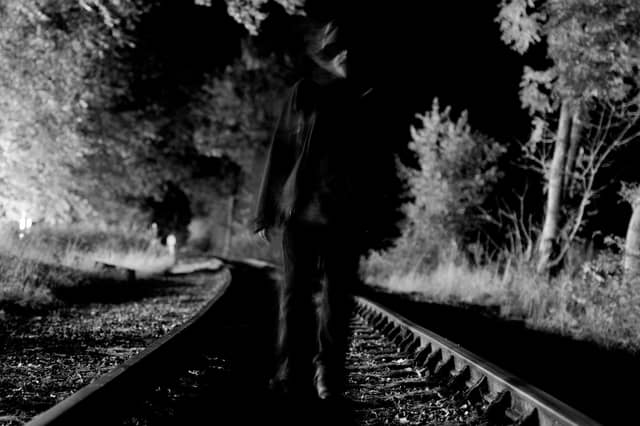


Until now, he has largely eschewed interviews, but to coincide with the release of his fifth album, Sidings, on the Leeds-based Leaf Label, he agreed to speak to The Yorkshire Post on condition of maintaining his anonymity.
“I’ve been doing music for 40 years, making a living out of it,” he says, explaining the origins of Craven Faults. “I don’t think I’d ever released anything on my own before, but I had the modular (synthesiser) and it was building up pretty fast and expanding and I was having a lot of fun with it.
“One day instead of just going in and patching and making sounds out of it, I thought I need to focus on doing something a bit more structured.
“I had a few years where I hadn’t made a great deal of music after my son was born, I didn’t have as much time, but then as I started to get more time back I thought I need to get back into what I was doing but I’ve got new tools to do it with, so I decided to try and focus it and get on with doing something a bit more practical.
“And also, like a lot of lone musicians, most of what we do never gets finished, that’s really common, and even though I didn’t have an outlet for it, I thought I need to finish these things or get them mostly finished. Nowdays that things get released I’ve got to finish them, and I think that’s a good thing to do.”
Marrying the modular synth with sequencers – “I love the interlocking patterns that you can get and subtly changing textures” – tracks such as Eller Ghyll, Tenter Ground, Intakes and Ings were born. “When Leaf were interested in putting something out, I had a couple of hours worth of music,” he says. “The first EP was made up of two tracks, one of them was finished and the other was almost finished. There was a long track on Erratics and Unconformities (his 2020 album) which pre-dates Craven Faults.
“There’s a track on this new album which dates from about 2012 or 2013, Yard Loup, the current single, but that has all the ingredients that I do with Craven Faults: things fading in, the bass drum fades in and a second one fades in to double the tempo, and it’s got the little coda at the end. That was almost like a template for what came after in some ways. I’ve always really liked it but it’s never found its place before, so I’m quite glad that it’s in there and it doesn’t sound out of place. I can tell, there’s things on it that I would do differently today, but eventually it’s found its place.”

The producer’s fascination with Teutonic music began in the mid-1970s when he got a Saturday job at Woolworths. “There was a lad there who was about three years older than me and he lent me some records – including the second Faust album. But actually my favourite single of the 70s at the time was Autobahn, I thought that was great, and I really liked Radioactivity. I saw Kraftwerk in Coventry in about 1976, me and my friend David went, we had all of the Kraftwerk albums between us. I saw also Tangerine Dream in the mid-70s, I thought were really good, but it was all the other stuff like Cluster and Harmonia – that first Harmonia album especially – and I love The Faust Tapes, even though it’s quite different from what I’m doing. I think it’s because they were operating outside of the mainstream…
“Can are probably my favourite, recording themselves, and Harmonia having their own studio. It was a kind of DIY before DIY became a thing. Even though some of them were on major labels, I still feel like they were operating outside the mainstream, and they were making far more interesting music. I also love the work of (the American minimalist composer) Terry Riley – I think there’s a lot of Terry Riley in what I do.”
He feels the new album takes the story of Craven Faults “probably nowhere particularly different – but in a different way”. “I’m always reading, I do a lot of research into this and I tend to do it from whatever books I can find. The internet is helpful as a guide but I like picking up old Arthur Raistrick books and I found a book about the old railway navvies. I’m absorbing this information and you kind of move on from one subject to another in certain ways. Around the time of Standers (his 2023 album) I’d been up to the nine standers, the cairns on the front cover, and been up on Ilkley Moor and Baildon Moor looking for cup and ring marked rocks.
“My studio is in Guiseley and you see the hills going across Otley Chevin down into Menston, you can almost see up towards Skipton and the back of Beamsley Beacon and looking across at the moors. Sometimes you can see Baildon Moor and when it sun catches it, it just glows. That informs what you do, what the interests are.
“With Sidings, I think I’ve just been noticing freight trains. Like everybody, I think you despair of the amount of traffic on the roads, you think of all the lorries. We used to have a lot of freight trains and things have changed – not for the better from the way things work, the infrastructure. Now it’s big businesses just putting shareholder profits first and it’s all wrong.”
Having emerged from his studio to play a few live gigs in 2023 and 2025, Craven Faults will perform his biggest show to date in March, supporting Mogwai at Royal Albert Hall in London in aid of the Teenage Cancer Trust. The producer says he was delighted when he received a message from TCT’s new curator, Robert Smith of The Cure. It came after he remixed I Can Never Say Goodbye from the band’s last album Songs of a Lost World. “He messaged me last year and not being a complete fool, I said yes,” he says, laughing. “It’s really nice that he’s into it.”
Sidings is out now on The Leaf Label. https://cravenfaults.com/