
David Bowie: 10 years on, collaborators remember a superstar who 'instinctively knew what to do'
Ten years ago tomorrow the world was stunned by the death of one of music’s biggest stars, David Bowie. Two days earlier, he had marked his 69th birthday with the release of Blackstar, a dark and intricate work that showed him at the peak of his powers and was widely hailed as a masterpiece. Yet it was to be his finale.
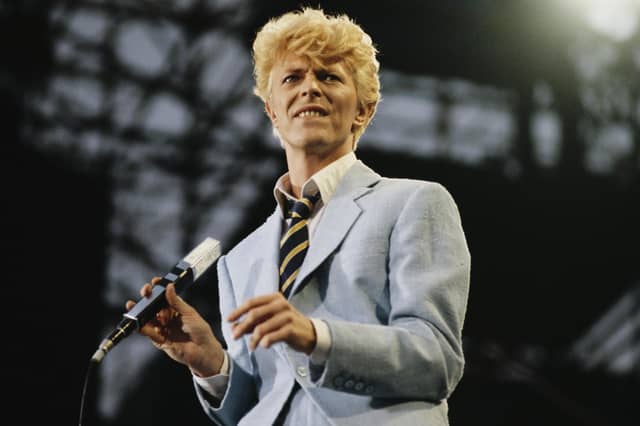


In the years since his passing, the singer-songwriter’s influence continues to be felt worldwide – and perhaps nowhere more so than among the musicians he worked with in a career that spanned six decades.
Guitarist Earl Slick worked with Bowie on five studio albums and several major tours over the course of 40 years. Talking to The Yorkshire Post from his home in upstate New York, he reflects: “In fortysomething years there were about three different David Bowies that I knew. The first one was the ’70s David Bowie when we were all just out of our minds. At that time I didn’t really like him that much, I didn’t really like me either at that point because I was taking too many drugs.
“Then, in ’83 when we got back together and did (the) Serious Moonlight (tour), things changed a lot and we communicated a lot better. I have so many memories from different points, but the fondest memories I have are from the 2000s because we both grew up, we had decades of sobriety under our belts. Guys like us took a little longer to mature. Our bodies might get older but our brains are far younger our bodies. That’s good, though, it keeps me alive.”
Slick, now aged 73, has warm recollections of “the way we worked the shows” on the Heathen and Reality tours in the early 2000s before Bowie abruptly retired from the road after suffering a heart attack. “It was not just that we were a great band, we were a family,” he remembers.
He also recalls the singer’s sharp sense of humour. “He was funnier now, we had a really good time, we just had a blast. A lot of times on the bus he used to love to go to these weird-ass truck stops in the Mid West and Montana and find weird stuff. We found one of these jackalope things [a taxidermy hybrid of a jackrabbit with antelope horns based on folklore] and he got so into it he brought it onstage and had these little guitar picks made with a jackalope on them. Stuff like that where he was a lot more human. The ’70s was weird but we did get some great work done.”
In 2012 Slick was invited to the Magic Shop studio in New York to contribute to Bowie’s ‘surprise’ comeback album The Next Day. He says: “That whole thing was very strange. I think he worked on that record for almost two years, and I had no idea… I came in for a week and we overdubbed on some existing tracks and we cut some new ones like Valentine’s Day, (You Will) Set The World on Fire. [The recording] was very focused but he was working business hours, it was funny. We’d get in there at 10am-ish and by 6pm, maybe 7pm we were done. We were in a studio near Chinatown which was not the kind of place people would even know you were in there, just for privacy purposes.
“I did notice one thing, though, when I was there: on certain days he seemed out of sorts but I couldn’t put my finger on it. Most of the days were really cool, a lot of times me and him would go sit in the control room with acoustic guitars and go over a vibe thing, normal kind of stuff, but there would be some days where he’d seem kind of odd, not quite right, a little edgy, which surprised me... I’m thinking maybe it could have been some of the medication they were giving him, they give you steroids after you have a heart thing and they can really f*** with you, so I thought it was that, but you’re talking 2012, he passed away in 2016, he might have already been sick with the cancer and maybe he didn’t even know it. Something was off, I could tell, but we made a really damn good record.
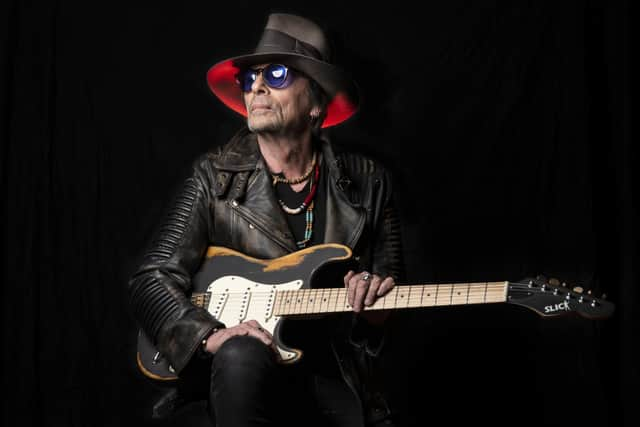
“The proudest track I did on that whole record was Valentine’s Day… (David) was always looking for that little hook riff, we’d bang it around and then I came up with the riff… This had just got a Kinks thing to it. If you listen to my rhythm guitar you can hear it, the vibe it there, and then that main riff at the beginning, then we just glued it together.”
Slick believes Bowie’s willingness to let musicians contribute in their own ways to songs was “his genius”. “I worked with some (people) they would dictate every note and you know what, they were some of the s***tiest records and performances I’ve ever done. David would bring in the people that he knew were the right guy for the right stuff and he let you loose. You were there because there was something about you that he could apply artistically, that was in you already, instead of trying to drag something out of somebody… He knew what to get for what – that’s genius right there.”
Of Bowie’s final album, Blackstar, Slick believes he recruited Donny McCaslin’s jazz band because “he needed guys who didn’t do what we did”.
“Also,” he says, “and this is just my own observation, I don’t think he wanted any of us to see him sick – and I’m kind of glad, I didn’t want that memory. I lost my best friend in February, David Johansen (of the New York Dolls), and did visit David towards the end and you know what, it was OK...but with David (Bowie) it would’ve been a bit different. I was very close with David Johansen; me and David Bowie were very close but in a different way. I always kept a certain distance between us on a personal level purposefully, for my own reasons, and it worked out better for us as we worked together.”
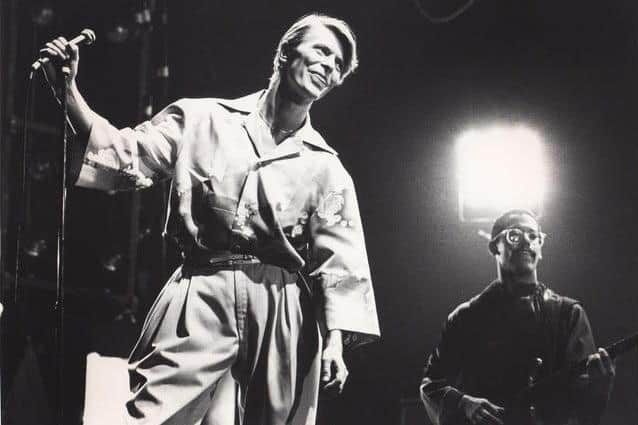
In the decade since his death, Bowie’s legacy has continued to grow. Slick attributes that to his uniqueness. “There are certain artists that are iconic, successful – Little Richard, Elvis Presley, a lot of major artists out there – but David did something that a lot of them didn’t do. First, he wasn’t afraid to take chances. He totally worked the media with whole androgynous is-he-straight-is-he-gay-is-he-bi, he knew what he was doing, and also, damn it, listen to the songwriting, it’s great, and the image and everything. He instinctively knew what to do… If you look at it, every record David did had nothing to do with the record that came before, it was always something new to grab onto, which The Beatles did once they hit Rubber Soul and Revolver. It was new and fresh.”
Rhythm guitarist and band leader Carlos Alomar, veteran of 11 Bowie albums, has a different way of looking at his long-time friend, preferring to think, as the title of the 2013 Bowie exhibition at the Victoria & Albert Museum suggested, that “David Bowie is, (rather than) David Bowie was”.
He talks in terms of their journey – which began with the 1975 album Young Americans – as an “odyssey”, saying: “Let’s look at something like a trip,” he says. “You take a trip because you plan it. I got expectations, but in that trip you have an adventure. That adventure is like the bomb, man, and when you go back what do you talk about, the trip or the adventure? Oh, you talk about the adventure. I had a lot of adventures with David Bowie.
“Now, if you imagine like me, you just say yes to everything, well, that adventure just turned into an odyssey, and you might never get home. When I travelled with David Bowie, I didn’t get home for a while. The odyssey continues, and in that odyssey we discover things about ourselves that were not planned. Why? The knee-jerk reaction that you have to deal with life establishes who you are. In that tour that I did (last year) it became B2B and in becoming you finally are. People think that B2B means Back To Berlin; it actually means B2B, the transitional form that we have in order to progress in life, and that’s what I learned being with David Bowie. What was my relationship with David Bowie? How could I be next to a transformative figure for decades and not be transformative myself?”

Like his own parents, he feels that Bowie’s influence is always there. “How could I miss him when he’s constantly in my mind?” he says with a smile, adding: “Many times I do an interview and they ask, ‘why do you always talk about David as if he’s in the present?’ and I say if you could tell me that he had died everything would be fine… The minute that you find out that somebody is dead then you start to mourn. I’d rather not know. Leave me in my ignorance and I’m fine and happy. You tell me something, now I’m all sad and mournful, losing the voice in my ear – why the hell would I want to do that?...
“And so, do I miss him? I miss fun, I miss curiosity. Why do you miss somebody? Because they took care of something in your life that you needed, and every time you went back you blossomed in that same thing.”
He says that he has never listened to the Blackstar album. “Why not? Because I think it would depress me,” he says. “I had all these fun albums then I know if I put it on it’s going to be dark. Well, I don’t even buy it.
“Memory and loss is based on the fact that there are certain memories that you cherish so much because they were part of your building blocks of life – when I graduated, they played that song, when I got married that song was in the background, all these things, and this is what I hear when I did the Back To Berlin Trilogy tour (last year). All of these people when they heard David, and the curiousity factor of which David. Every five years there’s a new David – why? Every kid gets the surprise of a character… It’s very hard to miss someone that you never caught. You lose one David Bowie, why don’t you grab another one? There’s a lot of memories packed into one person.
“We have very few iconic figures. Iconic means exactly that: the icon cannot be branded, he cannot be put in a stall, he cannot be corralled, he cannot be defined, he cannot be a lot of things. But it isn’t an issue of who David Bowie cannot be, it’s an issue of who David is. You cannot speak to someone in the past term when his influence is. David Bowie is courage, David Bowie is transformation, David Bowie is, is is, not David Bowie was. What does that mean? ‘Oh, David Bowie was a great artist’. No s***, David Bowie is a great artist. Be careful what your tense is because they impose and apply certain things that aren’t true. What is existence – the definition of what you did or the definition of what you are?”
Guitarist Kevin Armstrong worked with Bowie in the 1980s and early 1990s. He says: “I have many outstanding memories of David in the ten-year span in which I worked with him. Helping him finish Absolute Beginners on the day we met at Abbey Road, rehearsing with just him and Mick Jagger one night in Soho, driving him and Coco Schwab across London in the back of my beaten-up Vauxhall Cavalier, drinking rum with alone him on a beach in the Bahamas, having dinner with him, Gary Oldman and Sean Penn in New York. “I have many outstanding memories of David in the ten-year span in which I worked with him. Helping him finish Absolute Beginners on the day we met at Abbey Road, rehearsing with just him and Mick Jagger one night in Soho, driving him and Coco Schwab across London in the back of my beaten-up Vauxhall Cavalier, drinking rum with alone him on a beach in the Bahamas, having dinner with him, Gary Oldman and Sean Penn in New York.
“Where do I start? I suppose Live Aid was a stand-out. We travelled across London together by helicopter to Wembley and he was always a nervous flyer. Publicly announcing the names of the band members during his set that day was an extraordinary way of thanking us and he must have known very well what an impact that might have on all our reputations as musicians. It was certainly the rocket fuel my career needed at that point! He was always kind and thoughtful and took care to make sure everyone working around him was acknowledged as important. Roadies, studio assistants, drivers, everyone felt included.
“He was never the big shot and always full of jokes and fun to be around.
“Of course, he had a serious side, too. I was always impressed by his endless intellectual curiosity and attention to detail in the work we did, even though he made it all seem so effortless and fun.
“Since Bowie died, his legacy has grown among those who worked alongside him. I have met and played with so many of his musicians from every era from the 70s to the 2000s and count many of them as friends now. I think he would have loved that.
“The fans continued interest in the work keeps us all busy and their support never seems to waver. There are so few artists who have the depth and breadth of vision he had and the music is still so interesting and varied. I have just completed a tour with Carlos Alomar and George Murray and, since David died, I have toured with Mike Garson and still play with him and Earl Slick also. Bowie was a one-off and I think his work will continue to resonate much in the way The Beatles stuff has. So much of it has aged so well because it’s so multi-layered and memorable.
“He was as important an artist as we will ever see in ours, or many, lifetimes and I am seriously grateful to have been in his orbit for the little time we had.”
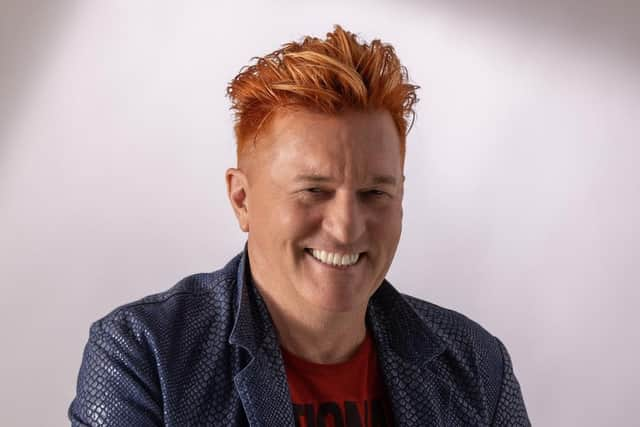
Doncaster-born fashion designer, singer and musician Keanan Duffty collaborated with Bowie on a clothing range for the US store Target. “Two things jump to mind:
“Bill Zysblat has been David Bowie’s longtime business manager and so reached out to him. My fashion label had blossomed. In 2006 I struck a deal with the American mass retailer Target, a 1,400- plus chain of stores based in Minneapolis and reaching across America coast to coast. ‘Come up to the office,’ said Bill. ‘You should meet with David and see if there is synergy.’ So I did. At that initial meeting with David he showed up with his long-time right hand person Coco Schwab. David asked me where I was from and when I told him Doncaster he turned to Coco and said, ‘Oh we know all about Doncaster, don’t we?’ David Bowie’s father, Haywood Stenton Jones, was from Doncaster, born there in 1912. I think this common ground created an initial element of trust between us. After all, the Spiders were Yorkshiremen and David definitely had an affinity with Yorkshire people.
“David had a very quick sense of humour and at the meeting he asked me to pitch my idea to him. Bowie had appeared looking very casual in a sweatshirt, chinos and suede desert boots. I was meeting David Jones from Bromley, rather than the rock superstar. Bowie immediately put me at ease but now I was on the spot. That voice. Even his speaking voice is totally distinctive. This is the guy who inspired me to be creative in the first place and I was in the same room. Just act natural, I told myself. After some light hearted small talk I made my pitch. Bowie was charming and funny, at one point in the conversation I forgot where I was in my monologue, I’ve lost my thread, I said, at which Bowie pointed out that was ‘Not so good for a fashion designer, is it? ...losing your thread’. Boom boom, as Basil Brush would say.
“‘Bowie by Keanan Duffty’, was available at the American retailer Target, in 1,400 stores in 2007. It was a big seller and a testament to the Starman’s cross-generational appeal and Andy Warhol would’ve loved it: an affordable fashion line, inspired by a rock superstar. It was an absolute privilege for me to be able to collaborate with David on the collection. A process which took about nine months and several meetings. With Bowie calling me on my cell phone from time to time. Now, ten years after he passed, it all seems like a dream.”