
Fiat Lux: 'We’ve always tried to push the envelope a little bit'
Back in the early 1980s when Fiat Lux were signed to Polydor, supporting Howard Jones and being championed by BBC Radio 1’s Annie Nightingale, the Wakefield band were expected to become one of Britain’s new big synth pop groups.
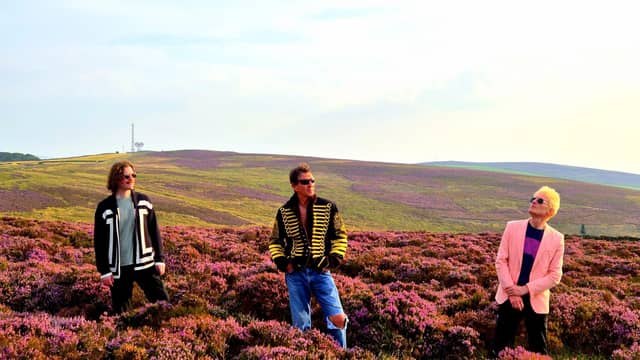


Sadly in a then crowded market it wasn’t to be, but they did leave behind two enduring singles – Secrets and Blue Emotion – and a cult following who’ve rekindled their interest in group since singer Steve Wright and multi-instrumentalist David P Crickmore reunited nine years ago.
Now joined by saxophonist Will Howard in place of the late Ian Nelson – they recently released their third studio album, Desire and Belief, and on Thursday July 16 they’re due to play their first gig in decades in the city where the band formed.
“It’s been great, the comeback and everything; it’s just been a thing to do without the pressures of the original set-up when we first started,” reflects Crickmore, who in the 1990s became known as a member of the Yorkshire folk group The Durbervilles and later presented a weekly folk and roots show on BBC Radio Leeds. Meanwhile Wright became a successful television producer.
“You’re starry-eyed when start off and very naive, you’re like a sponge learning things as time goes on, whereas this time what ws really nice was to find people out there who still remembered us from hearing us on the radio or coming to concerts and so on. There is a bedrock of interest there which enables us to function, albeit in a small way, and that was a delightful surprise, I suppose, after all these years.”
For the project to continue beyond a smattering of early reunion shows, both Crickmore and Wright – who had first met as students at Bretton College near Wakefield – felt it important that they wrote new songs. “That’s always been the basis of the act, really, the creating in the studio, so that continued. It was almost like it had broken off for various reasons and then it sewed back in where it broke off the first time, and that has been great,” says Crickmore. “The creative process between me and Steve is one that just seems to work. We’ve always tried to push the envelope a little bit.
“When we first started with Fiat Lux, it was in the era that they call post-punk now. From the punk days onwards was this thing of always trying to do something new and different. You were never settled into being ‘Oh, I’m this sort of band’ and you were just going to churn out loads of stuff that sounds like that. Although we have parameters for what the band is, we’ve always tried to move this way and that, see what gives, and I think that continues from the old days into the new material we’ve done recently.”
Crickmore draws encouragement from the reception they’ve received for their reunion albums Saved Symmetry, Twisted Culture and Desire and Belief. “From the way people have reviewed us, we seem to have succesfully managed to reinvent ourselves to sound contemporary, and I think that’s a twofold thing. It’s partly because contemporary artists are mining from our original era but also we have subsumed stuff that has gone on. We’re both big listeners to music anyway and keep our ear to the ground, and I think those two things have mixed together. We’ve always added new instruments and new ways of trying things, so both of those things come into play.”
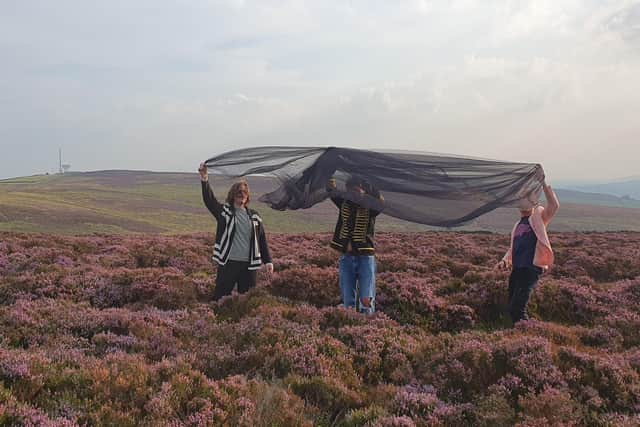
As a “multi-genre kind of person” who besides his folk interests has produced records for other artists, Crickmore was always keen to diversify. “The fact that Fiat Lux has been quite happy to slip in an acoustic guitar in there or some sort of folky element, it’s always been there along with the synthesisers. We’ve never been a straightforward drum machine/synthesiser band. At the beginning, I think part of that was because I was weaned on folk music as well as listening to what was on the radio. I was got at by teachers at my comprehensive school who were all part of the Grimsby folk scene, so that’s how that came about, and it’s always been intertwined in my musical appreciation.”
The duo vary their approach to songwriting, with one or the other often starting an idea then developing it with the other, or both starting from scratch in the studio. “They all seem to work,” says Wright, joining the video call from a holiday in Greece.
The new album has “a thread going through it, in the same way there was with Twisted Culture before it”, says Crickmore. “Twisted Culture was more about what was happening in the world and not being to keen on it. This one is about desire and belief – that’s why we called it that.”
“It is more personal,” says Wright, citing All The Stars Have Died and Shallow Hollow Souls, which, he says, “is about past relationships with colleagues, it’s clear when you’re not having a good time”.
When they first met at the turn of the 1980s, Crickmore was studying for BA in Creative Arts but the bit he liked best was inter-arts “which was using bits of film and tape machines, the great thing about it was that it meant you could borrow stuff, like tape machines and microphones and record your ideas, there was even a synthesiser knocking about in the music college which you could sometimes have a go at as well, it was very advantageous for sidelines such as the one we were doing”.
They were particularly attracted to the synth-pop coming out of Leeds and Sheffield at the time. “When we were at college the prototype Human League were on the go, and there was also a really good scene in Leeds and Wakefield,” Crickmore recalls. "We were based in Wakefield so we were part of that, and you could see the genesis of all these different scenes happening in places like Raffles off Westgate. There was a lot of new music in there, they were playing Bowie, Roxy (Music), the oddbod sort of things like The Normal, XTC. As new records came in they added to it.
“But it was an interesting time because there was all that electronic stuff, suddenly people were having a go with affordable synthesisers which had come out around the same time, and there were lots of places where you could try to play in the likes of Wakefield, you could try out ideas and you might get a reasonable audience. Some of the audience might be musicians who would pop up and try to play along with you – that’s how we met Ian Nelson (brother of Bill Nelson of Be-Bop Deluxe, who produced an early demo by Fiat Lux) and Aidan Wilson who was instrumental in pointing us in the direction we did go in to get a record out. There was also the goth scene at that point at the same time, so it was an interesting mix.”
“Also Ultravox and Japan at the same time,” Wright remembers. “Because of punk, you didn’t have to be on a major label; you could do it yourself.”
Wright was a member in the Yorkshire Actors Company who were then staging The Cabinet of Dr Caligari, which is where he met Bill Nelson. “He was doing the soundtrack for the stage show – that soundtrack’s now on an album called Das Kabinet – and he did La Belle et La Bete as well. I wasn’t in that one but I went along to watch the company rehearse and Bill was there and Bill said, ‘What are you doing now then, Steve?’ I said, writing songs, and he said, ‘Send me a copy’, and Ian saw us at The grove doing a two-man act and he came up to us afterwards and said, ‘I think you’re very brave. Do you mind if I join you?’”
“That was in between us recording the first single with Bill, Feels Like Winter Again, and it coming out,” Crickmore recalls.
“We were very lucky that Bill took us on and he had the mechanism with his (indie label) Cocteau Records and with people that promote it for it to actually get some headway. We decided to go around some music paper in London but it was on the push that it was something they recognised and gave it traction. It eventually got single of the week in the NME, but it wouldn’t have done that if we’d pressed our own copies in some back alley in Leeds.”
“Bill had pedigree. A Flock of Seagulls were on the label as well before us,” Wright says. “I was a huge fan of Be-Bop Deluxe, so I couldn’t believe I was actually in a studio with Bill Nelson.”
After signing to Polydor, Fiax Lux toured with Howard Jones. “Howard was very lovely,” Crickmore recalls. “I remember the first time we played Glasgow Apollo, a huge old cinema, and as we were loading our gear up Howard came up to us and said, ‘Hi guys, nice to see you, have you got that grotty dressing room right up in the gods?’ I said, yes, he said, ‘Come and look at my dressing room’, it was palatial with sandwiches wall to wall and drinks. He said, ‘There’s only me, so have this at your disposal’. That was so kind of him because he didn’t know what we were like when we arrived, we could’ve been horrible, but as it was we jogged along very nicely for the rest of the tour.”
Although their singles Secrets and Blue Emotion received plenty of airplay, they failed to dent the top 40 and the band split up in 1985. Crickmore says “it’s difficult to say” if he’d actually wanted pop stardom. “There were any number of labels who wanted to sign us at the same time as Polydor, and we could have been on a high. It’s difficult to say if we’d have done any better with them. We went weith Polydor not because they were at the top of the tree at the time but because they were going to make us a priority act, which indeed they did, there was no holding back on spending.”
“We took a smaller advance for a recoupable status and they paid for everything – travel, studios,” Wright says.
“There was a strong commitment from their side, but it was just one of those things,” adds Crickmore. “If we had the amount of airplay that we had then, then Spotify and stuff would’ve ruled the day. There were issues with distributors. We were often told by fans at gigs, ‘we tried to get the record the other week but it wasn’t in the shop’. There was something wrong in that chain somewhere.”
“Blue Emotion went in at 79 and went up to 59 the next week and was due to go to 39 but the strikeforce of reps who went around the Gallup chart shops pulled it and it went down 20 places,” Wright says. “So we just missed Top of the Popps – thank God for that!”
Desire and Belief is out now. Fiat Lux play at The establishment, Wakefield on July 16. https://wegottickets.com/f/17536?fbclid=IwY2xjawQ4djRleHRuA2FlbQIxMABicmlkETFmZVBvS1M3N00yUDRNOWZmc3J0YwZhcHBfaWQQMjIyMDM5MTc4ODIwMDg5MgABHuuyZjnNh0U8u8payDeKwXAMR3ATsBqlbKcXWp17-PlNElnoIGIhh1BNxLRK_aem_2EPcymbLotp-dLW1iMZ6Jw