
Gig review: Femi Kuti & The Positive Force at Stylus, Leeds
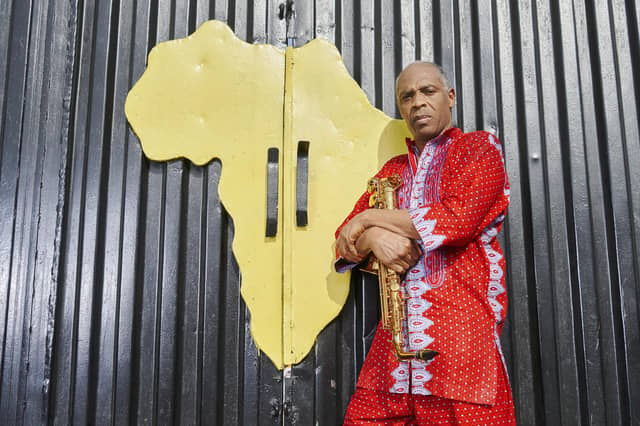

The son of Nigerian Afrobeat legend Fela Kuti brings his own pulsating grooves to West Yorkshire.
“He is the son of a legend who is himself a legend,” Femi Kuti’s bandleader announces, hyping up the imminent arrival on stage of the star of tonight’s endlessly energetic, two-hour show.
It would be virtually impossible for Kuti – fronting the eight-piece Positive Force band, dressed in identical red and white uniforms – to not draw instant comparisons to his enormously influential, enduringly resonant father, Fela Kuti. Especially considering that they share that famous last name and a shared mission to forward the cause of Afrobeat, the vibrant polyrhythmic mesh of funk, jazz and African rhythms that Kuti Sr originated, and which Femi Kuti mastered as a teenage member of his father’s Egypt 80 ensemble.
It soon becomes clear that the 63-year old Nigerian saxophonist, organist and singer’s international renown has little to do with pure nepotism or banking on his legendary parent’s reputation. Kuti subscribes to the family tradition of combining pulsating grooves that are simultaneously robust and effortlessly airborne with unambiguously articulated ire at political dysfunction in (and beyond) Nigeria, but the way the underlying ethos of progress, unity and defiant positivity is presented is unmistakably Femi Kuti’s own.
With an opening jam successfully dispatched, Kuti announces the plan for tonight’s performance, tongue firmly in cheek: Kuti is our flight captain, ready to fly the enthusiastically responsive audience to Lagos, final destination Afrobeat. What follows is a breathless gallop through some of the highlights of Kuti’s four decades as a solo artist. Afrobeat is typically characterised by unhurriedly unfurling, loosely mapped-out workouts, but the breakneck presentation during the first quarter of tonight’s show brings to mind vintage soul revues, with each act cramming in as much action into their allocated stage time as possible.
Kuti maintains the relentless drive and inexhaustible energy for the entire two-hour show, suggesting a perpetual motion machine does in fact exist. At an age where many musicians favour sitting down to perform, Kuti stomps around the stage, gesticulating to emphasise the songs’ message, jogging on the spot, goofing around with band members and joining in on the choreography of the three vividly attired female dancers, stopping only to dispatch scorching saxophone solos and to deliver a heartfelt monologue about the importance of self-improvement even when the surrounding world is seemingly intent on getting worse.
Musically, the show is tightly drilled, with Kuti conducting the band with subtle hand gestures as they alternate between classic Afrobeat rhythms and elements of Highlife, jazz, minimalist funk, even a splash of heavy rock. Gradually, the arrangements are allowed to loosen up: Look Around (from 1998’s Shoki Shoki) hushes down to bare bones to emphasise Kuti’s mantra-like litany of societal ills, while Politics Don Expose Them (from last year’s excellent Journey Through Life) swaggers like a musical equivalent of a riotous party, exemplifying the seamless union between serious political fury and joyously exuberant positivity that characterises tonight’s performance.
As Kuti’s literally dances off the stage following an obligatory dash through Kuti Sr’s Water No Get Enemy, his top now drenched in sweat, it’s hard not to agree with the hyperbolic introduction to tonight’s proceedings: as a performer, Femi Kuti does indeed deserve to described as legendary.