
Gig review: Panchiko + Alison’s Halo at Project House, Leeds

The Nottingham dream pop band seem ripe for rediscovery.
When Panchiko asked how many people had listened to them online, the cheer from the packed Project House made the answer clear. Here was a band whose unlikely return had depended on people sharing music, facing a room full of young listeners who had followed those connections to a gig.
Their story began again when a copy of their 2000 EP, D>E>A>T>H>M>E>T>A>L, surfaced in a charity shop in 2016. An online search eventually reunited listeners with its creators, helping bring Panchiko back into action. At Project House, that internet history became something much more immediate: a busy room, an eager crowd and five musicians making the most of their second chance.
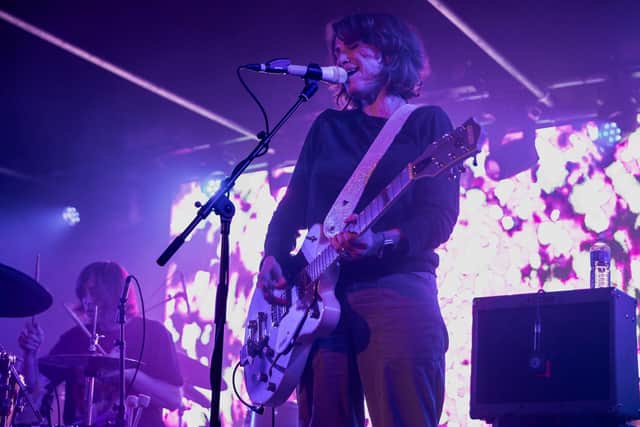
The queue had wound through the surrounding industrial estate before doors opened. Inside, Alison’s Halo provided a suitably hazy introduction, their dream pop and shoegaze accompanied by a large screen of shifting patterns. Colours moved like a lava lamp before giving way to twisting, fractal lines.
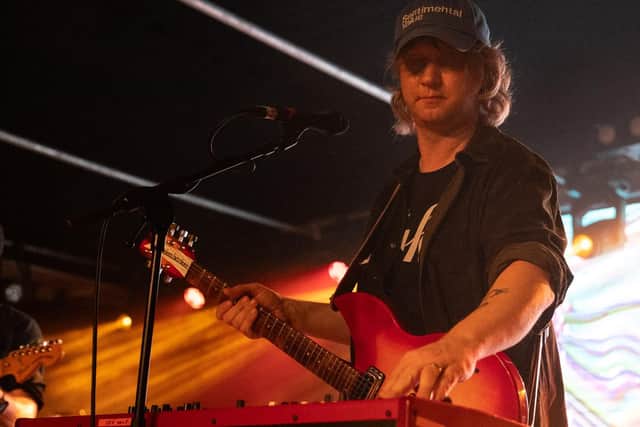
Their layered guitars and high vocals filled the room without losing their gentler details. One upbeat new song stood out, its jangling guitars giving the set a welcome lift. There was warmth between songs, too. Admiring the venue’s drinking water provision, the singer explained that they lived in a desert and did not have anything similar. Encouraged by the crowd, she laughed: “Leeds tells us to drink water.”
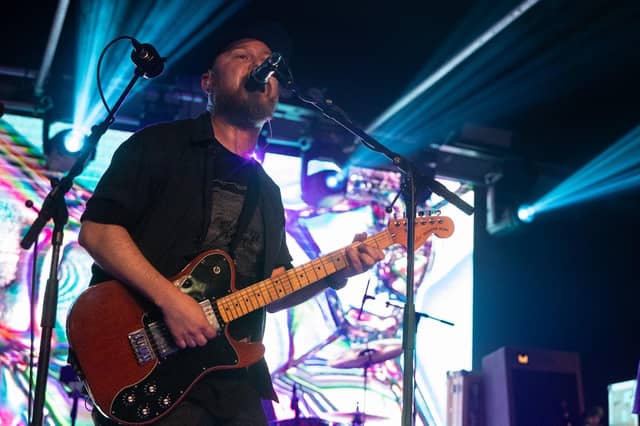
Panchiko’s set brought more movement, both in the music and across the stage. Apart from the bassist and drummer, everyone seemed to have two jobs. The singer worked between two microphones and a keyboard, while both guitarists also had keyboards within reach. They switched roles during songs, building the arrangements without interrupting their flow.
The result was a heady mix of shoegaze and dream pop, with samples and vocal effects adding detail rather than overwhelming the songs. There was plenty happening, but the extra sounds stayed subtle enough to support the guitars and singing rather than distract from them.
Stabilisers for Big Boys, Stuck and Ginkgo opened a set that eventually reached D>E>A>T>H>M>E>T>A>L, Laputa, All They Wanted and Kicking Cars. Together, the songs connected the recordings behind their rediscovery with the band now standing onstage.
The evening was not all carefully assembled textures. When the crowd started chanting “Yorkshire, Yorkshire”, Panchiko improvised a soundtrack around it. Later came the diplomatic verdict that Yorkshire was probably the best county, followed by the admission: “I’m from Derbyshire”, no chant followed.
That easy humour helped close the distance between stage and audience. Online discovery had brought people through the doors, but Panchiko gave them a performance worth being there for. The connection was no longer just a recording passed between strangers. It was a shared night in Leeds.