
James Walsh of Starsailor: 'Writing songs is a constant rollercoaster'
It’s now 25 years since Starsailor formed in the Cheshire town of Warrington, taking their name from an album by cult American avant-folk musician Tim Buckley. But things might have turned out differently had the band stuck to their original moniker, Waterface.
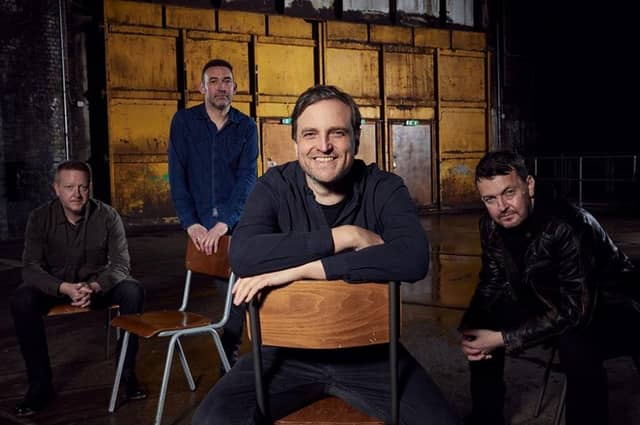


“It’s funny, that doesn’t get brought up as much as you’d think, but we just decided that that was an awful name,” chuckles singer and guitarist James Walsh when it’s mentioned by The Yorkshire Post.
“There’s a letter on Neil Young’s Tonight’s The Night album that’s addressed to ‘Waterface’, so I thought that would be a cool name for the band, but taken out of context no-one who’s not aware of that connection thought it was a particularly good name.
“But I think a band becomes the name that they’re given. I always say even The Beatles is a pretty bad pun.”
The band’s roots go back to Wigan and Leigh College, where Walsh met bassist James Stelfox and drummer Ben Byrne. In 2000 they drafted in their friend Barry Westhead to play keyboards, changed the group’s name and never looked back.
Such has been their longevity that Walsh, now 45 years old, can chart his entire adult life through their musical adventures. “I’ve not really known anything else,” he says. “It’s been a pretty wild ride.”
Walsh had penned his first songs at the age of 14 when he was growing up in Chorley, Lancashire. His aspiration from childhood was to become a songwriter. “I was just never any good at anything else or had any passion for anything else,” he explains. “When I was about eight or nine, I wanted – like everyone of that age – to be a footballer and play for Liverpool, but the main drawback to that was I was absolutely dreadful at football, so once I found that music was my calling, it just became an obsessive passion, and I just really enjoy it as well.
“I guess the frustrating thing and the magical thing as well about music is you never know when inspiration is going to strike. But equally, you never know what that inspiration is going to desert you as well.
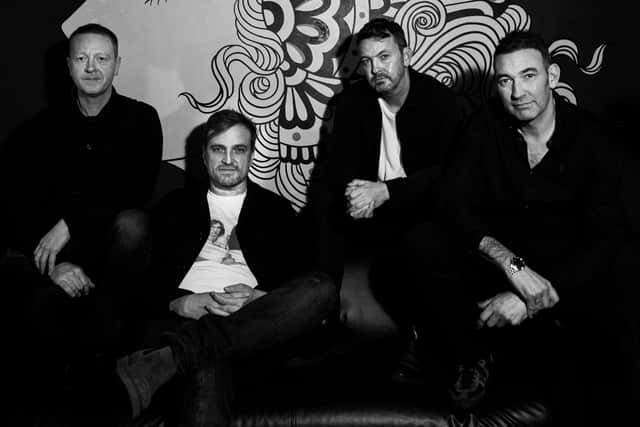
“Even the greatest of songwriters have off-days when they just can’t come up with an idea. But it is pretty magical when you manage to sit down with a guitar and come up with something that you’re really happy with – and equally it can be demoralising when it’s not happening. It’s a constant rollercoaster.”
Starsailor emerged at the same time as a number of other British bands loosely grouped together by the NME as the New Acoustic Movement. Walsh says he felt they had “a little bit” in common with the likes of Coldplay, Travis and Turin Brakes. “I’m a fan of those bands, but I think moreso our attitude and the kind of personalities are quite similar, and the focus on emotional songwriting,” he reflects.
“Guy Garvey (of Elbow) is a bit more outgoing, and Chris Martin has maybe developed into a more outgoing performer, but I think around that time we were not your typical egotistical rock stars. We were all fairly modest people who spoke through the songwriting, and I think that’s maybe the thread that joins all those kind of acts.”
He remembers with fondness he and his bandmates signing to EMI and making their first album, Love Is Here, at the storied Rockfield studios in Monmouth where the likes of Queen, Black Sabbath, Robert Plant and The Stone Roses had trodden before them.
“It was an amazing time,” Walsh says. “It was so exciting to step into a studio like that with all the history. In more recent years the mystery behind recording and studios has been lost a little bit because it’s got so much easier to record at home or to record yourself, which is amazing for up-and-coming artists because it’s obviously much cheaper to do it that way, but there is still something pretty magical about stepping into a studio with that history and having an amazing producer like Steve Osborne to worry about which is the best take and if you need to do any drop-ins so you can just concentrate fully on the music and the songwriting.”
Love Is Here was the first of three Starsailor albums to make number two in the UK charts – along with 2003’s Silence Is Easy and 2024’s Where The Wild Things Grow. Walsh admits that there’s a part of him that would have liked to gone one better, but it’s not something that overly concerns him. “It is frustrating not to have had that accolade but I think it’s still something to be proud of – especially for the two early albums to do that well and really set us on our path,” he says. “I think sometimes as well getting to number one is just a case of bad luck or good luck in the week that you’re released. An album that’s maybe not done as well as Love Is Here or Silence Is Easy might have got to number one over the years because it was released at a certain time.
“Also, being signed to a major label, they want to create that hype and pit you up against a strong rival like Kylie Minogue in one instance and The Darkness in another. That creates the press story and the big battle for number one, let’s say, going back to the Oasis-Blur years, whereas if you release in a more quiet week you might get the accolade of getting the number one then there is the hype that they can build around it, particularly on the debut album, it’s like the new band on the block against the legendary Kylie Minogue. I think that was the one that had Spinning Around on it so I’m definitely not bitter about losing to that, it’s an amazing song.”
During the recording of Silence Is Easy, Starsailor worked with Phil Spector on what would be the notorious American producer’s last ever record. Months later, the creator of the famous ‘Wall of Sound’ was arrested for shooting dead the actress Lana Clarkson and was later convicted of second degree murder.
Walsh recalls it was “quite a strange experience” and one that he looks back on now “with quite mixed feelings because of what occured afterwards”.
“That was obviously very tragic and dark, to say the least, but at the time it was a huge honour to work with somone who was thought of – at least then – as a pretty legendary producer. It was a situation where it was partly the excitement but also a lot of pressure. There’s a lot of people who have grown up with his music who were excited to see what he would do next as much as they were excited to hear a Starsailor album, so that created an extra problem and it was a bit of a risk and a roll of the dice from the label as well.
“I think that created a bit of friction because they were used to having better communciation with the producer and hearing demos and having some influence on how they expected or wanted the direction of the record to go in, and he was obviously quite a singular talent. He was, like, ‘No-one’s going to tell me what album to make, I’m going to go in whichever direction I feel like’, so that was quite a difficult process that ultimately didn’t work out in the end.
“Also, he was quite heavily medicated when he was working with us. You never knew if he would be lucid and up for working or if he’d be in more of a trance-like state. It was a difficult time.”
Starsailor play at Brudenell Social Club, Leeds on November 13. https://www.starsailor.band/