
John Harris: 'I think music speaks emotionally in a very powerful way'
One-time winner of the Orwell Prize for political journalism for his work in The Guardian, John Harris is regarded as one of Britain’s most pertinent columnists.
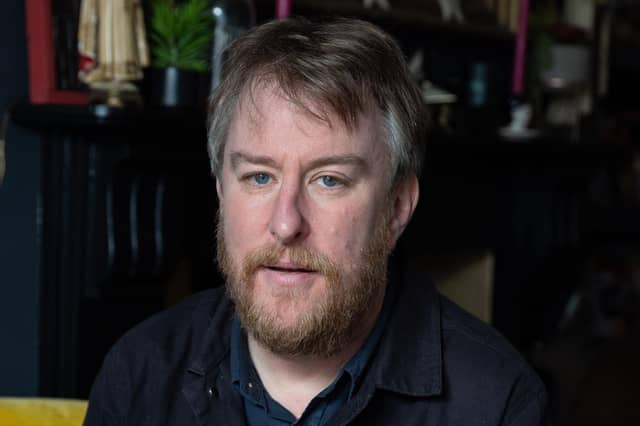


For the last 35 years he has also written about music and pop culture for the likes of Melody Maker, the NME, Mojo and The New Statesman, as well as penning The Last Party: Britpop, Blair and the Demise of English Rock, a history of the intersection between Oasis, Blur and the New Labour government in the 1990s.
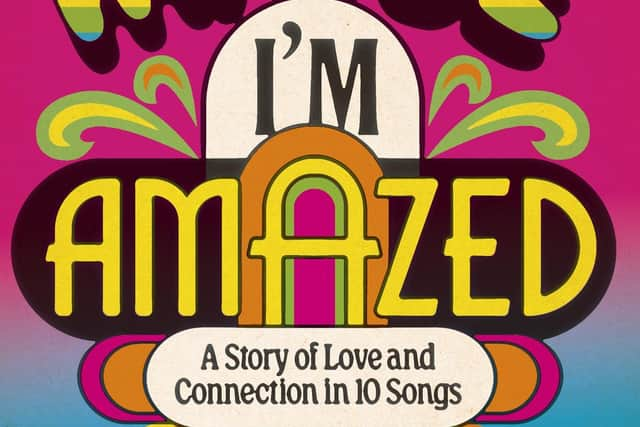
His latest book, however, is something of a departure for the 55-year-old. Called Maybe I’m Amazed, it’s a memoir charting the life of his autistic son James, and how music opened up the world to him. James’ responses to songs such I Am The Walrus by The Beatles, Autobahn by Kraftwerk and I’m Waiting For The Man by The Velvet Underground come to provide John with a profound insight into his son’s way of perceiving things; the book also details the battles with bureaucracy that John and his partner Ginny went through while trying to ensure that James got an Education, Health and Care Plan and appropriate schooling.
Talking to The Yorkshire Post, John says that given the book’s deeply personal nature, he has been “surprised and thrilled” by how much it has resonated with other people, sparking a flurry of emails and comments on social media platforms.
“Also,” he says, “I’ve done, I suppose, 14 or 15 events now around the book and the richness of the conversations that everybody has at those events is just amazing, such that the bit I really look forward to are the any questions from the audience part and then meeting people who I’m very grateful are buying books.
“The conversations have been really rich and I think there are two aspects to it. There’s a human conversation about autism which involves autistic people themselves, and also the parents and carers and friends of autistic people, that I think we’re only in the foothills of having. The whole thing is so much about bureaucratic things like, not unreasonably, targets and this policy and that policy and the state the care system is in, that perhaps the human elements of autism and neurodivergence get pushed to one side, and I think that’s one of the reasons why the conversations have been so great.
“And the other is specifically about what the book describes, which is this intersection of autism and music. For a lot of people like me, for them it’s the first time they’ve seen that reflected back to them. It’s something that’s there in their lives and it’s often profoundly life-changing in the same that it was for me, but they’ve never had a conversation about it with anybody else.”
The book is divided into chapters, named after songs with specific relevance to John and James, who’s now 19 years old. Whittling down that choice to just ten was “quite hard”, John admits. He explains: “I can’t write when I have music on, that’s the one time when it has to stop, but most of the time when I’m at home doing family stuff there’s always music on. I rarely watch television, my way of relaxing is to put music on, but James takes that into somewhere even more intense. He goes to college, so there are breaks within it, but the rest of the time he’s listening to or thinking about music a lot more than most people.”
James is currently doing a deep dive into The Strokes’ catalogue and before that, it was Bob Dylan after he watched the film A Complete Unknown. “We bought tickets for Kraftwerk the other day, so they came roaring back,” John says. “It’s just always there.” John says. At his music youth club in Somerset, James, who plays bass and keyboards, often favours the Magazine song Shot By Both Sides – which is also mentioned in the book. “There was an embarassment of riches when it came to choosing songs for chapter titles but having said that, all of the songs in the book do signify for me periods of my shared life with James. If I hear I Am The Walrus I picture James when he was three-and-a-half or four, and when I hear London Calling by The Clash he was six or seven, and Fish Chips and Sweat by Funkadelic tends to remind me of when he was 11 or 12.”
John believes that music has a unique ability to evoke memories. “Also, because music conveys feelings very vividly, sometimes that combination of a particular memory and a song is also about how you were feeling at the time. The reason I picked Northern Sky by Nick Drake to play when James was born was because it’s a lovely, euphoric song that’s about unconditional love. There have been a couple of events where they’ve put Northern Sky on at the beginning and I’m in bits before I even have to talk.”
James was disagnosed with autism at the age of three. John admits that he and Ginny were unprepared for all the questions that it threw up. “We were probably like the majority of parents whose child receives an autism diagnosis, you’re not prepared for it because no one’s mentioned it up to that point. To some extent that shows you a failure of awareness of things that are to do with the education system because for me personally I knew no more or less than most people.
“I probably had some misplaced associations to do with Rain Man, just because of the age I am and that film was big in the ’80s when I used to go to the cinema a lot, and I had some received ideas about autism being bound up with social connections to other human beings and difficulties with language, but they were very superficial ideas, and I thought of autism as something to do with other people, it’s nothing to do with me, so we had a hell of a lot of learning to do incredibly quickly, and more to the point, we were largely left to our own devices, which is not really a very good thing.
“I always say we were not given so much as a pamphlet...So we ended up spending far too much time on Google – sometimes that’s useful but a lot of the time it will give you pretty misplaced or an alarmist kind of information that you really don’t need. In other words, it just makes you fell more anxious, and there didn’t seem to be that many opportunities to sit down with anybody and have detailed human conversations exploring what all of this meant.
“There’s a bit in the book where we go to the local parents’ support group and we only went twice but the two sessions we went to were invaluable in the sense that I didn’t really have a script and it was’t a formal meeting but in the course of those two hours just the simple experience of meeting other people with autistic kids, a) gave me lots of information and b) it was a simple reassurance that this was nothing terribly out of the ordinary, there were lots of people like us.”
In the book, John discusses the shortcomings of the system for supporting children with educational needs; he’s also raised concerns in columns for the Guardian about the Labour Government’s proposals to reform SEND provision. He feels far too much emphasis has been placed on monetary costs and not enough on what failing to sufficiently fund such provision says about Britain as a society.
“That’s always the way now because money is tight and special educational needs is an area of policy that’s seen to by local councils and local councils for 15 years have been strapped for cash, there’s been a catastrophic level of cuts in the money they receive from the government, so it’s no surprise that money is constantly there in these conversations. But we’ve got such a topsy-turvy understanding of public money in this area of special educational needs and why we’ve ended up where we are. The plain fact is that cuts are expensive – that’s what I think. If you get rid of children’s centres all over the country, if you allow teaching assistants to leave the profession because it’s so poorly paid, if schools budgets get so squeezed that they can’t deliver things like speech and language therapy and occupational therapy, then what tends to happen is the system picks up needs when families are in a state of emergency, and picking up needs at that point is always more expensive than what we call early intervention – and I think that’s the catastrophe of special needs education in the past 15 years, it’s the fact that if you don’t keep up a reasonable level of spending then you find yourself later with what looks like an unmanageable level of spending. But I think that can be put right, I’m not wholly pessimistic about that.
“But at the same time you get what I call austerity think, which is if services get cut back then people start to rethink the level of need to fit the small amount of money that’s there, then you get these conversations about how parents and kids are playing the system and there’s actually less autistic people than families claim there are, and this idea that we shouldn’t be spending nearly this much on transport because why can’t all these kids walk to school – very disquieting, sometimes hateful conversations, but I think they just happen bexcause people think that they’ve got to think of the level of need along the same lines as the level of money and that’s just not true.”
The presence of The Beatles looms large in John’s story – in fact, he and Ginny met while she was working on the Fab Four’s 1990s Anthology albums in her role as a publicist at Parlophone. James’ fascination with The Beatles would ”over time” provide John with a gateway into his world.
“Initially when James got immersed in The Beatles, which sort of happened of his own volition in the sense that he figured out how to work my iPod and it became his gadget, and there might have been 1,000 or 2,000 songs on there so he could take his pick, but not unreasonably in my opinion, he first chose The Beatles to get obsessed by. So initially that was just wow, that’s what happened to me when I was five years old; he was three, so he had a jump on me, but I could identify with it on that level. Since then, though, there are one or two Beatles songs which are a window into how fascinating James’ mind is and the amazing way that he hears and enjoys music.
“The obvious example is I Am The Walrus. When James was little he would listen to (that song) repeatedly, 40 or 50 times a day sometimes, or he’d just play the intro over and over again. Originally we were told that was rigid and repetitive behaviour – in other words, it didn’t really mean much, it was this ritualistic way of behaving. Since then, I’ve come to understand that James hears things in music that most of us don’t.
“Hears hears music with a level of intensity and detail which is very rare, so I Am The Walrus must sound amazing to him because it has an orchestra on it, it’s full of sound effects, it takes lots of unexpected twists and turns and I think for James listening to I Am The Walrus is a bit like for the rest of us looking at the Taj Mahal. If you had the opportunity to do that over and over again of course you would.”
The other one that James latched on to and that John himself has strong emotional associations with is the closing medley on Abbey Road. “In particular Golden Slumbers, Carry That Weight and The End, I have always heard in that all of the great things of human existence – love, loss, life and death – and I’ve stood with James and watched Paul McCartney play it and I’ve sat and listened to that piece of music with James and I instinctively know that it has just as much of a profound effect on him although he can’t necessarily express all of that – and that’s another thing that music does. It fills a gap left by language sometimes but you know that somebody is hearing it and understanding it in just as deep and complicated a way as you are although you’ve never had a conversation about it.”
John believes it’s a similar sentiment with Kraftwerk. “Probably like a lot of people, I had that cliched idea of Kraftwerk being cold and emotionless, they present themselves as robots at least some of the time, and people have this misplaced idea that electronic music somehow has less emotion in it than music made on instruments made of wood, but that’s ridiculous because a guitar is only a machine, as is a violin or a saxophone,” he says.
“I watched this fascination with Kraftwerk blossom with James from when he was four onwards, and it’s still blossoming even now. Particularly watching Kraftwerk play live with him (at Jodrell Bank Observatory), I suddenly became aware of this profoundly moving element of Kraftwerk’s music, and I don’t think that’s all in my head and that’s not to do with James. A song like Neon Lights, which is about the wonder of looking at a city at night, is among the most moving pieces of music I think I’ve ever heard. Radioactivity has this lovely melancholia to it, so does The Model. A lot of their songs are just as emotional as music that people think is profoundly soulful. That’s something that James has taught me, I think.”
Later on in the book, John talks about the research of neuroscientists such as Prof Pamela Heaton at Goldsmiths, University of London, into musical perception which he found eye-opening. “She talked to me about how vivid and clear and detailed a lot of autistic people’s hearing and listening to music actually is,” he says. “I had an instinctive sense of that from being James’ dad but I’d never talked about it as something you could observe scientifically and that was definitely a confirmed thing, so in that sense that was revelatory. She’s done a lot of work on autism and absolute pitch which again is one of James’ talents. One in 10,000 is reckoned to have it, among autistic people it’s put at one in 200. But in the moment, can you imagine the first time I picked up a guitar and went what’s this note, James and he said, ‘B flat’, it was like watching someone perform magic. I’ve tried it myself, I couldn’t even get near to doing that, it’s almost supernatural.
“Reading her work on that is amazing, when she does this musical experiment when she associates four animals with particular musical notes and then goes back to this school four weeks later and brings up an image of the animal and asks them which note, or the other way round, and the autistic people disproportionately clearly recall the notes that they heard. Then the other area of research that she’s been involved in which I think is really interesting is showing that although the emotional element of facial expression is something that a lot of autistic people find hard to process, emotion in music is a much more reliable thing and autistic people find it much easier to spot emotion in music, and to be moved emotionally by music they find a lot easier than those stereotypes suggest.
“James and the people who teach him down the years have done lots of little emoji cards showing that various facial expressions suggest anger or sadness or being throughtful or whatever and that was quite hard stuff to do, he eventually got a lot of it but it was difficult, whereas spotting whether a song is sad, happy, relaxed or whatever in my experience, and I’ve done my own amateur tests, is something that comes very naturally to him. But I think actually it comes naturally to all of us. I think music speaks emotionally in a very powerful way to everybody, whether they’re autistic or not, and among all artforms, I think it conveys emotion much more dependably and strongly than literature or fine art, which is why music can make you cry or take you back into a particular moment, but there are also emotional states that I think only music can describe. We haven’t really got any satisfactory language for happy-sad which is enjoyable melancholia but if I want to understand that feeling I’ll play Just Like Heaven by The Cure or Reach Out, I’ll Be There by The Four Tops and I’m there, I know exactly what that feeling is – and I’ve only come to understand this unique ability that music has to convey emotion through James and observing him immerse himself in music.”
Maybe I’m Amazed is published by John Murray, £16.99. John Harris appears at Todmorden Literary Festival on Friday November 7 and Louder Than Words Festival in Manchester on Sunday November 16. https://maybeimamazed.substack.com/?fbclid=PAZXh0bgNhZW0CMTEAAafKQqIakvCU3bESTXQ5qXRNukLNcwYc6sta2UScpGg5VOBD57j3s6iBQEphwA_aem_UmDoaiign1budw7A-9cfDQ