
Manu Delago and Max ZT: 'There’s this tennis theme running through the album'

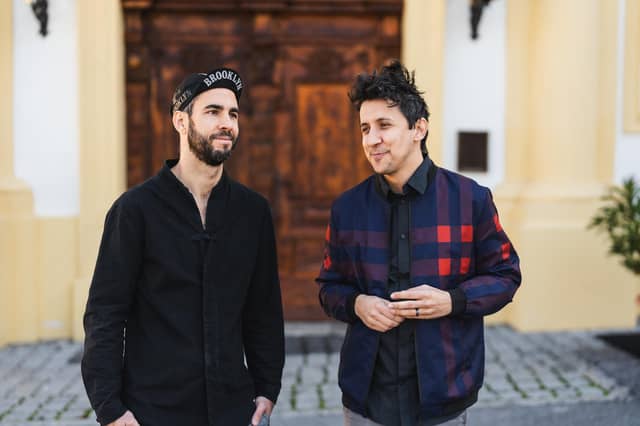

Manu Delago and Max ZT’s collaborative album Deuce brings together one of Europe’s leading percussionists with an American virtuoso hailed as the ‘Jimi Hendrix of the hammered dulcimer’.
And next month there will be a chance to hear the pair in West Yorkshire when they perform at The Old Woollen in Leeds.
Talking to The Yorkshire Post from his home in Austria where he and Zbiral-Teller have gathered to prepare for concerts across Europe and the UK, handpan player Delago – who has worked with the likes of Bjork, Nitin Sawhney and Ólafur Arnalds – says the album has been “quite a long time in the making”, coming 10 years after the pair first met while he was on tour in the US and then again in London where Delago used to live. “We always kept doing these improvised sessions and a couple of years ago we realised we had about seven hours of recorded improvised material, so we decided to put a week aside and finally spend time together in a nice place where we can record. Then we developed the best bits into nine compositions which turned out to be the album,” he explains.
Zbiral-Teller, a Grammy nominee who was first bewitched by the sound of the hammered dulcimer when he was two years old and now makes his own instruments, likes the meditative effect of the music they’ve created together. “Both (instruments) have resonance that is, I think, unique, but they’re slightly different in sound. Of course it’s both metal ringing but mine has this wooden texture to it, so when it’s overlapping it doesn’t feel like anybody’s stepping onto anybody’s toes. It has this lovely group, new, unique sound that comes from it even though they’re both percussion instruments that are roughly in the same range.”
Delago sent “a lot of options” to Zbiral-Teller for possible recording spaces in Austria, but for the American musician the choice of Bernardisaal monastery was “so obvious”.
“The monastery is from the 13th century and that Baroque hall is early 18th century, it has a really amazing sound, acoustic and reverb also,” Delago says. “There were no religious reasons. It was purely acoustic and stylistic reasons because we also decided to film those sessions and we wanted a space with a character, not just a blank, dry studio in front of a white or a black wall. You can hear the space on the album, it’s like, helping us and amplifying our sound.”
“I can remember doing a roll of some note and doing a little bit of a different technique to go with the echo,” says Zbiral-Teller. “I’d do a very strong attack and then go very quiet so you can hear it’s not me doing this any more, the room has taken over the sound. It was so magical, it was beautiful.”
Delago is hopeful that the partnership will continue beyond their current run of concerts. “We’re having a great time now finally playing it live because even though we’ve been planning this for a long time, we haven’t actually spent so much time in a room together. We met about five times before we made the album over nine years… It’s working really well, the concerts have been well received, so hopefully there will be more.”
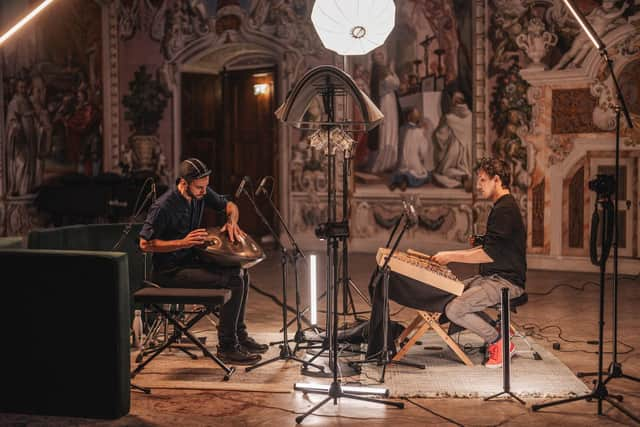
Zbiral-Teller enjoys the dialogue they have onstage. “There’s this tennis theme running through the album, from the name of the record to a lot of the track names, that came from this concept of we faced each other in the recording session because that was easiest and we realised this was nice, not some sort of angle thing, just really direct and we realised that because of these similarities not just rhythmically but harmonically we could rotate roles very easily, which is quite rare. Usually in a band each member has their own space. But we can rotate constantly… Dialogue is a great word but it’s really just this constant communication between us that I think is probably the main aesthetic, for sure.”
Manu Delago and Max ZT play at The Old Woollen, Leeds on April 1.