
Marc Almond of Soft Cell: 'I felt sad that Dave Ball wasn’t around to enjoy this record'
Theirs is a story that began in Leeds in 1977 and would go on to encompass millions of record sales, one of the best-known singles of the 1980s, and surprise second and third acts.
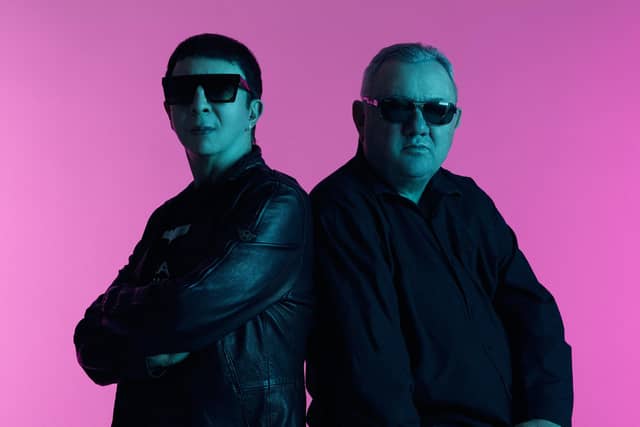


But now Soft Cell’s journey is drawing to a close. Eleven months on from the death of co-founder Dave Ball, Danceteria, the band’s sixth and final album, is being released at the end of this week.
For singer Marc Almond, who worked with Ball on and off over five decades from their first meeting as art students at Leeds Polytechnic, it marks a poignant final chapter for what he initially envisaged would be an underground electronic outfit known only to a modest few.
Speaking to The Yorkshire Post from his current home in Portugal, Almond says that Ball’s death last October had not been “entirely unsurprising” because the keyboard player had been “quite ill for quite a while” after breaking his back, ribs and wrist in a fall at home in 2022. When Ball caught pneumonia and sepsis “we thought we’d lost him then,” Almond says, but he subsequently rallied and sent Almond “a whole bunch of new music which (became) this album, Danceteria, over two years ago now”.
Although Soft Cell were able to play a few concerts in the UK, the health concerns over Ball remained and Almond remembers fearing the worst when they played at Rewind Festival in Surrey in August 2025. “He was in very bad shape,” he recalls. “I wished at the time that he hadn’t done the concert because it had taken him a lot of effort to get there.”
Yet two days before his death in October Ball had seemed upbeat. “We’d only just completed the album and we kind of ticked off the record, it was finished and mastered for the final time, we were really happy with it,” Almond says. “He even talked about doing a British tour – which was going to be in March – and the record was originally going to be released then, and of course it got delayed and delayed.”
The fact that it’s finally about to see the light of day is evidently a relief to Almond, yet he says: “The sad thing for me is that since we did the *Happiness Not Included album (in 2022) there had been a huge interest with Soft Cell again. (It) was really well received by fans and critics and it ignited this whole new interest in Soft Cell and I think that’s what started the ball rolling again. I felt sad that he wasn’t around to enjoy this record and to enjoy the attention that Soft Cell was getting by a whole new audience.”
Danceteria brings Soft Cell’s story full circle to where they made their trilogy of albums Non-Stop Erotic Cabaret, Non Stop Ecstatic Dancing and The Art of Falling Apart in 1980s New York. The concept for an entire album exploring the city’s nightlife had come to Almond when he wrote Polaroid for *Happiness Not Included, a song about meeting Andy Warhol at The Factory in 1982. “That track was about the reality of meeting him that was very corporate and mundane, and the fantasy of what I would’ve liked it to have been,” he says.
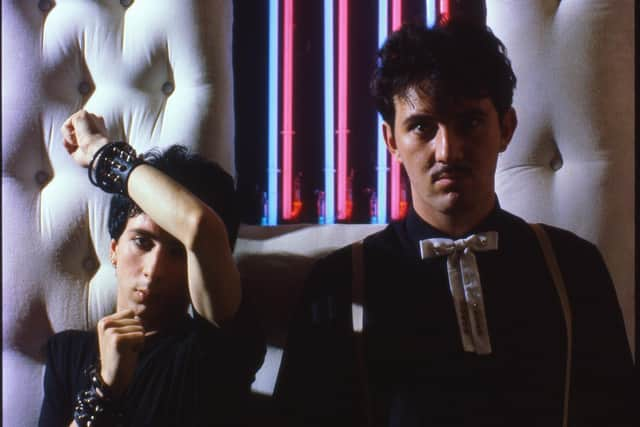
The Big Apple had seemed a far cry from Leeds and seaside towns of Southport and Blackpool where Almond and Ball had grown up, but looking back, the singer sees it as another stage in a longer journey.
“I think we both went on the journey together,” Almond reflects. “Dave and I...were like chalk and cheese, really...we never hung out together or had the same groups of friends, but we came together with this common thread that we liked making music together. Dave wrote music that was very inspiring to me, I instantly clicked with it and my lyrics initially Dave rolled his eyes a little bit, but we never argued in nearly 50 years that we’d known each other, so it was a great adventure that we went on.
“Going from the north of England down to London first, playing our initial gigs and signing a record deal – the whole experience of going from Leeds and doing all of that. When we became well-known we had to spend less time in the north of England because we got too much attention there, we had to melt into a bigger world, I think.
“And then we were sent to New York to record our first three albums, so it was a really intense almost five years we were together. I don’t think we ever intended for pop stardom, we were always a slightly underground art college band and suddenly by circumstances found ourselves in the mainstream pop world and that at first was quite uncomfortable for us, it was a strange lot of experiences that we both went through. It wasn’t always a happy place, I think the reason why we finished so early. In 1984 we wrapped it up, the two of us said we couldn’t really do it any more, we were going in different directions and wanted to different things.
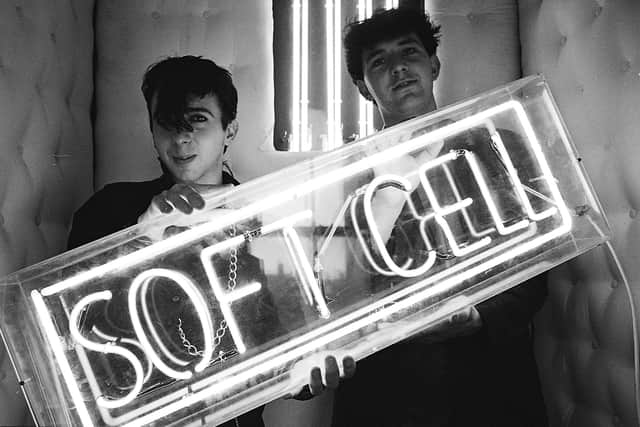
“We’d had this intense ride for three or four years but I think at the time we thought it was never going to be totally the end, we’d go away and do something sooner or later again. We didn’t realise that the first time it was going to be 17 years when we did Cruelty Without Beauty. It was a wild, strange life, really.”
Many of Soft Cell’s musical reference points – such as Devo, Suicide, Lou Reed, disco and 60s soul – came from America, but they were juxtaposed with an English lyrical sensibility. “When we went to New York to record our first album all the songs had been written in our bedrooms in Leeds,” Almond says. “So it was strange taking an album we’d written in Leeds that was really about our London experience and then taking it to New York. But when we were in New York we found a sense of freedom that we hadn’t really got (elsewhere), and it was kind of a home for us.
“We knew that we’d been influenced by so much American music and there was some excellent dance music that was going on at the time. I’d already had the experience of working in The Warehouse club in Leeds, which was a pioneer in England in the late ’70s for bringing in American DJs that mixed music. We’d never heard that before – people doing 20-minute mixes of records – and it was quite influential to hear that. When we went to New York people were doing that in all the clubs everywhere, mixing very eclectic music together.
“Going to a club like Danceteria, for example, which I always thought was an overground club with an underground mentality. There were different things happened on different floors, different DJs, different music, there was art performance happening. It was a very artistic cultural hub as well as a music disco so we really felt at home. Even though we were recording songs that had been written in our bedsit in Leeds about going to London and things like that, we infused them with a New York Dance mentality that we were picking up around the clubs in New York.”
Almond remembers that the first track Ball had sent him was the music for what turned out to be the album’s title track. “Danceteria was the first word that came into my head,” he says. “It’s a great word, it could pay to that era, 1982 New York. Danceteria is that kind of microcosm of New York at the time, of what was going on and happening. I thought it was a good word that also summed up life – we dance our way through all the things that happen in our lives, and life is a Danceteria.”
The songs Times Square and The Rainbow Room are the most directly autobiographical. The former is about “an afternoon I spent in Times Square” while the latter is are collection of “looking downtown at the Twin Towers while having a romantic dinner at the Rainbow Room, but it could also be about being in Windows on the World, which was the restaurant at the top of the Twin Towers”.
“I had a birthday party in the Rainbow Room and I also had dinner in Windows on the World around the same time. One looks downtown and one looks uptown, and in the Twin Towers you’re thinking what a long way down. I think the feeling and imagery was in my mind from both of those places when I wrote this song. It’s actually my favourite song on the album, I think it’s the most poignant song.”
Although a “total coincidence”, he feels it was apt that the release of the elegiac track as a single coincided with commemorations marking the 25th anniversary of the 9/11 attacks on the Twin Towers.
In keeping with Soft Cell’s tradition, the albums also includes a cover version – this time of the Was (Not Was) song Out Come The Freaks. It was chosen, Almond says, to “give a feel of that period” in the early 1980s. “I thought of this song straight away because when I DJ-ed at The Warehouse around 1980-81, when Soft Cell was first starting, I used to play records from the Ze label in New York and Out Come The Freaks was one that I used to play. I said to Dave, I think it will be a nice track to end the record because it would start with Danceteria which would be a club-feeling song and end with Out Come The Freaks, which would be another club-feeling track from that period, and Dave loved it. I think the words are quite Soft Cell-ish. I have a great mix of the record where Dave is just doing all the vocals. That will probably come out as part of the digital version.”
The American singer Nona Hendryx who provides guest vocals on the track is a “long-time friend” of Almond’s. “We’d planned to do a song together for years and it never happened," Almond explains. “Around the time that Out Come The Freaks came out, I used to play another record which was on the Ze label called Busting Out by Nona Hendryx, which was a great dance track. So I said to Nona, just sing whatever you like, so she does all the vocals on Out Come The Freaks. I think it’s great because she was also a regular at Danceteria. I think it’s great that I finally got Nona on a Soft Cell track and I think she adds some great colour and vibrancy. She actually makes this track for me.”
While Almond has performed in the US this year under the Soft Cell moniker – with Philip Larson, Ball’s long-time stand-in for shows outside the UK – he says he does not “have any plans” to do so here.
“It’s a strange thing for me because for the past few years Dave never performed with Soft Cell outside the UK, so we’d always done the music and I’d always taken it out on tour to Europe and America,” Almond says. “America, for some reason, they just love Soft Cell, they can’t get enough of it, they want to see the name and hear the songs. But I’d never done a UK gig without Dave, ever. Even in the latter years when Dave hadn’t been well, he’d always done the UK gigs, so it would be a strange thing to do without Dave.
“Philip Larson has been a background member of Soft Cell for quite a while. He was a musical partner of Dave, a co-producer who did all the programming with him. Even when I went out in the UK Philip was always onstage too.
“I would like to do a UK date, even just to air some of these songs. As a tribute to Dave, I thought I would try to keep it going, to keep the music alive as long as possible. We deliberately make it look like Soft Cell when Philip’s onstage. We always used to use screens and visuals and backdrops, and we still do that; we always had a couple of backing singers and so we do that. Sometimes Gary Barnacle, our sax and flute player, who’s played a lot on this album, joins us. I would like to do one UK date at least where I could do a tribute to Dave.”
With hindsight, Almond is still amazed at how far Soft Cell managed to travel from what Dave once described as their “little art colony” in Leicester Grove in Leeds. “We never expected it,” he says. “We always expected to be part of an underground music scene. Dave liked experimental music. We both did, actually. I thought I’d probably drift away into some kind of theatre at some point and Dave would go into producing. So when we became international, we became successful in Britain and had a string of hits – obviously the biggest being Tainted Love, which went stratospheric here, Europe and America, it was in the Guinness Book of Records for spending the longest time in the American Billboard Hot 100 – it was a journey that we never thought we’d go on, and it took us a while to embrace.
“I didn’t think until we came back 17 years later that we were able to embrace a lot more than we had done in the ’80s. Back then there was enormous pressure for us to be a throwaway pop band, do some more Tainted Loves. We always regretted doing the song What because we were rushed to do a single, (the label) needed one very urgently so we rushed into do another Northern Soul song. I’m quite fond of it actually now but I think that we both wished that we’d never done that.
“We knew as a band when we went to New York the second time to record the album The Art of Falling Apart we committed commercial suicide and made a very uncommercial pop album, but I think that’s what kept the longevity of the band, actually. We sacrificed some of the instant pop success but it gave us more of an album and more of a critical success that made us last longer, and the legacy has lasted longer through the years from the latter two albums that we did, as opposed to the first one – although I really love Non-Stop Erotic Cabaret.
“You go through periods where you hate your early stuff, but we went out (in 2022) and we played the whole album and we re-evaluated it, we came to love it again as a self-contained musical song cycle. Neil Tennant of the Pet Shop Boys he pointed thta out to me – he said ‘This is a piece of musical theatre’. The Pet Shop Boys were always influenced by Soft Cell and I think he really got what it was about, and so you learn to embrace your older stuff again, but I think at the time it was a journey we never expected to go on.”
Danceteria is out on Friday September 25.