
Mike Joyce: 'When Johnny Marr said he wanted to leave The Smiths, it was a massive broadside'
Mike Joyce admits that a certain amount of pester power played its part in him finally giving his account of his time in The Smiths. Talking to The Yorkshire Post backstage at The Old Woollen in Farsley, Leeds, on the first night of a tour to promote his book The Drums, the now 62-year-old musician says that he had “no desire” to pen a memoir despite being regularly encouraged to do so by journalists who have interviewed him over the years.
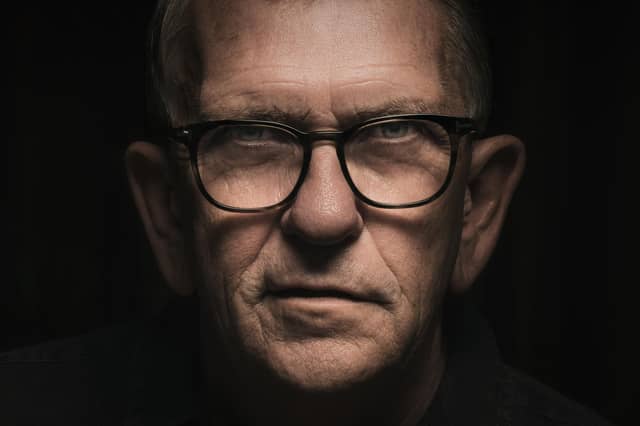


But when fans continued to ask him what it was like to be a part of one of the most beloved British bands of the last 40 years and he found himself replying “Even if we had three or fours hours, I can’t really explain to you what it was like being in The Smiths”, he began to come round to the idea of committing his thoughts to print.
“Obviously it’s a unique experience and I had the best seat in the house because I saw the band and the crowd, so it was something that I thought, yeah, maybe the time is right now,” he says.
Frontman Morrissey’s concerns with the awkwardness of youth are “maybe” part of their continuing appeal, Joyce acknowledges, but he feels that there are other things, too, such as vegetarianism. “I became vegetarian the day that we recorded Meat Is Murder and I’ve been vegetarian ever since, all my children are vegetarian, all my grandchildren are vegetarian,” he says.
Even the anti-corporal punishment message of The Headmaster Ritual still seems to strike a chord, although such practices have long been banned in schools. “These kind of things aren’t necessarily from defining certain eras,” Joyce says.
“When I arrived at the venue tonight, there was a young lad, probably 17 or 18, standing there with his dad and he was saying, ‘Wow, I can’t believe it’. We seem to cross generations and there isn’t anybody that’s been in a band ever that doesn’t want to do that. You don’t want to have a shelf life of a specific era or a specific genre – that’s the punk era or the ska era or Northern Soul – you want to transcend all those, and The Smiths do that, I think first and foremost because we were a pretty good band. Regardless of what we looked like, regardless of what we wore, we sounded like a pretty good band.
“I do a bit of DJ-ing and when I play How Soon Is Now it sounds pretty incredible but it doesn’t sound like it’s from the ’80s. If you’re playing something R&B like Little Richard, it’s going to sound like it’s from the ’50s, but if The Smiths had been a band in the ’60s I think we would’ve resonated then, or if we came out in 2020 I think we would resonate.
“There was a compilation album that came out (called) The Sound of the ’80s and ABC were on it, Heaven 17, Culture Club, Duran Duran, every single band apart from us and I took that as a massive compliment because even though we were right in the ’80s, we were nothing to do with the ’80s, the music that we made could’ve sat anywhere and I think that’s partly why the kids of today seem to dig what we were doing.”
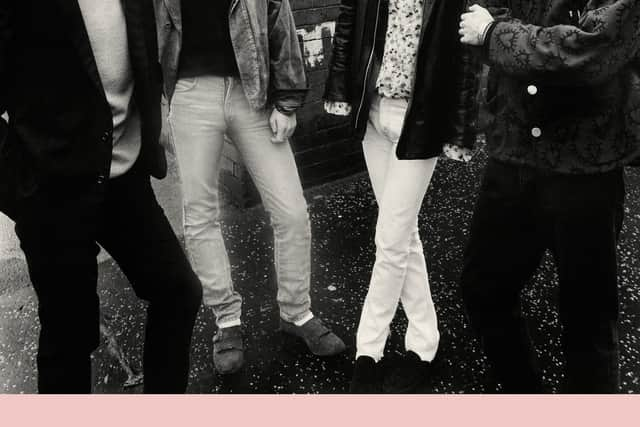
Joyce was baffled that much of the humour in Morrissey’s song lyrics was overlooked by the Press and the general public at the time. “People said, ‘Oh The Smiths, the’re really miserable and boring’. The miserable tag comes from Heaven Knows I’m Miserable Now but what Morrissey’s singing about there is what everybody goes through – you’re young kid, you want to go out and get a job and earn some money and be a grown-up and then you do and it’s, like, I’m pretty miserable working, I don’t want to do this, so it was tongue-in-cheek, it was meant to be a joke.
“The people who said we were miserable and boring had never been to a Smiths gig, that’s not in the top 100 adjectives that I’d use, it was absolutely bedlam, it was incredible. The atmosphere, the communication between the band and the audience was second to none, and I’ve been to a lot of gigs. Obviously I’m going to be biased, but really I’d never seen anything like that before or since.”
The four members of the band all grew up in working-class Irish families in Manchester. Joyce says in the book that it’s a city that he loved and hated, and it seems a sentiment that was shared with Morrissey, Johnny Marr and Andy Rourke. “Obviously I can’t speak for them, but we moved to London and back to Manchester then back to London again, so there was that umming and ahhing going on geographically, but I think it’s because was a dark, dangerous place,” he says. “I loved it because it was my home but there were a lot of no-go areas, a lot of clubs that you couldn’t go in because you’d get attacked because of the way you dressed. That was quite prevalent there.
“I speak about when we played in Cannock, which is only 30 minutes drive from Manchester, and people there were (saying) ‘what the hell is this?’ It happened with Johnny Rotten, he was chased and slashed. If people see something that they don’t recognise, some people get really aggressive.
“That kind of tribalism was rampant – I think you could say the same of Leeds, Liverpool or Birmingham in the ’70s and ’80s. Two hundred yards up the road, I had the Thelwall mob, 200 yards the other way was the Netherton mob, you just didn’t go in those places. So you could understand why the violence in football was prevalent, if someone coming from another city that was it, it was going to kick off. Manchester was a dark and danerous place – I loved it and hated it because of that.
“There was no cross-pollination between style of music, either. We were the weirdos and went to our clubs and the straights went to their clubs, and I liked it. A lot of those lads would go out and get p***ed and have a fight, we just didn’t do that. We got drunk and had a great time and listened to music rather than going out and fighting.”
Although the band never discussed their backgrounds, there was an intrinsic understanding between them, Joyce says. “We were not replicas but there was a similar vein running through, whether it was from religion or strong Irish beliefs, there was that element there, so when I met the lads for the first time I kind of had a pretty good idea. One was from Stretford, one was from Wythenshawe and the other was from Sale, so I had a pretty good idea of where they were.
“I knew lads in Longsight, I had mates in Burnage, which of course the Gallaghers are from, I knew what they’re like. I knew what Fallowfield lads were like. They had all got their own thing going on, but there is (a common thread). For people coming over from ireland, the first port of call was Liverpool and then 30 miles (away) is Manchester. They were not going to go looking in Norfolk for work. My dad came over during the war because there was a massive shortage of manpower (in England). So I felt that (The Smiths) had an affinity with each other even before we’d opened our mouths.”
Joyce was 14 when punk rock arrived in Manchester, and seeing local heroes Buzzcocks inspired him to persuade his mother to buy his first drum kit. “I had never fallen in love at all, and that was the first time that something hit me right in the gut and I absolutely fell in love with what I was hearing,” he says. “It was like a calling, I’d never seen anything so wonderful in all my life.
“I thought that punk was all about fighting and agression and spitting and f*** the system and I’m looking at these guys and all I can hear is the greatest music I’ve ever heard played with a smile on their faces like it’s the most wonderful experience they’re ever having. Of course, that was reciprocated by the crowd… It was one of the most incredible things I’ve ever seen and I just thought, oh my God, I’ve got to do what he’s doing. There was a guy at the back, John Maher, and he had a red Premier kit with cymbals, it looked balletic and he looked like the coolest guy I’d ever seen and I wanted to do that.”
Another early influence was Dave Barbarossa of Adam and the Ants. His playing, Jotce says, was “phenomenal”, adding: “The structures of the songs were different pre-Marco Pirroni. Dirk Wears White Sox was their first album after that it fell off a little bit for me. Because of the style of the songs that they were playing, Dave Barbarossa was coming up with some ingenious drum beats that weren’t your bog standard that I would probably have come up with. I was fascinated by what he was doing. He went on to do the Burundi style of drumming with Bow Wow Wow, but I’d never heard anybody play drums like that.”
The unusual subject matter of the Ants’ material was also intriguing. “It was very theatrical and I’ve always liked that in a band, something that’s different rather than just oh, that’s a nice tune. And I think that was probably the appeal of Morrissey...his stagecraft was incredible to see. I had the best seat in the house and I’m watching all these people looking up at him with jaws dropped, gobsmacked by what he’s doing.
“Unfortunately I only saw the back of his head but I have seen some gigs that were filmed and I can see why people were mesmerised by him because he was so interesting and so different and unusual as a performer.”
Joyce was 19 years old when he auditioned for The Smiths, having been played a demo tape by his friend Pete Hope, who told him that Johnny Marr was looking for a drummer. By that point, the drummer had already been a member of two punk groups, the Hoax and Victim. He says there were a few factors that persuaded him to take the job.
One was Johnny’s guitar playing,” he says. “Apart from looking like the coolest guy I’d ever seen, he was certainly the best guitarist I’d heard in my life. The singer was so out-there and so unusual and the recorded stuff that I’d heard sounded incredible. I took a punt on it because the band that I was playing on at the time, Victim, sounded great and they were good mates of mine...but I just thought, there’s something about this, I can’t let this go.
“It was one of those revolving door moments and I thought I’m going to have to do this because I think they’re really, really good. It might have just fallen by the wayside and nothing might have come of it and I’d have thought oh well, I’ve given it my best shot, but that wasn’t the case and I was right.”
The Smiths would go on to become one of the most successful British guitar bands of the 1980s, with 14 top 40 singles, their album Meat Is Murder reaching number one and The Queen Is Dead going double platinum. Joyce is honest in the book about the disagreements over the division of royalties that would eventually be resolved in court – with the drummer winning a £1m settlement.
Talking to The Yorkshire Post today, he recognises that their lack of a manager “didn’t help” matters. “The Smiths were unmanageable,” he concedes.
“I worked with another artist that will remain nameless and he was saying that it was driving him mad because he was having to do everything and he said, ‘I’m not here to organise this and that and the other, I’m here to write songs’. So he did get a manager in and he was complaining that he wasn’t doing it right. But it’s got to be one or the other – you either get somebody in to do it or you do it yourself and that’s it. I think with The Smiths that was the case. I think Johnny and Morrissey had such strong, definite ideas of what they wanted to do and how they wanted to do it, they didn’t trust it in anybody else’s hands. Well, certain aspects of that they weren’t business-minded.
“I remember Scott Piering, who used to work at Rough Trade, said the same thing, he said it was just chaos because there wasn’t a central point of business where you could say ‘speak to them, they would sort this out’. That didn’t happen with The Smiths, it was just a lot of craziness going on all the time. We were very young, all of us. I joke in the book about Johnny and Andy being 18 and I was 19 and Morrissey was 23, he was the old man. Obviously it’s different when you’re 62 to somebody being 66, but 18 to a 23-year-old is worlds apart. So it was very difficult for everybody and it got to the point where we had to sort out our legal disagreements through the courts.”
Joyce also muses on celebrity in his book, suggesting that he thinks Morrissey was “born to be famous”. He himself was a lot less comfortable with public recognition. “I think there’s a reason why I’m at the back and he’s at the front,” he says. “I speak in the book about seeing Johnny at the Tariff Street sessions (in Manchester), he just looked like a pop star because he wanted to be a pop star, nothing was going to stop him...and I think the same with Morrissey. I think Morrissey wanted to be a literary great – I didn’t know this at the time but I (later) heard that he’d written scripts for Coronation Street – and of course, he achieved it.
“But with Morrissey and Johnny, some people are just born to be; I certainly wasn’t, I wanted to play the drums in a band but that kind of fame and stardom didn’t really come into it with me to the level that it did with those guys. Maybe I’m wrong there in saying that, they wanted to be successful in what they were doing, which is slightly different to wanting fame and success, one follows the other like in a domino effect. But for me, it was just the idea of being in a band with other guys.”
From the book, it seems that the shock of Marr declaring that he was leaving the band in 1987 still resonates – particularly coming months after they had finished recording Strangeways, Here We Come, which Joyce describes as his most enjoyable experience in the studio. “It’s Johnny’s favourite album and it’s Morrissey’s favourite album, it was Andy favourite album and it’s my favourite album,” he says. “I hear people talking about that album, saying you can hear the cracks appearing. It’s bulls***. I was there and we all absolutely loved the sessions.
“Obviously, Johnny had thought about other things and when we met up in London and he said he wanted to leave the band, it was a massive broadside. we were blindsided, nobody had thought about it. I think if there had been a bust-up in the studio or somebody had said something out of line prior to that then I could’ve understood that, but it was a massive shock to us all. The first thing I said was let’s just have a year out, I know Johnny was really p***ed off that I’d said that, but I suppose I’d liken it to if your partner said ‘I want us to split up’, wouldn’t you say, let’s have a bit of counselling or something, maybe we can pull it together. But he was adamant, and fair enough, he wanted to get out and play with other people.”
In the epilogue to The Drums, Joyce talks about going to meet the bass guitarist Andy Rourke in New York, shortly before his death in 2023 from pancreatic cancer. Last year, Joyce helped organise crowdfunding for a mural in Manchester in his friend’s memory. The drummer says he’s glad that today Rourke is revered for his musical contribution to the band. “I told him that when he was around. Sometimes when you say to your girlfriend or you auntie or your mum or your uncle or your mates, you’re great you are, it’s lovely to hear that, but his whole raison d’etre was to be a great bass player and he succeeded on the international stage.
“If I go down on the way home tonight, I’m not a***ed, I’ve had the best life anybody could wish for. I wanted to be in a cool band and I did, I wanted to meet a gorgeous girl and marry her and have gorgeous kids, every box has been ticked.
“But it’s very difficult talking to somebody that’s going to die, it’s like the elephant in the room, you don’t want to talk too much about the future, you don’t want to talk too much about the past because you don’t wan’t to be too maudlin. It was very difficult (talking to Andy) like it is in anybody’s situation, it wasn’t unique to me, but I felt he really needed to know from me. It does happen a lot, all the superlatives come out when somebody’s not there any more and that’s just human nature. I suppose you’re a bit more blase when it’s there and when it’s taken away from you, you miss it.
“But he was brilliant. The great thing about Andy was that his bass playing was about a tenth of the man, he was such an incredible guy and such a wonderful person and great to be with, funny and kind and sweet and honest, and just a perfect mate. On top of that he was a f***ing red hot bass player. You couldn’t ask for a better mate.”
The Drums by Mike Joyce is out now, Putman Publishing, £25. Mike Joyce will be in conversation at Social, Hull on January 16. https://socialhumberstreet.co.uk/whats-on/mike-joyce-my-life-in-the-smiths/