
Nine Below Zero: 'If you’re a songwriter, the blues is a great apprenticeship'
In 1976 a young Dennis Greaves was so impressed watching Britain’s foremost exponents of rhythm and blues, Dr Feelgood, performing on BBC2 programme The Old Grey Whistle Test that the next day he went to school and formed a band.
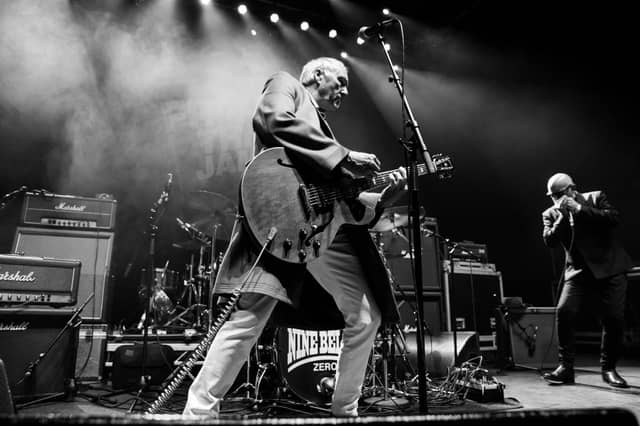


Fifty years later, he’s sharing a stage with the band that now bears their name. This Saturday Greaves’ band Nine Below Zero will co-headline with the modern-day incarnation of Dr Feelgood at the Old Woollen in Leeds.
“They connected with me – the way they dressed, their attitude and obviously the music they played,” the now 67-year-old singer and guitarist recalls of seeing the late Lee Brilleaux and Wilko Johnson on TV. “Punk was big at the time, and for me they were something I could really relate to.”
Brilleaux and Johnson might have passed away in the intervening years but that relatability has “continued right up to today” with the band who include Kevin Morris, Phil H Mitchell and Gordon Russell who all played with Brilleaux in the ’80s. “We have a lot of respect for each other,” says Greaves. “We’re probably the only two bands left doing our genre of music, and it’s really good playing with them and I think the fans like it as well. You’ve got two and a half hours of maximum R’n’B, it’s a really good night, you see the punters really getting into it.”
Johnson’s unique guitar-playing style, in particular, left a lasting impression on Greaves. “Seeing that on The Old Grey Whistle Test as an 18-year-old kid I thought, that’s for me. It was just terrific. Even Paul Weller talks about trying to play like Wilko and look like Dr Feelgood. I think the working-class attitude and appearance, aligned with the music, it combined together.”
Nine Below Zero are currently promoting a new album, Blues Power Vol 1, which gathers together their bluesier material from the past 20 years. “During Covid I found lots of recordings in my loft – one on Beta tape, one on half-inch tape, one on two-inch reel-to-reel 24-track, some on ProTools, some on Logic, so I had six or seven forms of music. I digitalised it and like The Beatles did with AI with the Shea Stadium (recordings), where they were able to separate the drums and the guitars and the vocals, I used technology.
“Some of those tracks have never been heard and I was really not happy with some of the mixes and some of the performances, so I was able to go in and, as Chris Rea coined it beautifully, (shine) new light through old windows. With the help of Wayne Procter mixing it, producing it, we were able to get a package out there that really jumps out at you, especially on vinyl.”
A half century on from Nine Below Zero’s formation in south London, Greaves believes it’s “really important” for the band to keep on moving. “We produce one or two new projects a year to keep everything fresh,” he says. “The fanbase are fantastic, they buy into it.
“With the Blues Power, I’ve made it more guitar-orientated. Normally we heavily rely on Mark Feltham and we have done since the day we started, we’re very much a champion for the harmonica, but on this album, Mark’s got a track called The Toddle on there, it’s like Little Walter, which is amazing, Mark’s one of the few people in this country who could take that on, but the rest is guitar-orientated. I do a duo with Glenn Tilbrook from Squeeze and I’ve got some really interesting guitar work on there, which I’m very proud of.”
Greaves feels it shows how “adaptable” the band is. “We’re just going out on tour to promote (the 45th anniversary of) Don’t Point Your Finger and I was just going back to a track to You Can’t Please All The People, it’s like Pink Floyd and I’m thinking, wow,” he says.
“The wonderful thing about Nine Below Zero is we started out very much (in the vein of) a Chicago blues band, we loved Muddy Waters and BB King, then we got to write songs, so like the Stones and Black Sabbath, who were a blues band, like Jethro Tull, like John Mayall’s Blues Breakers, all of those early influences from then, then you start to develop and when you start to write songs your own personality comes out.
“The one thing I like about Nine Below Zero – and Blues Power proves that, as did another album we did, 13 Shades of Blue, where we went Cajun, white soul blues, Chicago blues and country blues, that big facet of blues music – we’ve always been diverse. When we write our own songs, there’s always blues and soul underpinning it. But I wrote a song called I Wanna Be a Wannabe where I was looking at social media at young people who have zero talent but were able to promote themselves through image – through rhythm and blues I was able to write a song with a current social message.
“We’ve always been diverse. If you listen right from our first album Live At The Marquee through to Avalanche, you’ll see a growth, a maturity and songwriting prowess.
“We’ve never just stayed still and accepted a narrowness of we can only play three chords. The Stones are a great example, and look at Fleetwood Mac, who started out as a blues band, even The Moody Blues. If you’re a guitarist and songwriter, the blues is a great apprenticeship to serve.”
Nine Below Zero play at the Old Woollen, Farsley, Leeds on Saturday February 7. https://www.ninebelowzero.com/