
Radical new opera explores AI and Yorkshire's revolutionary past
AI is one of the single most pressing and controversial issues of our time. Depending on your perspective, it is either a valuable tool that will help and support humanity or an existential threat that could lead to its downfall. The reality probably lies somewhere in between, but whatever your view it can’t be ignored.
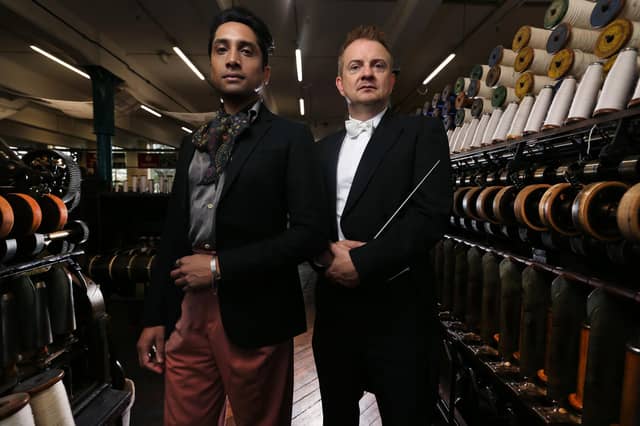


Now, a radical new opera aims to address it by drawing on lessons from Yorkshire’s revolutionary past. Acclaimed composer Ben Crick’s latest work The Last Machine Breaker, An Opera On Luddites, AI and Revolution, a Bradford Opera Festival commission, has been inspired by true stories from the Industrial Revolution and draws parallels between the 19th century Luddite movement, textile workers who were concerned about the impact of automated machinery on their livelihoods, and the contemporary technological landscape.
“I think now is a good time to re-evaluate the Luddites,” says Crick. “They weren’t against progress and technology, just the way in which it was being implemented. They are known for machine-breaking, but they didn’t start with violence – they initially petitioned Parliament – that was the last resort.” For Crick this is a passion project, his most personal yet, that has been several years in the making. “The reason I make art is to tell the story of the North of England and a couple of hundred years ago great swathes of people in industry were being replaced by technology; I was born in Huddersfield and grew up hearing these stories. We can see the same potentially happening with AI now – the circumstances are different but the question is the same; what are you going to do with a labour force that has been replaced by new technology. I believe this is what art should do, pose those questions. We can confront those issues through art and highlight the personal, individual stories.”
The opera tells two stories set in different time periods. In one, set in the near-future of 2030, tech entrepreneur Eva creates a humanoid AI robot called Adam who is capable of thought and emotion, in the other narrative strand, taking place in 1813, we meet Luddite leader George Mellow as he awaits his execution by hanging. The score is composed by Crick, with libretto by Kamal Kaan and directed by Alex Chisholm. “AI is incredibly clever and can do things for a fraction of the price but the question is whether it has benefits for everyone or just makes the owners rich,” says Crick. “Back in 1812, the mill owners became very wealthy but ultimately it caused discontentment in society.”
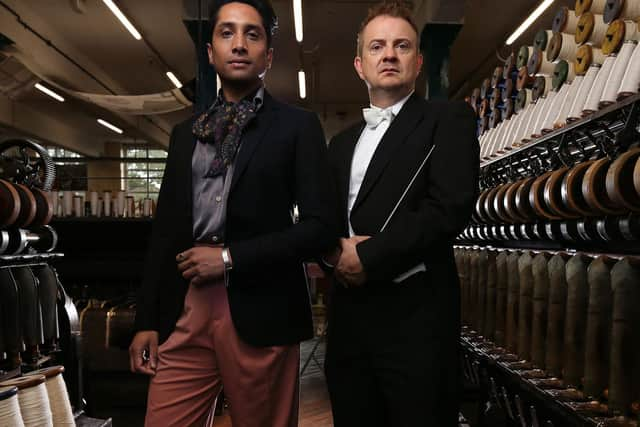
Crick and Chisholm have collaborated before – in 2107 they worked together to bring the opera Ice Cream: The Opera by Ian McMillan and Russell Sarre to Bradford. Out of the success of that – over 600 people watched and listened in one day – emerged the idea to establish a homegrown opera festival featuring classic operas remade for Bradford and new work by Bradford artists. “This opera is about the Luddites and about now – who gets to benefit from technology and who gets to pay,” says Chisholm. “Ben and Kamal’s piece tells an important Northern story – pushing forward what opera can do, and who gets to experience it.”
Crick is a passionate advocate for classical music and a firm believer that it is for everyone. Founder of the Skipton Camerata, he also rebooted in 2022 the Yorkshire Symphony Orchestra, much loved by the likes of Alan Bennett and David Hockney in its heyday, which had disbanded in the 1950s. “I always argue that classical music is an accessible art form,” he says. “The music I have composed for this opera is very melodic. I have been inspired by British pastoral composers like Benjamin Britten and Ralph Vaughn Williams and also a couple of folk songs from the Luddite era.”
Crick believes that opera, which is a uniquely powerful storytelling artform with great emotional depth, should be topical and relevant and provide plenty of food for thought alongside entertainment. “What I hope people will think about is that the situation we are in now is not something new – similar challenges have been faced in the past and the same question is being posed,” he says. “What can we learn from history and how might we do things differently this time?”
The Last Machine Breaker: An Opera on Luddites, AI and Revolution is at Mind the Gap, Bradford, November 10 & 11; Skipton Town Hall, November 12; Slung Low Leeds, November 15; Marsden Mechanics, November 16. On November 11, the creative team are hosting a mini-symposium ‘Art, Access & AI’ for artists, technologists and researchers to explore the question of AI impact on the arts bradfordoperafestival.com