
Robin Guthrie on revisiting Cocteau Twins' collaboration with Harold Budd
Cocteau Twins’ collaboration with the American ambient composer Harold Budd was something of a fleeting moment in both their catalogues. Nonetheless, looking back almost four decades on, Robin Guthrie says he still has “strong recollections” of them working together.
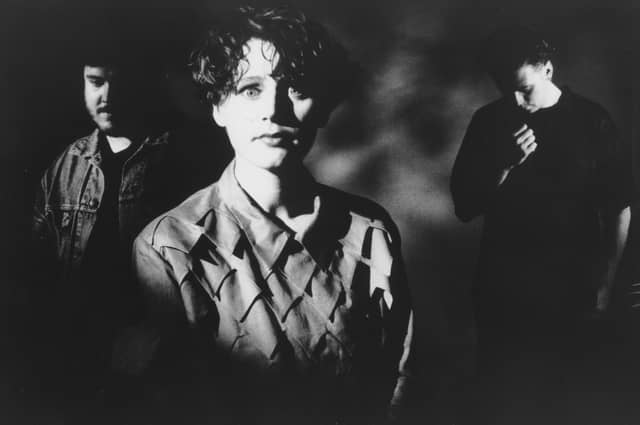


Talking to The Yorkshire Post via video from his home in northern France on the eve of the reissue of their album The Moon and The Melodies, the band’s guitarist and producer seems to feel mixed emotions about the record itself.
“My deep regret is that it’s like a demo,” he says. “(Today) when you work on a computer you build up ideas, but this was just like thrown together, and for that reason that’s one of the charms of it. Some of it was off the cuff and some of it was not off the cuff at all.”
The pairing of the group, renowned for ethereal albums such as Head Over Heels and Treasure, and Budd, a Californian pianist who had been making ambient music since the 1970s, had been mooted for a television project that never came to fruition. But on Budd’s arrival in London, they struck up a friendship that would continue until the composer’s death in 2020 aged 84.
“I’d never played with Harold before; I knew him from the pub just chit-chatting and seeing if we were on the same page,” Guthrie says. He recalls that the first song they worked on was Sea Swallow Me, for which Guthrie had been programming a click track on a drum machine. “Harold just started to play that melody which is the intro of the song and I went, OK. All that difficult stuff with black notes from jazz, that all happened much later, but for that moment it (fit).”
Released by 4AD in November 1986, The Moon and The Melodies reached number one in the UK indie charts but it was “something of an anomaly at the time”, with individual credits to all of its contributors – Budd, Guthrie, Simon Raymonde and Elizabeth Fraser. “It had its own life and it got a bit of attention, but it was never really attached to Cocteau Twins as we would continue and carry on,” Guthrie says.
It wasn’t until he came across the mastertapes years later that he thought it ripe for reconsideration. Still, it was not without problems – both technically and on an emotional level. “I didn’t know if the tapes were in a band condition or it was a really shabby recording – I have to hold my hand up for that (as the album’s producer) – but I know that the equipment that we had back then was very rudimentary, one step above a cassette, really. So I didn’t have too many hopes for it coming out sounding pristine, (but) it sounds as good as it’s going to, I think. I don’t think it’s lost any of its charm, but it is very basic.
“Going back and remastering Cocteaus’ things it’s a labour of love of start with but it can really throw me into a spin for a couple of months because I have to go back and look at this whole thing, both just technically, that’s the easy bit, but emotionally. It’s intense because you’re not just listening to the record once when you’re remastering it, you’re literally playing it for days on end and living it again.”
Despite Guthrie’s misgivings that the album “sounds like a home recording”, he believes all four of them “excel to a certain degree on it”, and that more importantly for him, it was “the start of a great journey with Harold” that in later years would yield several more Guthrie/Budd albums such as After The Night Falls, Before The Day Breaks and Another Flower. They also worked together on the soundtrack to Gregg Araki’s film Mysterious Skin.
The bulk of The Moon and The Melodies was not pre-prepared, but Guthrie disagrees with his former bandmate Raymonde’s assertion that the album came together with “no effort at all”. “I just think, well, maybe it wasn’t for you, but I was doing this,” Guthrie says. “You can’t make music like that without some effort and some vision of where you want it to go. The sounds, the programming and the technical stuff, just that itself is serious and focused. It wasn’t a jam session per se, but it wasn’t pieces that had been worked on outside…
“But at that time, the idea of making stuff up in the studio was second nature, that’s the way that I worked and it had been since Head Over Heels. That was made up in the studio right from nothing and that was a confidence trick because we told Ivo (Watts-Russell, boss of 4AD) that we had a bunch of new songs and we were just going to record them. We had that super focused, super narrow, egotistical confidence that you can only have when you’re that age and you don’t know anything about life...We were not thinking for a minute that we would fail with that.”
The guitarist suggests that all of the music he made with Budd “could be written on a tissue – it would be little squiggles”, adding that the composer, who had studied music at university and taught at California Institute for the Arts before becoming part of a London-based community of avant garde musicians such as Gavin Bryars and Brian Eno, was “completely accomplished at writing music, he’d write scores in his head with just a pencil and a piece of paper, and he’d worked with electronics and tape recorders and pedals but at shows he wouldn’t rehearse, it was ‘let’s do this, it’ll be fine’. I was (thinking) it might be fine but I was terrified. But it was a great experience to put myself into areas that I didn’t know that I could do.”
Half of the eight tracks on the album feature Fraser’s vocals while the rest are instrumental. Guthrie says that was due to time constraints. “Liz probably would have sung on some more if we had time or we’d thought about it,” he says. “The ones that she sings are the ones that are sort of Cocteau-sy guitar/drum machine, that sort of vibe. She didn’t sing on the floaty ones because she probably wasn’t there.
“Harold wasn’t on one of the tracks because it wasn’t long enough to be an album so we recorded another song and put it on at the end. He said, ‘I don’t remember doing that one, Robin’ and I had to tell him he didn’t...But not thinking things through and it not being an effort are two different things. We didn’t necessarily plan it to be an album when we started but I guess we got on a roll.
“Thankfully at that point in our so-called career or whatever it was, there were quite a lot of supportive people around us from labels and journalists who would write about what was going on and were interested and could add a little bit of oomph to the whole thing. That would give you confidence in it, so that probably helped, otherwise it might not have come out if people weren’t so enthusiastic.”
Richey Thomas from fellow 4AD band Dif Juz brought “soprano saxophone that was tagged along at the end when we were looking for something to fill up some space”, Guthrie says. “Richey was with us socially, we worked with Dif Juz with being big fans of Dif Juz, so we just asked. Again, it was right time right place. Sonically it was something that I could put through loads of effects, it was more raw material.”
Budd’s piano parts were treated in a similar way, as part of a sonic sculpture. “Just having that amount of piano – I’d used piano in Cocteau Twins before but my clumsy one-finger one this hand backing thing, so to have something like that featured was really exciting. I could make it into that sonic space that I was making, just mix that around a little. It was kind of like that round hole and square peg thing when I make music.”
He recalls that another interviewer recently made a distinction between vocal songs and instrumental music. “In my head it was somewhere between the two, apart from quite a few of the songs later on which became quite literal,” Guthrie says. “There was that (sense of) I am mixing instrumental music here, I’m treating the sounds in the way that they are, they are the raw materials to make a new sound out of, so the voice was very much like that as well, not always.”
It wasn’t until he formed Violet Indiana with the singer Siobhan de Maré that the pair sat down with a guitar and wrote songs together. “I’d never done that before, It was so difficult,” Guthrie laughs. “That took me out of my comfort zone. The way I made music wasn’t like writing songs, it wasn’t like we had the tune and the lyric before it was recorded.”
Guthrie feels that he and Budd worked so well together because they “both had distinctive areas that we worked in and we were able to merge them together, so it was neither completely me or completely him”.
“I used to encourage Harold to play piano because he would play synths quite a lot...With the piano it was about touch, not just about the sound. It was something that worked really well but mostly we got on well as people and we didn’t talk shop, we talked about the other beautiful things in life but we didn’t really have music fandom in common. I don’t think I ever told him about anything I liked and I don’t think he ever told me about anything he liked. We talked about Chet Baker a lot because he had lots of anecdotes about be-bop concerts.
“I would consider that most of my inspiration doesn’t come from music, it doesn’t come from going to watch bands or listening to other people’s music, it comes from what I read, what I’m exposed to through travelling, my life. So he was a kindred spirit, really, because I don’t think Harold was necessarily taking any other artists and thinking ‘I can do better than that’. He was just into this own thing, doing whatever he was doing, and sometimes we would sail alongside each other.”
Last month Guthrie unveiled a new instrumental EP of his own. As he did during the Covid pandemic – when he released three EPs plus an album – he intends it to be part of a larger project. This EP was inspired by a trip to Beirut. “It’s just one of those things that sticks to you when you’re in a palce with so much history,” he says.
A second EP will hopefully follow in September. “Conceptually speaking, the next one takes off where this one leaves,” he explains. “What took us into this one were little voyages and it being pretty downtempo then it lifts up at the end. The next one is going to start where this one ends. I was kind of inspired by vinyl records with side A and side B, so you had four pieces of mysic that intrinsically worked well together with a start and a finish, but the finish has to be such that you want to turn it over to play the other side.
“These thoughts keep going around because in this world where people make playlists on Spotify, I still want to make the record in the same way. I’m showing signs of wanting to control the way people listen to my work, which is just going a bit too far, but it is meant to be in this particular order in the same way the Cocteau Twins were as well.”
At 62, it sounds unlikely that Guthrie will be touring any time soon, however. “I’ve found the delights of travelling the world but not having to play shows. I can go to lots of nice places and actually see them. I’ve been going back to quite a few places that I toured but never (previously) got the opportunity to look around.
“I actually don’t want to (tour) because I’m not naturally a performer. I never was. performing live is only for certain kind of people. Myself and Elizabeth in the Cocteau Twins – Elizabeth much more so than me but still in the same area – we were absolutely petrified of the stage and very paranoid that everybody was looking at you as well.
“With Harold I did a whole lot of stuff that was more improvisational and that was really challenging for me but it was nice to spend time with him and to do stuff and go to lots of places. I did a thing a few years ago where it was a trio, that was relaly good but it took so much work, so much rehearsal to get that right. There was absolutely no room for some of the howling mistakes that I’ve made when I’ve played from time to time. That was such precision and that was really exhausting as well. We didn't really get chance to take that to a bigger stage; we toured around America and Japan and we’d have done more.
“There’s a wave of Cocteau Twins interest just now, where people are calling up saying ‘hey, do you want to come and play some shows?’ and I’m going, nah, you’re 10 years too late, ask me years ago and maybe, but I’m getting used to not having to spoil my day at 6pm to go and do a soundcheck, not hurting my knees by having to lug my pedals around. It’s a more dignified sort of behaviour for the older gentleman.”
The remastered version of The Moon and the Melodies is out on 4AD Records on Friday August 23. Atlas is available from Robin Guthrie’s Bandcamp page: https://robinguthrie.bandcamp.com/