
Robyn Hitchcock: 'Various people threatened to write my biography over the years but it’s too unwieldy'
Robyn Hitchcock might have had a storied career in music over the past 45 years, as leader of bands such as the Soft Boys, the Egyptians and Venus 3, not to mention more than a dozen solo albums. But his new memoir focuses on just a single year during his adolescence.
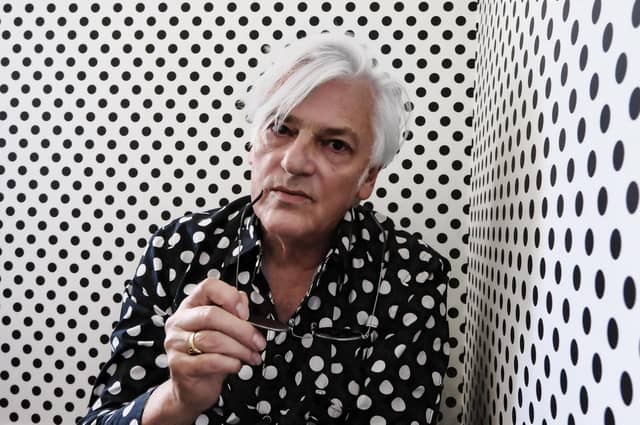


Talking to The Yorkshire Post via video from his home in Nashville, Tennessee, where he’d been resident since 2015, the now 71-year-old singer-songwriter explains there were “multiple reasons” for honing in on 1967 – one being that his wife Emma Swift, a fellow musician, told him to “just focus on one period”.
“Various people had threatened to write my biography over the years but it’s just too unwieldy, it’s too long,” he says. “What it really goes back to is 1967, and its forerunner 1966, which are the two years that music erupted but it’s also when I grew a foot… The world was changing as fast as I was and it was a time of momentum, so what I did with the rest of my life was decided by what happened to the 13/14-year-old me. I’m taking direction from my teenage self.”
During 1967, Hitchcock, then at the public school Winchester College, made several key musical discoveries which would shape his later work. “I heard Bob Dylan and Jimi Hendrix and Pink Floyd and I constantly heard The Beatles and that sent me off in the direction I’ve taken,” he says. “Here I am in Nashville with a psychedelic shirt, which is absolutely, totally on-brand.”
The reminiscences in 1967: How I Got There and Why I Never Left were dredged from “vivid” memory rather than diaries. “I have a very good memory for things like that because for one thing when you’re 13/14 your receptors are wide open so your antennae are at their most receptive,” Hitchcock says. “You’re fully stretched, you’re fresh to life, unless something’s gone horribly wrong you’re a new you.
“You’ve had a life as a child and then you have this enormous injection of hormones and suddenly you’re developing a life as an adult, and I happened to be doing at the same time as I was off in this weird hothouse academic boarding school at the same time as all this music was coming out. Everything happened at once, it was a good perfect storm, so it’s quite easy for me to remember it.”
Although initially wary of Winchester College, he found himself embracing some of the public school’s eccentricities. “I absorbed it, it absorbed me, which is its job,” he says. “Its job is to infiltrate you and then in a subtle way remain in your DNA for the rest of your life – hence the old boy network and the public school mafia.
“I can’t say it’s been a big part of my life but I went off into a field where there weren’t many old boys rampant, it wasn’t much use to me in rock music in a way I probably wanted to go somewhere that was nothing to do with my education and the direction it was supposed to give me in life, so I was wary of it, but because it’s so hierarchical once you’re a couple of rungs up from the bottom you start thinking there’s a place for you in it. As you get older you get to realise the geography of the place, the nature of the teachers and you are growing up with the kids in your year, like you would at any school except it’s 24-7, it’s all the time, so you have this weird kind of intimacy.
“I don’t think it’s particularly healthy, but I kind of think I got off lightly by not being sent off to one until I was nearly 13. Most of the other kids had been there since they were seven, whatever that does to you psychologically I don’t know, but the function of public school or boarding school seems to be to cripple people emotionally and then send them out to run the country.”
Hitchcock thinks that almost everything he has done creatively in the past four and a half decades flows from his youthful love of Dylan. He says: “I heard Like a Rolling Stone and that brought me in and then I heard Desolation Row and that hooked me, and I heard Visions of Johanna and I didn’t even consciously think, that was it. I’d had a strong enough dose to make me into that kind of songwriter.
“I didn’t think I want to be a songwriter like Paul McCartney or Ray Davies, I wanted to be a songwriter like Bob Dylan at that age. Over the decades I’ve learned that there are many other great songwriters and that Dylan’s approach is not the only one – in fact just because it works for him, it doesn’t mean it’s going to work for you, and sometimes it doesn’t work for him at all but it doesn’t matter.”
By the end of the book, Hitchcock seems mildly disappointed with Dylan’s more austere approach on his album John Wesley Harding, which came out in January 1968. He sees the ditching of psychedelia by The Beatles, the Rolling Stones and The Doors as the start of a ‘great retreat’. The year 1967 was, he says, “the peak because things were still going forward, the volcano was still erupting or the pendulum was still swinging to left” but as soon as 1968 arrived “within a couple of weeks John Wesley Harding was out in Britain and it was a very sober, beige, deliberately un-psychedelic record – Dylan looked at what everybody was doing and decided to go in completely the opposite direction, if he’d started playing cricket it couldn’t have been much weirder”.
“Suddenly there he was with short hair, short songs, not much imagery, very sparse, no overdubs, no electric guitar. All the exuberance of the previous few records had gone, and some of the meanness too. It was a very enigmatic record and in a way it was very well timed because Dylan’s followers, such as myself, were all expecting Dylan to come out of the 18-month hiatus with the meaning of life, but in his time off, off the motorbike, Bob would have realised the next stage that we should be going to, and he sort of played with that, he did these very cryptic liner notes and there were a lot of bits of ‘well, this is the moral of what I’m saying could be’.
“The message seemed to be: be a nice chap and have a family, so people thought ‘Well, OK, I guess’, but everybody just went backwards. The Beatles and the Stones lost no time in ditching their kaftans and trying to get down to earth in various ways. Not everybody got earnest but it seemed that a lot of people felt that they’d gone as far as they could, and then when The Band came out with Music From Big Pink that autumn and The Byrds did Sweetheart of the Rodeo, that was just a general kind of ‘hey folks, let’s get down-home’.
“Dylan was recording in Nashville, he’d done Blonde on Blonde here, but his second two Nashville albums, the stuff he did from Self Portrait was very regressive, nothing way-out as they would’ve said in those days.”
Hitchcock was given a guitar by his parents in 1967 – and it’s something he sees as a seismic moment. “They probably thought, ‘what would he like?’ They could see that I was getting obsessed with music and they bought a cheap guitar with red nylon strings, it didn’t even have a case. I’m not sure that I even learned to tune it by the end of the year but I was definitely taking it with me and playing along. My musicality was so undeveloped that I don’t think I even realised I was out of tune, I just sat there and I’d pluck along to my Dylan records or Donovan.”
In a couple of wryly amusing passages in the book, Hitchcock describes how Brian Eno, then studying at Winchester School of Art, staged a couple of local ‘happenings’ which he attended with his schoolmates. Hitchcock says he was “magnetised” by the then 19-year-old Eno. “The hip kids at school, the groovers, the scholars, they were maybe 16/17, I was 14, so I looked up to them and they looked up to Eno, and Eno contributed these enigmatic pieces to the school magazine.
“I think what was interesting about him was I couldn’t quite figure out what he was for, what he did. He’s basically a catalyst – in fact, Eno’s a kind of app. Whether it was the scholars at school or whether it was Roxy Music or David Bowie or Talking Heads or U2, Eno’s clientele got more and more upmarket as it went on, but whoever it was basically they were just putting themselves through Eno. He’s a sensualist, I think, he just makes things a bit more beautiful. Whether he played parlour games with David Bowie or I know he’d do these mental exercises to get you to approach things from a new angle.
“He’s not technically a musician, he’s not technically an artist, I don’t think he draws or paints, and he’s not technically a poet, but he’s an Eno. I kind of feel much the same about him now as I did then. He’s just this enigmatic catalyst for things.”
In the memoir, Hitchcock also talks about his parents – his mother Joyce was independently well-off while his father Raymond, who was badly wounded in the knee in the Second World War, concentrated on art and later novel-writing. Today, he says he thinks he got “further away” from his mother and “began to get closer” to his father while he was at boarding school. “Certainly up until puberty, up until 13, I felt much closer to my mum and I was rather uncomfortable with my dad, then I think once I became fully adolescent maybe he identified with me more and felt less threatened by me,” he says. “I began to see him more as an elder brother than as a father, which I think he was better at.
“So again, ’67 was a seismic shift, that’s when I began to drift away from my mum and drift towards my dad. Now I feel very much like my father’s son and not very much like my mother’s. I’m an artist, which is what he was, but music is my primary gig; I suppose his was probably writing but he painted and I paint, he drew and I drew, he wrote and now I’m writing, so there’s a lot of overlap with Raymond for me, and probably my attitude as well. My mother was a great believer in the family, she sort of bought the myth of the happy family and wanted to perpetuate it. My father was much more cynical about all that – I think part of that was just sour grapes because he didn’t have a family and my mother had a huge one, so he probably enjoyed rubbishing her tribe, but I don’t feel like I was ever really a family man. I’m just me whoever I happen to be with.”
In the book’s closing chapter, Hitchcock suggests that while 1967 might have finished “it never ended”. He sees it as the foundation on which he built his later career with the Soft Boys, the Egyptians and on to his solo work. “It’s not like everything I do is psychedelic or reeks of that era but it all grows out of that – the sort of compost of psychedelia, if you like,” he tells The Yorkshire Post. “Then every so often I throw in some of the old totems – backwards guitar, sitar, high harmonies, reverb, phasing.”
There is, he says, “a little bit of all of that” on the record he’s made to accompany the book, 1967: Vacations In The Past, featuring some of his favourite tunes from the era including A Whiter Shade Of Pale, Itchycoo Park, A Day in The Life and See Emily Play. “That 1967 record is what I term campfire psychedelia, it’s me and another person, two blokes with guitars strumming these old hits as if we were at a party. And then we’ve overdubbed a few little bits, almost like party hats – here’s a bit of Kelly Stolz on sitar, here’s Davey Lane playing a bit of Mellotron, here’s some high harmonies, here’s a bit of backwards guitar, just really for comfort.
“I work in that tradition and it’s not simply the trimmings, it was the way that lyrics were free-range in those days, you’d get something like Van Dyke Parks writing Surf’s Up or Bob Dylan doing Visions of Johanna or doing The Basement Tapes and you’d get Lennon doing I Am the Walrus. You’d get more down to earth stuff like She’s Leaving Home or Waterloo Sunset or you’d get stuff like A Whiter Shade of Pale which may be absolute pretentious bull****, who knows, once you get into that sphere you leave yourself open to that sort of criticism. Even back then, there were times when I thought oh God, this is all rubbish, but there were other times I was captivated by it and I say in the book it’s given me a job for life.”
Robyn Hitchcock’s book 1967: How I Got There and Why I Never Left is out now on Constable, priced £22 and his album 1967: Vacations In The Past is out on Tiny Ghost on September 13. He plays at Hebden Bridge Trades Club on August 30 and The Crescent, York on September 1.