
Rosie Doonan: 'This album Quiet Fear is about life'

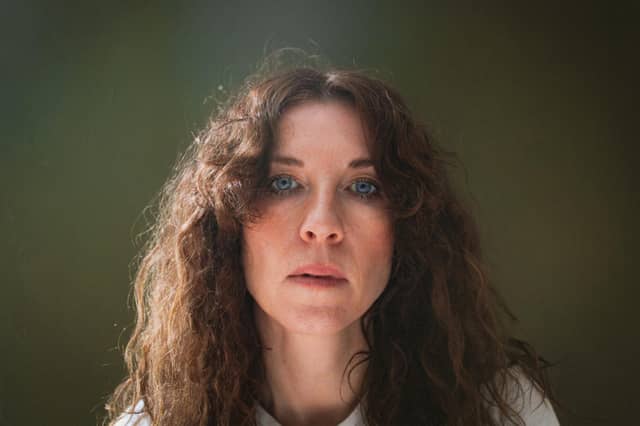

Nine years on from her last album, Wakefield-born, Saltaire-based singer-songwriter Rosie Doonan, above, is back with a new collection of songs.
Quiet Fear was written over an eight-year period while raising her young family. “I had kids, so that put touring out of the picture for a while, but then I started writing for TV,” she tells The Yorkshire Post. “I had various projects going on but mostly that’s what I was doing. I was writing (for myself) while I was doing that stuff so this album is seven or eight years in the making from pen to paper to the finished article.”
Although no stranger to a recording studio during that eight-year period, she found making this record different to her previous albums. “Before this, and before I had kids and I was younger, the albums were mostly about heartbreak and the classic kind of stuff. This one is about life and what happens when you get to my age. Illnesses, addiction – not me personally, but people around me – and just the kind of stuff that happens when you get a little bit older, I guess.”
Given the intimate air of many of Quiet Fear’s songs, she says she “felt quite exposed” when she released them on streaming platforms. “I’m not of the generation that share everything on social media, so I really struggled with putting that out. I still do, to be honest. I’ve kind of got one foot in the past and one foot in the present and it’s hard to put stuff out when it’s that close to home. But I’m a songwriter, that’s what we do.”
Doonan, who has worked with Peter Gabriel, Birdy and John Metcalfe, the composer, producer and arranger who was a member of The Durutti Column, says Quiet Fear’s wide-ranging lyrical and musical concerns reflect her own interests.
“I get bored easily, and I think when I was recording it with Jamie (Lockhart) because it was an intimate record, before I’d have had got loads of other musicians in, but I just found from experience that I was too influenced by other people’s opinions, so I wanted to keep the people that were involved in it to a minimum.
“John Metcalfe did the strings because I knew I wouldn’t be able to arrange orchestral strings, for example, so I got him to do four tracks, but for the bulk of it it was just me and Jamie, which is how I wanted it, and I think that’s probably influenced the sound to a certain degree. I went in saying to him I want to go back to folk, I want it to be stripped back and it started like that but then turned into something different because obviously over eight years, it quite a long time. So I think it’s reflective of just time and boredom and moving through different stuff.”
Coming Home and Therapy were written after conversations with friends about their experiences of the Covid-19 lockdowns, but Brother addresses her own sibling’s issues with addiction. She says putting that track out in public was “difficult”.
“I spoke to my parents about it at length because I wanted my family to be OK with it,” she says. “My main concern was that they were going to feel exposed and it was going to be too uncomfortable for them because they definitely do come a generation where things like that aren’t necessarily talked about. When the video came out I had mixed feelings about it. I was happy that it was out because I thought the guys who created the video had done such a beautiful job, and my artist’s brain was thinking how lovely the video was, and I think the song had touched quite a lot of people that had heard it already at gigs, it encouraged conversations around addiction and other people’s experiences with it, so when the video came out I got a lot of love, which was great, but I was worried that people were going to think I was doing it for the wrong reasons.
“I was worried about extended family that I didn’t have chance to talk to before it was released, but I spoke to my parents after the video had come out...and my mum had had a lot of messages from people that she knew that had seen the video that had opened up to her about their relatives and they were saying that it was really nice that it had started conversations around things that hadn’t necessarily been talked about before.”
Price At The Pump, the album’s most political song, sums up the experience that many have felt during the cost of living crisis. ”My family are involved in lots of community projects and are very political, and politics was always something that was discussed when we were kids growing up, so me and my siblings are politically-minded. I think, like a lot of the songs, it was anger, really. I was seeing what was going on around me and I was angry. There’s another song on the album that I released a while ago about the situation in Palestine and that caused quite a stir, but...it was a long time since I’d written and (before) it was heatbreak and love, but things are different now. I’ve got a husband and I think when you’ve got kids you do look at the world they’re going to be growing up in and I’m very aware of making them aware of what other people are going through.”
Rosie Doonan launches her album Quiet Fear at Kirkgate Community Centre, Shipley on Saturday October 24. https://www.instagram.com/rosedoonan/?hl=en