
Sultan Stevenson: I’m really big on writing in such as way where it’s not too prescriptive'
Sultan Stevenson’s forthcoming concert at Leeds Jazz Festival later this month will be something of a first for one of Britain’s most exciting young pianists, composers and band leaders.



“I’ve actually never been to Leeds,” confesses the 24-year-old Londoner. “I’ve been to quite a few places up north...but it’s definitely been on my bucket list to go to Leeds because I know quite a lot of people at the Conservatoire as well.”
It’s now five years since Stevenson’s trio emerged onto the UK jazz scene. As a boy, he had been inspired by his father’s eclectic tastes. “My mum born was born in Dalston, east London, my dad was born in Barbados, as were his parents, but they met over there just before 2000. At the time my dad was running the jazz radio show and he’d play all kinds of things – from the classics, Wayne Shorter, Miles Davis, Horace Silver, Herbie Hancock to really progressive stuff like maybe Jeff Lorber or Chick Corea Elektric Band, a vast spectrum of different things,” he says.
“If someone was coming to do the Barbados Jazz Festival, he’d get in touch with their management and say, ‘Would they spend a couple of hours to come on my radio show?’ Through all of that he accumulated loads of CDs and different bits of memorabilia and when my parents moved to London to have me all of these things remained. So growing up I was constantly surrounded by music playing in the house and in the car. I was really immersed in jazz.”
The piano, however, was not his first choice of instrument. At the age of 10 he’d aspired to play the saxophone – “To me it was cool, it was gold and had loads of buttons and has this real jazz association as well and what stood out for me was nobody really plays it, I wanted to be original and trendy and stand out,” he explains – however his primary school didn’t have any saxophones or a suitable teacher and instead suggested he try the piano.
“I very begrudgingly went to the piano lessons but it was always on the premise that I’m only doing this for a year or so and then I can finally do what I want to do,” he says. “But within seven or eight minutes of the lesson I had no desire to learn the saxophone at all; I was sold on the piano and didn’t look back. I did it in secondary school and then at college and later on, the Guildhall.”
His principal musical hero was McCoy Tyner, who was a member of the John Coltrane Quartet in the 1960s. “I remember watching the John Coltrane band on YouTube – it was John Coltrane, Elvin Jones, Jimmy Garrison and McCoy Tyner and I think they were playing Afro Blue or My Favourite Things but I was really just captivated by McCoy – not really what he was playing as such because I wasn’t really at the stage of development where I could work out technically what he was doing. For me, it was really his attitude and the character, just the vibe that he put across when he was playing. It really inspired me to mimic what I could. As I learned more about music theory and piano technique, I more closely approximated what he was doing.”
A member of Tomorrow’s Warriors, the jazz music education and artist development organisation set up to champion diversity and equality, he says they were “pivotal” in helping him develop his own identity as a musician. “It was just the very original approach that Tomorrow’s Warriors has to jazz education in general,” he says, explaining that after Saturday classes with the likes of Denys Baptiste, Gary Crosby and Steve Williamson they would be encouraged to stay on and use the practice rooms. “We would be in that room making music and jamming and figuring stuff out, listening to songs together until maybe 10pm or 11pm and then go back the next day and do it all over again. That informal and relaxed approach to music definitely inspired a lot of my approaches to playing music with other people. It really helped to nurture a love for jazz, and a healthy curiosity as well.”
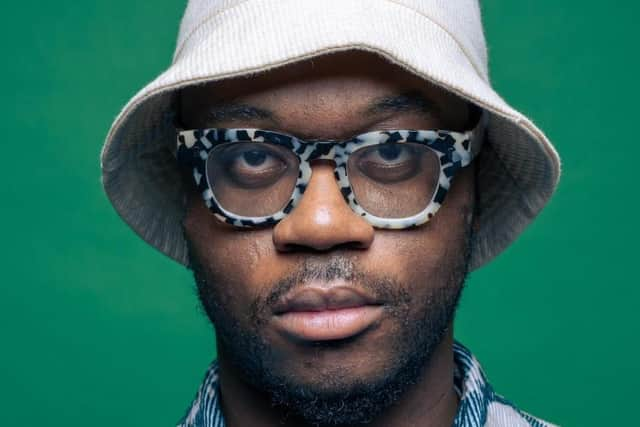
Stevenson has often cited the American pianist Geri Allen as an influence on his style of composition. Today, he says: “What I really love about her is the freedom in the composition. I’m really big on writing in such as way where it’s not too prescriptive, it’s not like a verbatim instruction to the other musicians in the band telling them you have to do this at this particular time… I really try to stay far away from that as I possibly can. What I’ve taken from Geri Allen is to create music where it’s almost half composed, there’s an idea of what you want but it also allows freedom for the other musicians to bring in their two pennies’ worth to enhance what you write. Also, it encourages them to have a bit more liberty when they’re playing.”
He also draws on gospel as an inspiration. “What I’ve taken from gospel music is more so the culture of going to worship. There’s loads of similarities between different experiences that happen in the church to different experiences that happen improvising. For example, people gathering around to pray is so similar to a group of musicians improvising at the same time together. The call and response in jazz is similar to someone giving a sermon and then a crowd reacting on the basis of their emotional reaction to whatever that sermon is about. There’s all these similarities between church experiences and experiences within the band that I’ve tried to approximate in the music.”
Last month saw the release of Stevenson’s second album, El Roi. He feels it develops the themes from his 2023 debut record, Faithful One. “It was actually on purpose,” he says. “I felt as a composer that there were bits and pieces that we could’ve fleshed out a little bit more which prompted me to write another album, which is purposed to be deeper but also more concise about the message that the first album was trying to portray. The second record only comes in at 29 minutes whereas the first one is 52 minutes, and also we have the addition of Soweto Kinch on this record which added a lovely and different dynamic to the way we played and the way we interpreted the compositions as well. It’s most definitely a springboard from the debut.”
Sultan Stevenson Trio play at Seven in Chapel Allerton, Leeds on May 23. Leeds Jazz Festival runs from May 22-27. https://www.leedsjazzfestival.com/