
The Divine Comedy: 'Wonka gives you a lovely safety net but I haven't been out buying Ferraris'
With The Divine Comedy’s 13th album about to be released, Neil Hannon, the band’s sole constant member over the past 35 years, has been doing some number-crunching.
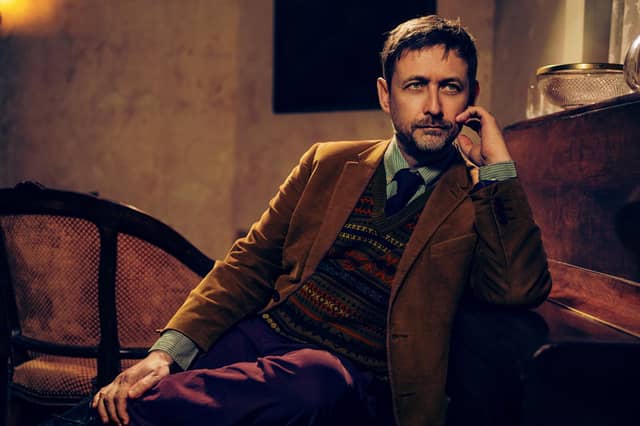


“I think I worked out it was about 2.3 years between albums on average,” the singer-songwriter from Enniskillen, Northern Ireland tells The Yorkshire Post. “But that’s only because there was about one year between albums in the ’90s. Now it’s about five.”
Rainy Sunday Afternoon, as its title suggests, is one of Hannon’s more sober records. Now aged 54, says he finds himself pondering life’s intractable problems – at least for the purposes of songwriting. “I muse seriously on life in the album, that’s for sure. Just outside of the album, nah.
“But yes, I agree, there’s less jokes than usual – and when I say jokes that’s anything from the sly aside to making ridiculous noises on a synthesiser, and everything in between.
“But it’s not on purpose. I suppose I always start with a big pool of half-written things and gradually I whittle them down to the ones I want to put together and then finish them and write some more around a sort of vibe.”
Hannon recently suggested that everyone should make an orchestral album once in a while. Here, he seems to have been aided by the success of the songs he wrote for the Hollywood blockbuster Wonka, which gave him greater latitude than usual.
“It was not necessarily the budget, but I felt more able to take a risk,” he says. “That’s pretty much what something like Wonka does, it gives you a lovely safety net.
“But I haven’t been out buying Ferraris or anything.
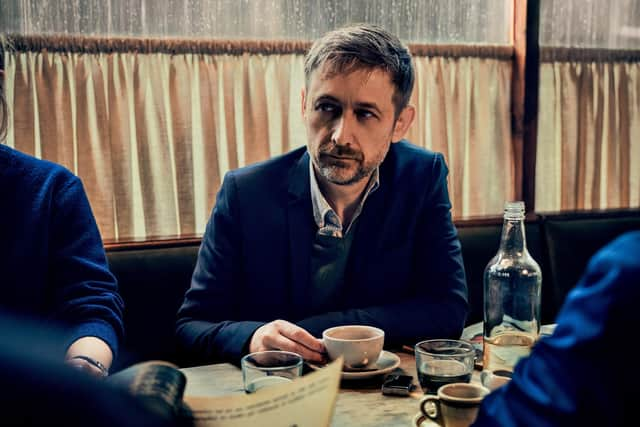
“It’s funny, it just occured to me. I didn’t go, ‘I want to make a record in Abbey Road’, it was more ‘This is the kind of record I want to make, how can I best achieve that?’ – and I thought, ‘Yeah, at Abbey Road’. Then it was just a simple matter of persuading my manager,” he laughs. “She’s just trying to look out for all of us, trying not to let me spend all of the money.”
The album’s opening song, Achilles, was inspired by a First World War poem by Patrick Shaw-Stewart. Hannon explains he wrote it 11 years ago when “there was a lot of stuff in the papers” about the centenary of the start of the war. “There was an article about this poem and it just struck me. I hadn’t heard of him or the poem before then and I read it. I don’t know why it struck me. I suppose at the time I was vaguely moaning about turning 43 and it makes you go, I’m incredibly lucky to live at this time and not be sent to the Front somewhere, or just to not be living in Ukraine, for example. We’re all sort of getting away with it by accident.”
The Last Time I Saw The Old Man is the second time that Hannon has addressed the Alzheimer’s disease that killed his late father, Bishop Brian Hannon. A decade ago, he wrote an oratorio called To Our Fathers in Distress. He says: “You never really do this consciously, it’s just a thing that happens in your mind. This song, I was just walking the dogs, I remember the bit of forestry and I just went (sings) ‘The last time I saw my papa’ and I recorded a voice note and then forgot about it, and then it kind of snowballs when you’re at a piano. I’m sure it’s just my brain wanting to talk about certain things, whether I want to or not.”
In Mar-a-Lago By The Sea, Hannon takes a rare dip into politics – in this case imagining he is in the Florida mansion of US President Donald Trump “entertaining fascist leeches”. He is not a MAGA fan, it turns out. “I think if you could specify the person who would be least like to be a fan of Donald Trump you’d come up with someone like me,” Hannon admits with a smile. “Quite apart from all the horrible right wing-ery, he’s so impolite, he’s so rude, he’s so vulgar and he’s such a philistine. He’s everything I should despise – and I do.”
Down The Rabbit Hole muses on internet conspiracy theories. Hannon says: “I wish the internet had never been invented. I wish we could go back to the ’50s. No, I’m not a fan. You could say there are various reasons for why the world is in its parlous state, maybe the root causes aren’t the internet but I think it’s all been exacerbated by 50 per cent at least by social media and other facets like AI. It’s all just making it 10 times worse, but, you know, what the hell am I going to do about it but write a rather irate song?”
All The Pretty Lights offers a moment of light amid a lot of shade. “It’s about a family trip to London at Christmas time when I was about seven or eight,” Hannon explains. “I’d always wanted to write a song about it but never found the right framing until now. It didn’t set out to be a Christmas song but I guess it is, and I like that, I have no problem with that – please give me a Christmas number one.
“The problem is these days you’re not just contending with the other people who’ve released Christmas songs, everybody who has ever released a Christmas song is also in the running (thanks to streaming). It’s very annoying.
“But the song itself is not complicated. It’s also an exercise in the act of remembering and testing myself into how much I actually do remember and if it’s actually true. In the second verse it says, ‘Did it snow?/I don’t know/I might be mixing it up with Peter Pan’. In my mind, it snowed but anyway we’ll never know.”
Elsewhere, The Man Who Turned Into a Chair channels the romantic sweep of Gallic pop stars such as Sacha Distel. “I’m a massive fan of French pop and all sorts of stuff,” Hannon says. “But I guess this album musically is heavily influenced by those sort of late ’60s/early ’70s orchestral records. Some might be classified as easy listening or just Francophone, but then there’s a lot of those American records as well – Neil Diamond, Glen Campbell, I guess late Simon and Garfunkel to a degree. I love all of these things. Basically if was made between 1955 and 1975 I’m there on this record.
“But then if it’s made between ’78 and ’83 for a different type of record that’s my period also – just not the one that I was thinking about this time.”
To coincide with the album’s release Hannon is embarking on a record store tour later this week. The singer is unconcerned if it’s a rainy Saturday afternoon when he plays acoustically at the Brudenell Social Club in Leeds for Crash Records. “I think it would be nice,” he says. “It’s a very autumnal-sounding record. There was a possibility of releasing it in the summer but I went no, it’s just not going to work, a non-summer record. I don’t mind if it rains, but I’m sorry about the people who are queuing outside.”
Full band shows will follow in October, including Sheffield and York. Hannon confides: “There’s an ulterior motive in there as well. When you’re on a tour bus nobody can get you there, so you can leave the world of promo and rehearsals and having to sign 1,000 records behind, and you can also actually leave real life behind – you don’t have to think about electricity bills or taking bins out because you’re on a tour bus. It’s a wonderful thing!”
Rainy Sunday Afternoon is out on Friday September 19. The Divine Comedy play an acoustic set at Brudenell Social Club, Leeds on Saturday September 20. The full band plays at Sheffield City Hall on October 16 and York Barbican on October 21. https://thedivinecomedy.com/