
Unbelievable Truth: 'The music picked up right where it left off'

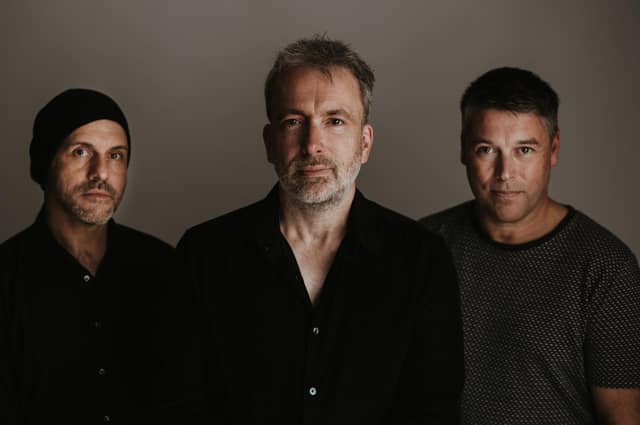

Unbelievable Truth, the Oxford indie trio remembered for their late 90s top 40 hits Higher Than Reason and Solved, are back with new music after a 25-year break.
Ahead of some UK dates to promote their EP Citizen’s Band, The Yorkshire Post spoke to singer and guitarist Andy Yorke and drummer Nigel Powell.
It’s 25 years since Unbelievable Truth split up after the release of your second album, Sorrythankyou. In between the three of you have had separate forays into music. What brought the three of you back together again as a band?
Andy: We played some shows in 2023 for the 25th anniversary of our first album, Almost Here. This involved a lot of nostalgia and rediscovering the old material, not just for the audience but for us in the band as we got ready for the shows. I was listening back to it with more objective ears after all that time had elapsed, almost like listening to someone else’s music for the first time, and it made me realise how special it is. Nigel and Jase (Moulster) have both been active musically throughout the period when the band split, but apart from my Simple album in 2008 I had not really done anything. I was coming to realise I really missed it and was really ready to get back into writing and playing shows again.
You played a couple of reunion shows in Oxford in 2023. What was it like sharing a stage after such a long gap? Did you find the chemistry was exactly the same as before or have your relationships evolved now you're all in your fifties?
Andy: It felt and feels very natural playing together again, despite the long gap. Very much the same chemistry, but at least as I remember the 90s, the experience of being onstage was often tainted by the pressure I felt I was under, in that situation of being signed to a major label, with a lot of money being spent on us. I was far too worried about what other people thought about us, and kind of ambivalent about whether I really wanted to “make it” in the music industry. I felt like a fish out of water. This time around none of that is important. Sure it would be nice to reach a large audience, but the main thing is to enjoy the experience and focus on the aspects of being in a band that make us happy.
When did the discussion start about making new music together, and how soon did that translate into the four songs that feature on the new EP, Citizens Band?
Nigel: There was no discussion, in an Unbelievable Truth kind of way. As soon as we got together to rehearse for the shows in 2023 we started writing without even trying. The chemistry between the three of us has always been organic and telepathic, and it picked up right where it left off. Before long we had more than enough material for an album, so we recorded it all and spent some time designing an album running order. The EP tracks weren’t weaker, or b-sides, they just didn’t naturally fall into the album in the way the others did.
Has your songwriting process changed from the 1990s? And do you feel the subject matter of your songs is different now?
Andy: There’s a couple of things. Firstly, we were sharing a house when we wrote most of Almost Here. And most of those songs came out of us sitting in the living room in the evenings after coming home from work, with our guitars, and coming up with stuff quite organically. Now we live hours apart from each other, so most of the writing necessarily happens remotely with the help of things like WhatsApp and GarageBand. But still, when we do actually get together to rehearse or whatever, all 3 of us being in a room at the same time can move things along much more quickly and produce results we’d never have got to over the internet.
Secondly, the way I write lyrics has changed a lot since the 1990s. Back then I loved the way Michael Stipe’s lyrics were impenetrable, especially on REM’s early albums. Even if you could make out the words they didn’t make a lot of sense. It’s a tempting approach, when you don’t feel you know what you’re doing, to just extemporise some stream-of-consciousness words and then try to knock them into some shape and meaning afterwards. That worked well for me back then, writing lyrics didn’t feel difficult and the result was evocative and suggestive that there was meaning in there somewhere, you just couldn’t quite grasp it.
But already by the time it came to writing the lyrics for sorrythankyou, I was losing the ability to do that because the ‘filter’ in my brain had got louder and was insisting that what I was coming up with was not good enough. So I had to face up to the idea of writing songs with a clearer meaning, that were actually about something because you had that in mind when you started with a blank page – not because, after splurging some words down, you realised afterwards that they made some kind of sense. Staring at the blank page, and feeling you need to make your song About Something, as well as it having to work with the music rhythmically and have some kind of rhyming going on – that’s a lot of pressure. That’s not fun any more.
So I was struggling with that during sorrythankyou, and was still struggling with it at the beginning when writing lyrics for the new stuff. Then I read Jeff Tweedy’s book on songwriting (How To Write One Song), and it really helped. Now I keep a scrapbook of lyrical ideas from books, or from conversations – I try to keep an ear out for phrases that would sound good in a song. If I have a song to write and need somewhere to start, I look through the scrapbook and pick something. It’s so much easier to build a song’s lyrics around a single killer line, than it is to start with just a blank page and an idea of what you want it to be about. So some of the later songs I wrote lyrics for this time around were done like this, and it felt really liberating.
How would you say the sound of the new material sits in comparison to, say, Settle Down or Higher Than Reason?
Andy: A good friend of mine, after hearing the new material, said “you guys sound very much yourselves – this is clearly a UT record – and have at the same time brought new depth to the writing and the arrangements.” That was nice of him, wasn’t it? But I like to think it’s true. There is a definite link back to the material we were making 25 years ago, but the new stuff still sounds like a big step forward, not a conscious one but something that just came naturally from the passage of a ridiculously long period of time.
There are obviously a lot of bands from the 90s back on the road now with a new album, but without mentioning any names, some of the new stuff can sound a bit tired, and feels a bit like an afterthought when really it’s all about selling nostalgia for their heyday. I’m really proud we’ve actually made a new album that deserves to be heard by people who might have completely missed Almost Here or sorrythankyou, or weren’t even born then. Now we just have to reach these people somehow!
How do you look back, from three decades remove, on the band’s early years? Was it a shared love of REM that brought the three of you together in the first place?
Andy: We had some great experiences, like touring with Tori Amos in the US and playing second on the bill to Portishead in front of a huge crowd at Route du Rock festival. But my memories of that time are a little tainted by those feelings I mentioned of being like a fish out of water, experiencing some serious imposter syndrome and feeling the weight of expectations from being signed to a major label. Because of this I hadn’t listened back much to the old material, and when I did I guess it was still with some of that baggage. Now I can hear it with fresher ears, I can’t quite believe how good the first album, Almost Here, sounds and how little it has aged.
At the beginning we did have a shared love of bands like REM, Throwing Muses, Elvis Costello. But I can’t remember which of those were shared interests from the outset, and which were bands that we introduced to each other after we got together. Maybe Nigel can help with that!
Nigel: Andy and I have been friends since I was 13, and he actually introduced me to REM, who became one of my all-time favourite bands. I introduced him to Iron Maiden and INXS, and they didn’t become any of Andy’s favourite bands at all. So between us and Jason, who I met in a band later, we had overlapping tastes but never identical. And whenever we wrote it just happened, so there was no talk of trying to sound like REM, or Elvis Costello. And absolutely no talk of trying to sound like INXS.
Do you have any particular favourite memories from the period where you released your first single on the Oxford label Shifty Disco and then signed to Virgin Records?
Nigel: We postponed signing to Virgin so our first release could be on a local label. Oxford’s music scene has always punched way above its weight, and we loved being part of it, and knew pretty much everybody. Shifty Disco did a singles club where you would subscribe and get a CD single every month for the first year. We were the second release, and I still have all of them – it was an incredible cohort to be part of. And being signed to Virgin was also perfectly nice, until it really wasn’t. But that’s a longer story.
A couple of your singles grazed the top 40 in 1998. Did you feel you were destined for bigger commercial success with the backing of a major label?
Andy: We received a lot of backing from the record company at the time, but it never felt certain by any means that we were destined to be big. Though when we were touring in France, there was a feeling something could really happen there. We had a second tour lined up there, which got pulled because we were offered a support slot with Tori Amos in the US – we did that instead. In retrospect, that was probably the wrong call. But it wasn’t our choice to make.
You start your new tour with an acoustic show in Oxford and then head up to Headrow House in Leeds – are you looking forward to being out on the road again and perhaps revisiting some towns and cities for the first time in many years?
Nigel: It’s an exciting challenge for us to be playing live again. I’ve always been more of a road dog than Andy, but that’s possibly because Unbelievable Truth’s music is quite delicate, and we can’t try and blast through a chatty crowd or difficult environment with noise and power – instead we rely on trying to create some kind of ephemeral ‘magic’ which, if it doesn’t sound too ridiculous, can sometimes feel quite transcendental, for us and (so I’m told) the audience. But what would life be without doing the difficult things? Although it was a quarter decade ago, I have fond memories of playing in Leeds. Duchess Of York was a great early gig for us, and later on playing The Cockpit I remember feeling like we were really reaching people. I’ve been back to Yorkshire many times since with other bands, but taking our music back out to people feels really special to me.
What can you tell us about the new album, which is due to be released in the autumn?
Nigel: If I had had some expensive media training I guess I should probably be saying how awesome, life-changing and epoch defining it is. But honestly, I’m more just quietly confident about it. If our music touched you before, I think it will again. It feels absolutely the equal of any record we’ve made before, still with our identity but also undoubtably a move forwards. Which is slightly scary, because I have no idea how we managed that, which means we can’t just recreate it again. But we’ve already started writing the next album, and already it’s coming as organically and telepathically as ever.
The Citizen’s Band EP is out now. Unbelievable Truth play at Headrow House, Leeds on Tuesday May 6. https://unbelievabletruth.co.uk/