
Vashti Bunyan: 'I’ve had some wonderful times'
Vashti Bunyan looks mildly puzzled at the thought that two decades have elapsed since she was first sat with The Yorkshire Post discussing Lookaftering, the album that heralded her return to music after a 35-year hiatus. But now nearing the age of 80, she’s philosophical about the passage of time.
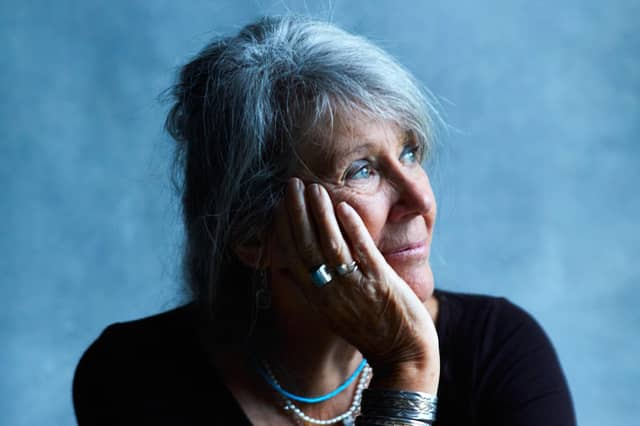


The biggest change that record wrought was being able to perform, she says. “I was able to get on a stage without it completely demolishing me and actually began to really enjoy it,” she says. “I’ve had some wonderful times, we’ve been all over the world. Recently not so much, but certainly in that first 10 years after Lookaftering came out, and then I made Heartleap and that took us round again – it really feels like it’s been a different lifetime to what happened before, with music in it.”
Bunyan’s also profile has risen considerably, thanks to numerous newspaper and magazine articles on her and a 2022 memoir, which charted her flight from the glamorous world of the Swinging London pop scene, where she rubbed shoulders with the likes of the Rolling Stones while she was signed to Andrew Loog Oldham’s record label, to an arduous journey by horse-drawn wagon that she and her partner took up to commune in Skye founded by the singer Donovan.
En route, she encountered the producer Joe Boyd, who persuaded her to make an album with him featuring members of the Incredible String Band and Fairport Convention that flopped when it came out in 1970 but would become the stuff of legend when it was rediscovered in the early 2000s by a new generation of singer-songwriters such as Devendra Banhart and Joanna Newsom.
In the meantime, Bunyan had turned her back on music altogether, focusing instead on raising her three children in Scotland. But the renewed interest in her old records – assisted by the use of the title track of her 1970 album, Just Another Diamond Day, in a TV commercial – encouraged her to start writing songs again and she approached the label Fat Cat with some demos.
Today, Bunyan laughs at the thought that she originally intended to call her comeback record ‘Dead Pets’. “I thought that was really good, as in measuring my life by dead pets because that’s how I looked back on my life – oh yeah, there was Bess, then there was Blue, then there was Molly… – I thought that would be a way of explaining the last 30 years, describing it in the form of all the animals that I had, but of course that didn’t go down well. Certainly in America you don’t want it to be called Dead Pets,” she says. “So I listened, I took advice.”
As she recalls, “most” of the album was written before she ventured into Sound Cafe and CaVa Studios with Max Richter, the classical composer, as producer. “I think I had all of it pretty much, and that’s what I had sent to Fat Cat,” she says. “They’re the ones that I still have and they’re the demos that have turned up on (the 20th anniversary reissue of Lookaftering).”
She remembers Richter being “so encouraging and completely involved” during the making of the record. “He taught me so much because we did a lot of the editing in his own studio in his house, and it was mostly on Logic. He would teach me how it worked, teach me about equalising and taking out the bits that are not needed. I think there were a few things that I disagreed with him about, but now I can see he was completely right. It was such an incredibly glowing time for me because I’d never been able to work with somebody else. I wasn’t very good at having people teach me things. So it was an extraordinary experience and one that I really value.”
The song Wayward touches on the journey she and her then-boyfriend Robert Lewis made to Skye and the domestic life she later chose. “It came in two lots,” she says. “One was remembering the 30 years and the child-rearing and the crazy houses, the domestic life that I chose rather than trying to make a career out of music, yet I always had somewhere in the back of my mind that I would like to still be out on the road. It was a complete fantasy, but in the end it came true. I’ve spent 30 years here in Edinburgh, so I’m not exactly a rover, but that song made me realise that was what I was yearning for all of those years, to get back to moving along and finding what I needed.”
Other songs, such as Here Before and Same But Different, seemed to “erupt” from her subconscious. “A song like Here Before, everybody had gone to bed, I was downstairs putting the lights out and there was my guitar and I picked it up and there was the song and I hadn’t changed a word. The other one was Same But Different, I was in a supermarket looking at rows of beans and it just came into my head and I had to rush home and put it down and again, I hadn’t changed any of it,” she remembers.
“And yet other songs I can spend ages fiddling around with them and trying to make them work. Some of them don’t and I discard them, but I just love that magical feeling of a song erupting like it’s been there all along waiting to come out.”
In the song Turning Backs, Bunyan talks about “indifference being the hardest blow”. She reveals to The Yorkshire Post that was actually a reference to her contemporary Nick Drake, whose albums suffered a similar fate to hers when they were first released in the 1970s.
“I haven’t wanted to use his name too much because we never knew each other and our only link was we were both managed by Joe Boyd, but (Nick’s) story has always, I suppose, resonated with me in that my songs were ignored in their day and he himself was completely ignored, his genius, and it was indifference, shrugging of shoulders, because he wasn’t able to push himself and nobody else was going to do it for him,” she explains. “That’s what that song is about, ‘the plainsong echoing unfound/until the voice have left town’.”
The pair briefly met once. “Joe thought that we could write together,” she recalls with a gentle chuckle. “He was sitting at his piano with his back to me and I was sitting on the sofa with a baby who cried every time I tried to pick up my guitar, so that was never going to happen, and anyway we didn’t know each other at all. I didn’t know his music, he didn’t know mine. I think Joe just thought, ‘Here’s two like-minded souls’. Little did he know that we were not alike at all, only in our shyness and not being able to manage the world very well.”
Bunyan did, however, have a productive working relationship with Robert Kirby. “What he did for Diamond Day I think is so beautiful, and he agreed to play trumpet and French horn on Lookaftering and we met again for that incredible session down in London and he said ‘We’re the survivors’ and I knew exactly what he meant and he didn’t have to say, and it was quite a moment.
“Then when I came to hopefully work with him again on my next songs he died and that was a terrible blow because I knew that we’d be able to make something really lovely, and he liked the new songs. He was a great guy, he was so funny, so irreverent. I just adored him, he was a fabulous man.”
Lookaftering was also a family affair. Bunyan’s son, Leif Lewis, gave her his beloved Martin guitar that she used on the album, while her daughter Whyn Lewis’ painting of a hare adorns its cover. “The guitar he gave me in Los Angeles and I nursed it all the way back on the plane because I was so scared of anything happening to it,” she recalls. “I didn’t have a case for it and they made me put it up in the overhead locker for when we were taking off and landing, I was so scared, but anyway it survived and I did use it for some of the songs on Lookaftering.
“Whyn had already done that painting of the hare and me and everyone at Fat Cat were looking for something to put on the cover, and quite without thinking I was always sending things to them saying look what my wonderful daughter has done now and I sent them this one and they said ‘That’s the one’. So we used that for the cover and I’m so glad we did because it’s become quite iconic to me – and for the new edition were just had the hare and no text at all on the cover, and I think it looks beautiful.”
The album also includes a song dedicated to her late brother, John. She says the idea for it occurred to her when she went down to Sussex to visit an old friend “and I realised I’d been living in Scotland for so long that I’d forgotten what the countryside looked like down there, the little thatched cottages and the brick – because where I live it’s all stone – and it reminded me of a cottage that my parents had sometimes”.
“I have a beautiful photograph of my brother and my mother standing in front of that cottage and liek some of the other songs, it just came to me – ‘The redbrick house and all the trees I climbed then’. Nothing’s changed, except that he’s now there now. It’s quite a simple song, I suppose, there’s not many words in it, but that’s what I liked to do with some of them, to condense and make a few words mean as much as possible.”
Although Bunyan feels her touring days may now be over, she continues to write and doesn’t discount a successor to her 2014 album Heartleap – however she warns it’s unlikely to be soon.
“Writing and editing the book took a lot and then going around book fairs and stuff, it was just great not having to take my guitar with me, not having to be fearful of whether I could sing or not, but as far as writing songs goes, I look at my guitar every so often and I think, help, something must be there somewhere, and maybe it is, maybe it isn’t. What I’d really like to do is do some recording with Gareth Dickson, who has played guitar with me right from 2006. He’s such a beautiful guitarist and his songwriting is lovely. Every time we meet, he says ‘We must do something, send me something’, that might still happen, I really hope it does. There must be something there somewhere.”
As she approaches her 80th birthday in March, Bunyan says she feels “huge gratitude that I’ve been able to do this last bit, the music”.
“I think also I’m quite glad that I didn’t have any success when I was 18, 19, 20,” she adds. “I don’t think I’d have handled it well. But life has dealt me very fairly in that way. I sometimes feel sad that Diamond Day didn’t have its day until so much later, but on the other hand, what it has given me in this part of my life is so valuable and so wonderful. And the fact that my children have survived through all the things that we did when they were little, deary me, with horses and wagons.
“I don’t feel like I’m going to be 80, I think that’s all wrong, that my oldest nephew is going to be 66, that doesn’t feel right either, that my son is 54, my daughter is 52 and that my youngest son, my baby, is 38. That doesn’t work for me at all, but on the other hand, I’m quite proud.”
Lookaftering – expanded edition is out now on Fat Cat.