
Warren Ellis of Dirty Three: 'It’s a very sacred place getting on the stage'
Thirteen years on from his last concerts in England with Dirty Three, Warren Ellis is looking forward to reuniting with bandmates Mick Turner and Jim White for a short tour around the UK.
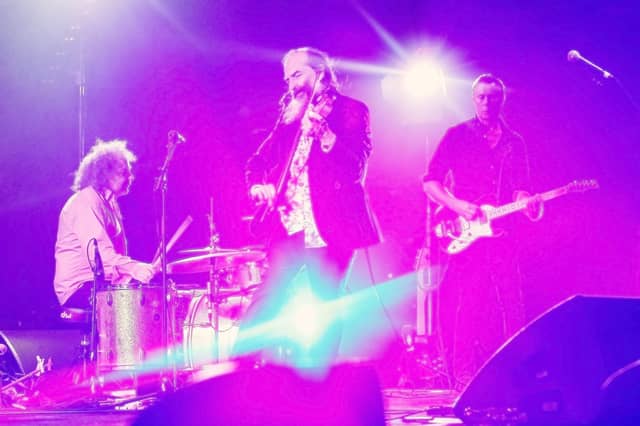


“It feels like it’s always felt,” says the now 60-year-old multi-instrumentalist who for the last 30 years has been better known for his work with Nick Cave and the Bad Seeds. “Dirty Three is where I started, so there’s something incredibly important about that for me. Everything that I became outside of the band, whether that’s with the Bad Seeds and working with Nick and film scores, I directly attribute to finding my feet with Mick and Jim.”
The same “willingness to experiment and take risks and just let each person do whatever they wanted” that was there from the start of the band clearly remains. “That really set me up on the right footing,” Ellis says, “because anybody that was interested in what I or any of us was doing that’s what they were presented with: three people who weren’t concerned about trying to make a certain type of thing or appeal to an audience.
“I don’t mean that in an aggressive kind of way,” he adds. “We were very much doing our own kind of thing, and I do believe that established a kind of work method in me. I do think very much what I’ve become is a result of having met those two guys and the single-mindedness of that outfit.”
Ellis says all he’s ever cared about is “making music that evolves”. Dirty Three was never about trying to write a hit single, he says. “I’ll leave that to the experts, that’s something I don’t know how to do or something that wasn’t of interest to me. I guess our approach was the ’70s electronic jazz period was doing when you’re hammering away and you’re aware of each other and you’re also not but you have to work together to create something because you need a foundation.”
The longer the band has gone on, and the busier its members have become with other projects, it’s become “the type of thing that’s nice to pop into a few cities every once in a while”, Ellis says. “The great thing about Dirty Three is we always encouraged that and we knew that when the time came for us to play, that would be the right time. I don’t know if we would’ve been able to sustain it as long as we have if we were just concentrating on that.”
Still, he finds it “very moving” to be back onstage with his old friends. “These are the guys I started out with, and we stayed true to the band and the concept of that we were doing,” he says. There’s also a mixture of “trepidation, anxiety, excitement”.
“It gets more demanding on me… I’m just getting over a case of the shingles, that shows you the kind of state I get into when I’ve got to do this tour.”
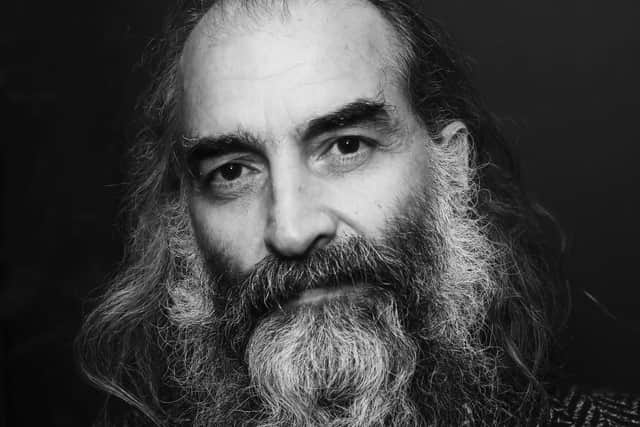
Before Dirty Three, Turner and White had played together in the Melbourne band Venom P. Stinger in the ’80s. Classically-trained violinist Ellis “appeared on the scene in 1991”, meeting Turner in The Blackeyed Susans. “In early ’91 a friend of mine had bought a bar and wanted background music and didn’t want to play CDs, so he asked if I had a bunch of mates I could get together and play at the pub. So we got together that day and made up half a dozen ideas then we had to play for three hours so we made it really long, and he asked us back and we did a residency there. We never rehearsed, we’d just go in there and play.”
He no longer believes, as he once did, that the band came together by accident. “Nothing is by accident. You feel like it’s all rather arbitrary but when you collide with people you’ve made a lot of decision before that to arrive at that collision, so it’s not as simple as that. I used to think that it was accidental but I don’t any more. You’ve made decisions and when you do meet people, a lot of that groundwork has been covered, even if it’s just you really love Suicide or a certain type of music or a certain type of cinema.
“I guess (Dirty Three) was a collision of minds that were in a similar place with Mick, Jim and myself… Like I said before, I do believe that the kind of creative that I’bve become is grounded in what that band allowed me to be, and what we allowed each other to be. So it will always be important for me. I think in many ways it is my musical spiritual home.”
Dirty Three have long been revered for their live shows, but early on, they could be dangerous. “At that period of time, you had to really fight to do it, you had to believe in it,” Ellis says. “Australian audiences for music are really tough, and I do believe that if you can play there you can play anywhere. Australians are a really discerning audience and we were playing pretty marginal – at the time – music and people either liked the spirit of it or they didn’t, so we’d divide people very quickly.
“Now our music seems kind of top ten but at the time it was quite challenging. I guess it was the way we operated, we believed in what we were doing. It helps you attain an identity. There’s something about the collective power of a band that’s phenomenal. It helps if you get along personally but when you get together, it becomes something else.
“It’s the greatest joy of my life to have spent 35 years in some type of band or another because there’s a mentality to it that’s at turns wild, terrifying, abusive, but it’s always about the band. It’s the sum of its parts and it’s such a great experience playing. I found this with the ‘sand trio’, being involved in a community, the power that gives you to know that you’re not on your own. When I left Australia with Mick and Jim, I wasn’t alone in the world trying to establish myself as an electric violin player, I had these two other guys and we would fighht tooth and nail for the band. I think it breeds a kind of dedication.”
Loves Changes Everything, Dirty Three’s 11th studio album, is a six-song suite inspired by John Coltrane’s 1966 album Ascension. “The concept came afterwards – we played for days, but this is often the case,” says Ellis. “You don’t go in there knowing what you’re making. You can have a bunch of ideas but it’s really only towards the end that you have an idea of what it might be...because you don’t know what’s going to work. Film music is like that, when I wrote my book (Nina Simone’s Gum) it was like that, too – I thought I knew what it was going to be at the start but when I finished it, it was about something very different.
“With this one, once we had the material and it was taking shape, it felt more on the vein of what I understand Assension by John Coltrane to be. They kept playing and playing until they worked something out.
“There was something about the way that record was done that was more in line with what we used to do early on: just sit down and play. Later records, we’d come in with the bare bones of ideas or try to force it into some kind of shape. Thirty years later, it was like going in how we used to, but with the experience that we’ve had… We do have a bar that we aspire to, you want it to surpass everything that we’ve ever done. For me, I have to feel that I’ve honestly done the best that I can.”
As well as working on numerous film scores with Nick Cave in the past 20 years, Ellis was recently the subject of a documentary movie himself. Ellis Park is ostensibly based on the animal sanctuary Sumatra that the musician co-founded with the Dutch animal rights activist Femke Den Haas, but director Justin Kurzel also delves deeper into Ellis’ upbringing and his relationship with his elderly parents as well as his musical life. Ellis says he found the experience “very confronting”.
“I’ve been involved in several films, the documentary on Nick, One More Time With Feeling, and then the ones with Andrew (Dominik), but I’ve always just been someone within the story. This was very different,” he reflects. “The film is primarily to shine a light on the work going on (at Ellis Park), that’s why I wanted to do it, but it became apparent that the director, Justin, wanted to dig more into me and give the park some framework to hang the narrative off. That required me stepping up to things a bit more… I felt the responsibility of this.
“Also, when it came to signing off on it, agreeing to the cut and all of that stuff, there was a lot of things going on in my life (including the loss of his father) that made it very difficult for me to make a clear-eyed decision about things. I’m really glad it came out and I’m really happy with the result...I’m really happy with what Justin did, but it required me working through a lot of conflict to let go of it. People know that I make music and if you like it you do and if you don’t, you don’t, and I don’t really care. It felt more like I was the subject of some kind of social piece. No-one had ever been interested in that (before). That was quite confronting for me, I must say, in the aftermath of it.
“I was being quite personal and the camera was rolling at a time in your life when you feel like you’ve got three flat tyres and there’s a fourth on the way. There was all these things going on. It felt like thta last scene of Goodfellas when you’re trying to make the pasta sauce and deliver the cocaine and there’s helicopters flying overhead. It was just one of those times and I had a camera stuck on me, so for better or worse, that tended to amplify things. But I say this seriously, it’s most most important thing that I’ve ever done creatively, that film, and I’ll be eternally grateful to Justin for what time I have left because it did change my life.”
Ellis reveals that he and Den Haas have plans to expand the park, saying being involved with such a project has been “a really great experience for me”.
“I’m really involved in the profile of it. I’m constantly trying to create awareness, and it very much reminds me of when I started out with Dirty Three where we knew if we stayed in Australia, we’d just keep playing to the same 100 people, and eventually that would become 50 and then it would become two and we’d be bored.
“So we eventually went out to America and Europe and kept touring non-stop and figured that playing in front of different people each night was better than playing to the same people. We knew from other bands like The Birthday Party who left Australia and found an audience outside, the chance of survival was more possible than staying working with the same circle. And working with the park is like that.
“When you start a band it just runs on blood and guts. And Femke, who runs the place, is extraordinary, she has so much energy and has committed her life to making good a horrible situation (for animals abused in Indonesia). There’s something I recognise with her – her passion is very similar to what I felt when I started out on my musical journey.”
Also mentioned in the film is Ellis’ memoir, Nina Simone’s Gum, which became highly acclaimed. Taking its starting point with a humble piece of chewing gum rescued by Ellis from a piano that the American jazz singer played at Meltdown Festival in 1999, it came to symbolise much more.
“It’s more a metaphor for the creative process and a metaphor for ideas,” Ellis explains. “Ideas need love and care in order to take flight. I think the banality of the object, what’s beautiful about it is the kind of love that other people showed towards it based around nothing that exists. It’s just a feeeling that they have for Nina Simone, and this idea that it was hers, and the idea that I’d kept it.
“There’s something about this communal kind of imagination that was ignited by it. It’s very much what I see in the studio when I’m working: sometimes you have to believe in the smallest little thing to give it life. Initially I didn’t know the book was about that, when I got to the end I realised it was and other people could see that more than I could. So the book is really a collaboration in talking to people, and people’s feedback and their involvement. I think it’s a book about community and I guess it’s a book of the time. It was written during Covid and I was trying to remember the good stuff because there was so much negative going on, and this little idea just kept going. It’s certainly a metaphor for a bigger idea.”
Next month sees the release of a live album documenting the tour that Nick Cave and the Bad Seeds did following the release of their 2024 album Wild God. At the time the shows were raved about in transcendental terms. Ellis reflects: “I think people raved about (the shows) and rightly so, there definitely was something going on at every concert, both onstage and offstage.
“You want every concert that you do to have some kind of feeling beyond normal life, and you can’t order that, that’s something that either happens or it doesn’t. The Skeleton Tree tour had something phenomenal about those shows, particularly seeing Nick come back in the way he did after the death of his son, and then the tour for Wild God, every night the shows seemed to attain an exceptional level, without fail. There was soemthing about the fate that was handed over to us, every night the shows seemed to get better and better.
“They were amazing shows to play, the sort of shows that make it very hard to step back into a regular life. Being onstage is such a privilege, it really is amazing. I don’t really understand what goes on with it. It’s a very sacred place getting on the stage, to be in front of people. The concert only happens with several elements: the audience, the band and the crew, and then the walls to contain it. It’s this wild moment where you hope for two and a half hours something comes together. It’s weird, I don’t know what it is, whether it’s alchemy or what, I wouldn’t attempt to describe it but if you ask any musician or any performer they’ll say the same, it’s the reason you keep coming back. Like you feel coming back to anything that moves you or you feel transcends normal life, and that sentiment goes for the audience as well as the performer, they’re inter-related, and I love the fact that a concert is the place where you can go along and experience something like that.”
Love Changes Everything is out now. Dirty Three play at Leeds Irish Centre on Wednesday December 3. https://www.facebook.com/dirtythreeband/?locale=en_GB
Live God by Nick Cave and the Bad Seeds is released on December 5.