
Warrington-Runcorn New Town Development Plan: 'It’s not about nostalgia'
Launched by Gordon Chapman-Fox in the dark days of the Covid lockdown, Warrington-Runcorn New Town Development Plan is an electronica project that continues to run and run.
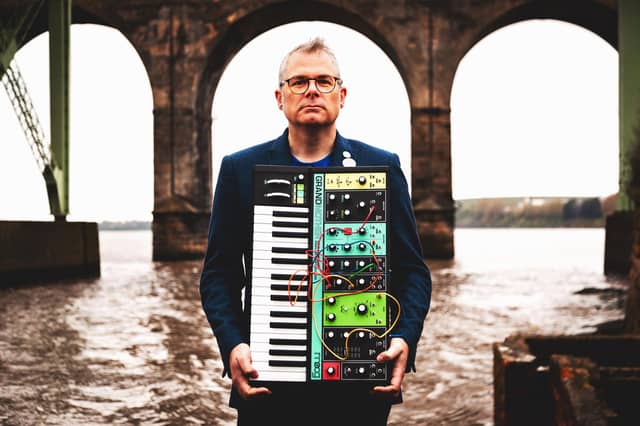


From the start it had a clear aesthetic in its retro-futurist preoccupations with civic planning, yet its creator, who had previously made music in various guises including Dublock and Heskin Radiophonic, never expected it to stretch as far as seven albums.
“I didn’t imagine it would have this longevity or popularity, but the first album definitely it was an aesthetic to tie into,” Chapman-Fox tells The Yorkshire Post. “It was very much a mixture of 1970s Sainsbury’s labels or Penguin paperbacks and things like that, but done even more prosaic than a Sainsbury’s tin of peas.
“It was more about council literature, hopefully something that a council might have put out in 1979 was the gist, and the sound palette goes with the visual identity as well. So I’ve tried to keep the sounds to more or less what you could expect to hear in 1979, but there’s a few cheats, they creep in here and there.”
His concept – based on the utopian dreams of new town planners set to Kraftwerk-like electronica – has provided “a really rich seam of ideas and subjects to mine” in the past six years. “It’s the mixture of the thematic and musical coming together, and the visual as well, I guess. It’s the (project) that feels most resolved in bringing those things together,” he says.
Despite not growing up in either Warrington or Runcorn – “So I do feel a bit of a fraud there” – Chapman-Fox does have childhood memories of the nearby Brutalist bus station in Preston as well as the city’s Guild Hall and market hall. “There was very much the concrete angular Brutalism going on there, but the local library was a beautiful post-war building that was built to be light and open air. The local shopping precinct had the laundrette and two banks you could walk into, the chip shop and the Spa.
“I suppose my earliest memories are coming from about 1980 so most of these buildings were 20 or 30 years old by then, they were all still fairly modern. When you’re a kid you think life’s just going to pan out one way because you don’t have any concept of anything else...and if you see any council documents or architect’s plans for that time they’ve got the illustrations on the front cover of the mother walking to the shops with child in hand, and that memory, that aesthetic is vey much the seam I’m mining.”
Runcorn, he recalls, was idealistically designed with five smaller suburbs that would each have a shopping precinct, pub, school, playschool, laundrette and post office “and you would be able to walk to that within five or 10 minutes of leaving your front door, and from there you could catch a bus to the town centre, which in Runcorn was the shopping city, it was one of Britain’s first indoor shopping centres, but even within that it had an ice rink, a cinema and a pub – the way that it was envisaged was very much like a 15-minute city where you could go out and access everything that you needed on foot or by public transport”.
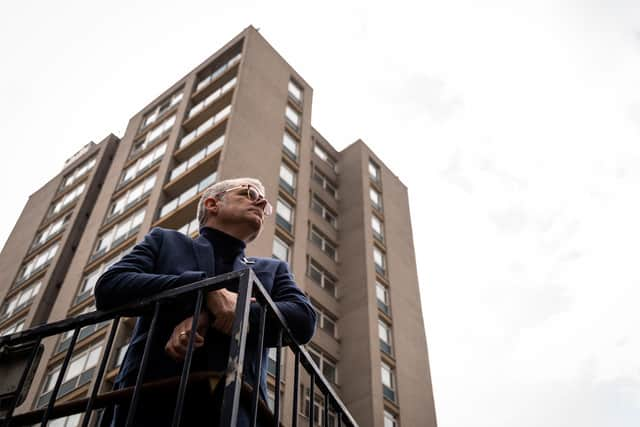
The North West’s economic decline, however, soon undermined the whole concept. That tension between lofty ideals and harsher reality was what interested Chapman-Fox.
“Some of my music is quite optimistic but it often tows a line between being optimistic and quite sentimental in places but you also have to reflect the harsh reality of what these places became. It’s not just Warrington and Runcorn, the new towns across the UK – Washington in the North East or Cumbernauld in Scotland or Basildon down south. All these places were built to improve people’s lives and became fairly grim places to live.
“There is no point in putting on the rose-tinted spectacles and basking in nostalgia because you have to reflect what they’ve become. The way I see the project it’s not about nostalgia, it’s more about looking at today and what we had in the past and how we’ve lost it along the way.”
Industrial Growth, Warrington-Runcorn New Town Development Plan’s seventh chapter, looks at what’s eating away at modern society. “I think where we are with capitalism and the internet, everyone shopping online and destroying our high streets has become such a thing, and it’s removing us from society,” Chapman-Fox says. “You don’t go to the Post Office to post a parcel and talk to the lady behind the counter, you order everything on your phone and go to a machine and print off a label. All of these things are removing us from each other and from ourselves, all of this is putting us all into little cubes away from each other.
“I admit I’m guilty of these things, too, because humans will do what is most convenient to them, but I am wary of it. As time goes on it does feel as though we’re losing the connection with other people. That’s one of the themes I’ve been trying to tug on for a while. The constant demand is for growth, but at what cost to us as people. That’s where the organic, cancerous nature of it seems to appear to me, anyway.”
Industrial Growth is out now. Warrington-Runcorn New Town Development Plan play at Hebden Bridge Trades Club on November 27, Sidney & Matilda, Sheffield on April 17, 2027 and Brudenell Social Club, Leeds on April 18. https://warringtonruncorn.com/