
Fossil hunting in Yorkshire: Best places along the coast where you can find fossils and dinosaur footprints from 200 million years ago

There are plenty of beaches and bays along the Yorkshire coast where you can find fossils with some that date back 200 million years - we have compiled a list below.
The coastline in Yorkshire is populated with many beaches both sandy or rocky and from 2016, four of the beaches have been awarded Blue Flag status; Whitby West Cliff, Scarborough North Bay, Bridlington North Beach and Hornsea.
Fossil hunting is also a popular spring or summer pastime along the coast and is the predecessor of modern paleontology.
Yorkshire’s coastline is home to some of the world’s best Jurassic and Cretaceous geology which has given it the nickname of the ‘Dinosaur Coast’.
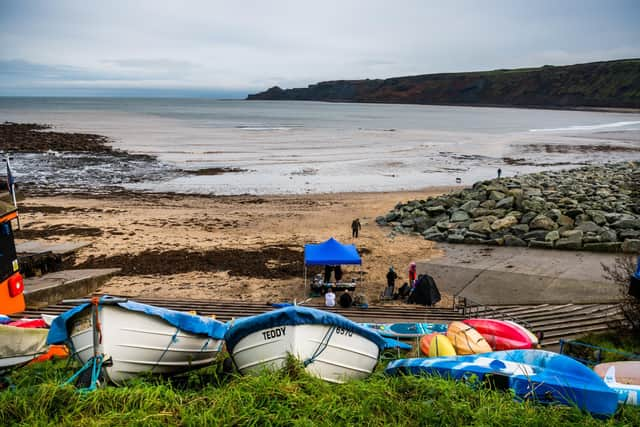

Best places along the Yorkshire coast to go fossil hunting
Staithes
This former fishing village is a key destination for geologists and amateurs researching the Jurassic (Lias), strata in the cliffs surrounding the village.
Port Mulgrave remains to be one of the best places on the northern coast to find fossils of ammonites and many visitors spend hours opening the rocks on the shoreline, hoping to find a perfectly preserved fossil.
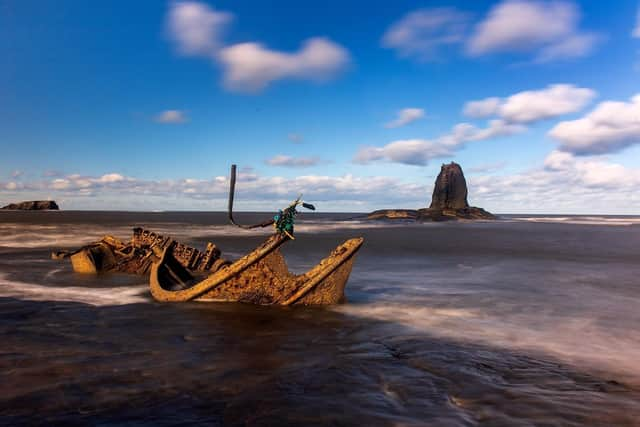
Saltwick Bay
The bay contains the Saltwick Nab alum quarries, listed under the Ancient Monuments and Archaeological Areas Act 1979. The bay is part of the Saltwick Formation and is known for its collections of fossils.
Quarrying resulted in the discovery of fossils and the bay is now known as being a location for fossils from the Lower Jurassic period.
Fossils commonly found at Saltwick Bay include the Dactylioceras and Hildoceras, as well as fossilised plant remains. A horse skeleton was found around 27 metres underground in the alum mines.
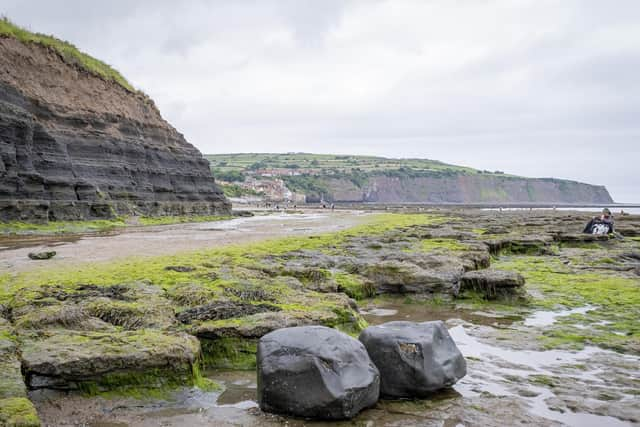
In 1824, a nearly complete skeleton of the extinct teleosaurid Steneosaurus bollensis was found at the bay and is now displayed at Whitby Museum.
Boggle Hole
This location near Robin Hood’s Bay is a more secluded spot to find Jurassic-era fossils, including 200-million-year-old ammonites, Devil’s toenails (gyrphaea) and pyritized shells.
A visitor left a Tripadvisor review that stated they “found several fossils which are about 150 million years old. They are just lying on the sand.”
Saltburn
This seaside town has various rock pools where visitors have found various fossils dating millions of years ago including ammonites.
The development of Saltburn was motivated by the discovery of ironstone in the Cleveland Hills and building of railways to transport the minerals.
Robin Hood’s Bay
Robin Hood’s Bay is known for the large number of fossils which may be found on its beach.
The foreshore rocks on the north side of the bay, especially, are the best location for finding ammonites, particularly after winter storms.
People have found 180-million-year-old Jurassic fossils, particularly ammonites, belemnites, and Devil’s toenails (gryphaea).
Whitby
Dinosaur footprints are visible on the beach in Whitby and fossils found here include an almost complete crocodile and a specimen of plesiosaurus measuring 4.27 metres in length which was discovered in 1841.
Smaller fossils include various species of ammonites or ‘snake stones’ and Whitby Scar nautiloids in the lower beds of the lias strata.