
'I'm one of the last bespoke cricket bat makers - the trade is dying out'
One of Britain's last bespoke cricket bat makers fears the trade could die due to the lack of young people getting involved.
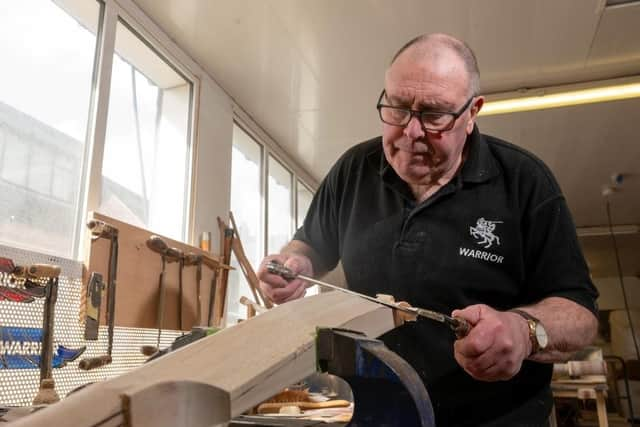
Cricket-mad Ian Sampson, 69, works from his humble 30m x 4m shop in Wakefield, West Yorkshire., handcrafting wooden bats using techniques unchanged for centuries.
The master bat maker has been producing the wooden piece of equipment since he was 15 years old in the 1970s.
These include superstar customers like ex-England Captain Alec Stewart, South African Hall of Famer Jacques Kallis, and Ashes Winner Mark Waugh, when he worked for Slazenger up until 2002.
Now he enjoys carving blades for talented youth players who play for the cricket-obsessed regions' teams.
Though he says he still also often repairs current English test cricket players' blades and handles.
But Ian believes that the specialist trade could cease to exist if more young people don't take up the craft.

Ian said: "I only know a couple of young lads who have taken up the craft. I've never made a great deal of money from it, so maybe that's why it isn't appealing.
"I also think that people think it is an easy craft, when in fact it takes time and patience to hone your skill set. I really think that one day it could die and I hope it doesn't.”
There are only around 20 traditional cricket bat makers left in the UK, according to Heritage Crafts.
Ian says he can make up to three a day using the traditional methods.
But he says it is becoming more popular than ever for companies to buy in premade pieces and put them together rather than making them from scratch.
He said: "Youngsters aren't being taught to process from start to finish anymore. I see now companies buying in blades and handles and just fitting them together which doesn't count.
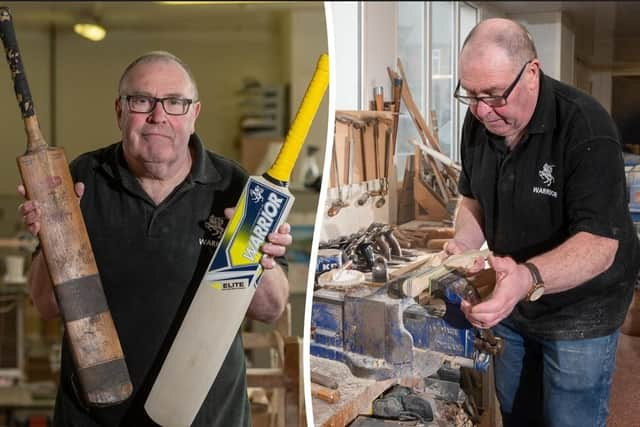
"I mean my apprenticeship at Slazenger was seven years, which is a very long time, and it helped me learn the craft properly. These aren't on offer anymore."
His equipment is lined up chronologically along the back wall of his workshop so he can go from station to station, streamlining the process.
He said: "The first step is using the circular saw to cross-cut each end of the willow, removing the wax which was put there to stop the wood from splitting.
"Then I move onto the plane machine to create rough clefts on the front and back of the bat.
"The bats are then put into the VAT press which compresses the wood so it is nice and hard, so when it is used, it reacts well with the ball when it is struck.
"Then it is over to the handle splicing and blade splicing saws, creating the triangles so they can fit together neatly.
"I then sand and wax the blade, add the twine string to the handle and then the grip. I use the exact same methods and machines I did when making bats for legends."
After being made redundant from Slazenger, Ian started his own cricket bat company called IF Cricket the same year alongside his friend Fred Freshney.
But in 2005, he bought out his old Slazenger boss' company, Richard Wensley Cricket, and turned it into what he now runs, Warrior Cricket.
His bats have been used by legends of the game.
He said: "It gave me a huge satisfaction and pride knowing iconic players used bats that I had helped make.
"But saying that, I get just as much out of seeing a young eight or nine-year-old using one on the field. I still have lots of test players, who I can't name, bringing me their bats and asking me to fix them up for them.
"They mainly need handle repairs as they have come lose, or they need their blades taped up or having glue put back in because they have cracked. I do my best for them, and it is nice to be recognised for my craftsmanship."
Ian's bats are made using the finest willow in England from JS Wright & Sons, according to the bat maker.
Though he claims the new ruling made by the Marylebone Cricket Club (MCC) to the Laws of Cricket allowing laminated bats to be used in open age (adult) cricket, won't have a huge affect his business.
The bats - known as Type D - which can be made from up to three pieces of wood, have been introduced to an attempt to slow the rising costs of bats around the world.
They were previously only allowed in junior cricket.
He said: "People just love a proper willow bat which have been used for centuries.
"I think it is a good thing to develop bats and make the game more inclusive. In my view, the threat isn't there as players will also want a proper willow bat."