
Queen Elizabeth II: The life and legacy of Queen Elizabeth II on what would have been her 100th birthday

Tuesday (Apr 21) marks the 100th anniversary of the birth of the late Queen Elizabeth. Andrew Vine reflects on the life and legacy of Britain’s longest-reigning monarch.
Even now, three-and-a-half years after her long life drew to its peaceful close, her loss is still keenly felt by the nation she served for so long.
Queen Elizabeth was at the heart of British life for so many decades that by the time she died aged 96 on September 8 2022, the vast majority of her subjects could not remember a time without her.
Her 70 years on the throne was the longest reign in history, but her presence stretched back beyond the moment she became sovereign in 1952 – to the darkest days of the Second World War, when the teenaged princess made her first broadcasts to the nation and undertook her initial public engagements.
The air of permanence she carried meant that when the announcement of her death came from Buckingham Palace, millions paused for a moment as they tried to take in the realisation that she was no longer with us, even though her increasing frailty had been apparent for several years.
Only three months before, there had been a last, glorious, glimpse of the Queen, beaming from the balcony of Buckingham Palace accompanied by three generations of her heirs as she waved to the massed cheering crowds on her Platinum Jubilee.
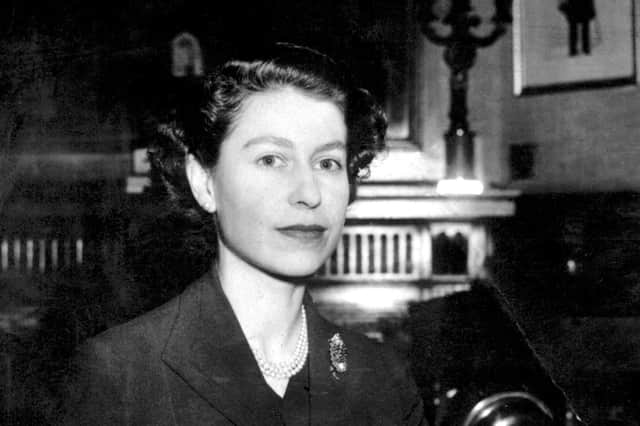

And days before, a photograph at Balmoral had shown her smiling as she prepared to welcome the 15th Prime Minister of her reign, all business as usual, attending to the duties of state as she had for seven decades.
As the centenary of her birth, on April 21 1926, approaches, memories of the Queen feel very vivid.
For countless people who met her during official engagements, or turned out to line the streets to cheer her arrival or hope for a smile and a wave during a walkabout, those memories will be of moments touched by the magical.
For the King and her wider family, there is bound to be sadness that she is no longer with them.
Yet her legacy endures. Her presence still hovers over national life. The service of the King and the rest of the Royal Family continues to follow the pattern she set, adapting to changing times to remain in step with the nation just as she and her late, beloved husband, the Duke of Edinburgh, did so masterfully.
And public fascination with the Queen remains intense. Two new biographies are sailing to the top of bestseller lists and previously-published books sell briskly in new editions.
An exhibition at Buckingham Palace of her clothes across the decades has received rave reviews and is one of the most in-demand tickets in London, likely to be sold out throughout its run until October.
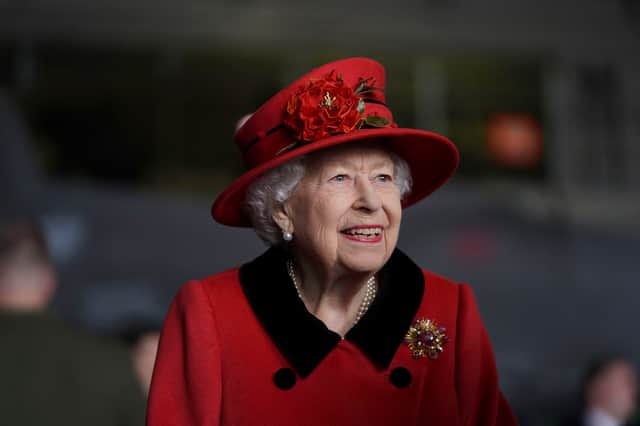
Public affection for her memory is undimmed. It is inconceivable that there could ever be another reign anything like as long as the Queen’s, nor one that could so successfully navigate as much upheaval – for both good and ill - as she witnessed.
The Britain and Commonwealth she reigned over in 1952 were radically different to those she left 70 years later, and for many her presence felt like one of the few constants in changing times.
Benevolent and comforting through national tragedy and turmoil, her presence was a reassuring reminder that stability and good sense would always prevail, because she symbolised her people’s core values of decency, tolerance and fairness.
The Queen’s qualities helped Britain weather serious turbulence – end of Empire, the Suez crisis, the devaluation of sterling, the IRA bombing campaign, the winter of discontent, mass unemployment, the miners’ strike, inner-city riots, the Iraq war, a wave of Islamist and far-right terrorist attacks, the financial crash, Brexit and the Covid pandemic.
The touchstone of her reign was a closer bond of affection between monarch and people than that enjoyed by any other king or queen. She regarded her subjects as extended family, and they in turn regarded the Queen as one of their own.
That is because so much of her life, despite the trappings of royalty, mirrored theirs. Like them, she brought up children who were at times the cause of heartache; like them, she suffered painful bereavements and like them she found joy in becoming a grandmother and great-grandmother.
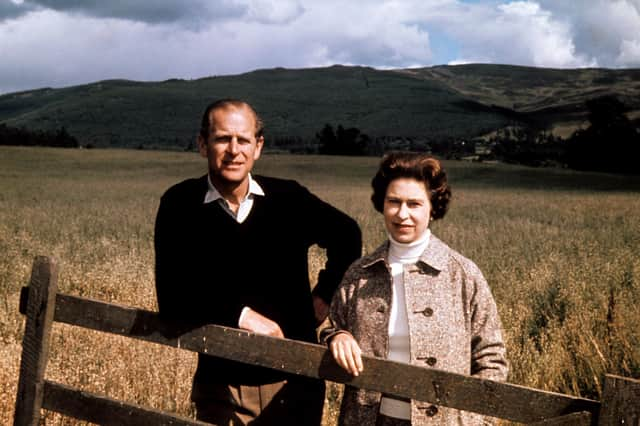
As her people did, she suffered loss with stoicism. Her grief at losing Prince Philip after 73 years of marriage in April 2021 was painfully apparent.
The depth of her loss was obvious at his funeral, when because of Covid restrictions, she sat alone in St George’s Chapel, her face covered by a mask.
All over the country, families bade farewell to their own loved ones in similar heart-rending circumstances, unable to grieve as they would have wished, with mourners excluded from services because limited numbers were permitted to attend.
The nation’s sense of the Queen being one of their own was touchingly demonstrated at her funeral on Monday September 19 2022.
Despite the pomp and ceremony of a state occasion, the 2,000 guests including world leaders inside Westminster Abbey, and the sombre procession of the Queen’s coffin through the centre of London, this was a family funeral for both her loved ones and the country.
Just as the King bowed his head and shed tears for his mother, so did the crowds 50-deep at the barricades lining the processional route and millions more who watched the live broadcast at home.
The heartfelt simplicity of the King’s handwritten card that crowned the wreath of flowers from the gardens of her palaces atop her coffin echoed the sentiments of the subjects who mourned her: “In loving and devoted memory. Charles R.”
Love and devotion characterised the day for her family as much as it did for the hundreds of thousands packed into London and along the route to Windsor, or in the parks and squares of towns and cities where people gathered to watch the state funeral on big screens.
There was an echo of countless thousands of royal visits by the Queen as her coffin passed along the roads, as the crowds threw flowers towards the cortege. In life, the Queen had always reached out toward her people and delighted in receiving the bouquets they presented. In death, they reached out to her again with their flowers.
Those crowds and the vast television audience who watched every moment intensified that sense of saying farewell to someone very dear and very close.

The presence of her great-grandchildren, George, nine, and Charlotte, seven, looking overawed at everything happening around them only added to the feeling that this was a family occasion being played out before the world’s eyes.
The intense sadness touched everybody, even those at the heart of the ceremony. The Dean of Westminster coughed and almost stumbled over his words as he opened the service, and the Archbishop of Canterbury grew suddenly hoarse as he said the prayers of commendation.
At the close of a day when Britain fell silent in memory of its Queen, her coffin slid from view as it descended into the vault of St George’s Chapel and she passed into history. There, away from the gaze of the cameras and in the sight of her family, she was buried alongside her husband.
The country had shared the family’s grief that day, as the Queen had always shared her people’s suffering in the darkest of moments. Her ability to understand and bring comfort by simply being there grew with every passing year.
Her tears at the memorial service at St Paul’s for the victims of the September 11 2001 terrorist attacks were those of her people.
A few days after the atrocity, she sent a message to a service of remembrance for the victims in New York that was broadcast around the world.
Her wise and compassionate words momentarily stilled the hearts of all who heard them: “Grief is the price we pay for love.”
She always found the right words of comfort. As Britain’s people were separated from loved ones during the first Covid lockdown in 2020 she broadcast to the nation, telling all who wondered what the future held: “We will meet again.”
But for all her affinity with the people, the key to the success of the Queen’s reign was her ability to maintain the magical quality of the monarchy. She was the most famous woman in the world, yet one of its most enigmatic.
Her people knew her only up to a point, and the continuing stream of biographies still provide new insights into a person who in her lifetime became universally recognised on every continent.
Those who met her found the exemplar of dignified charm, genuinely interested in their lives, and touched by them turning out to cheer her, rain or shine.
Yet she remained something of a mystery, distant without being aloof. But over time, clues crept out about her personality.
She had a lively sense of humour, was prone to fits of giggles, and could not abide pomposity, which she would mock with a gift for wicked mimicry.
Her humour – and instinctive feel for the mood of the people – was never more spectacularly demonstrated than in the astonishing part she agreed to play in the glorious summer of 2012 when London staged the Olympic Games.
As a worldwide television audience that could not quite believe its eyes watched, she strode down a corridor at Buckingham Palace accompanied by James Bond actor Daniel Craig, boarded a helicopter and then, thanks to flawless special effects, appeared to parachute into the Olympic Stadium, appearing in her seat.
The roar of delight and disbelief that went up was echoed in millions of homes. A nation that adored its Queen fell in love with her all over again.
At 86, she had shown an audacious willingness to move with the times, and captured perfectly the public mood of elation about the Olympics.
And then she did it again at the age of 96 during the Platinum Jubilee in 2022, once again springing the most delightful of surprises by sharing tea with the nation’s most beloved bear, Paddington, and producing one of his favourite marmalade sandwiches from her handbag.
Old age did nothing to dim the impish humour. The tendency to giggle was glimpsed in the official portrait for her 90th birthday, when pictured seated next to a smiling Prince Charles, the Queen was quite plainly trying not to laugh.
Her sense of humour had an appealing touch of the self-deprecating about it. In her Coronation year of 1953, the young Queen jokingly complained to aides: “It’s awful — I’ve got the kind of face that if I’m not smiling I look cross. But I’m not cross. If you try to smile for two hours continuously it gives you a nervous tic. But the moment I stop smiling somebody will say, ‘Doesn’t she look cross’?”
The Queen’s unshakeable faith was key to the strength she displayed over seven decades. Christianity was central to her life, not only in her role as head of the Church of England, but personally.
It was always a theme of her Christmas broadcast, which in 2000 was one of her most personally revealing.
She said: “To many of us, our beliefs are of fundamental importance. For me, the teachings of Christ and my own personal accountability before God provide a framework in which I try to lead my life.
“I, like so many of you, have drawn great comfort in difficult times from Christ’s words and example.”
She used the theme of spirituality to demonstrate how deeply she appreciated the nature of modern multi-cultural Britain, by underlining the importance she attached to the other great faiths.
“Whether we believe in God or not, I think most of us have a sense of the spiritual, that recognition of a deeper meaning and purpose in our lives and I believe that this sense flourishes despite the pressures of our world.
“This spirituality can be seen in the teachings of other great faiths. Of course religion can be divisive, but the Bible, the Koran and the sacred texts of the Jews and Hindus, Buddhists and Sikhs are all sources of divine inspiration and practical guidance passed down through the generations.”
Her acknowledgement of how Britain had changed over the decades since she came to the throne in 1952 was central to her keen political awareness.
Although above party politics, her sharp intelligence made her a formidable head of state. Several hours every day were devoted to reading Government papers, with nothing being skimmed.
Her grasp of how the world worked impressed major players on the international scene, which she straddled with ease. US presidents from Dwight D Eisenhower at the beginning of her reign to Donald J Trump in its final years were dazzled not only by her charm, but by her shrewdness.
Former US Secretary of State Henry Kissinger said of her: “She is a serious woman who is world class in her understanding of foreign affairs, and she is able to make shrewd judgments of people.”
That understanding helped to build the Commonwealth, an organisation that she valued highly. Its steady development encompassed her view of the world in which seemingly disparate cultures can work together.
The Queen once described the transition from Empire to Commonwealth as “a beneficial and civilised metamorphosis”. Her presence was the glue that held it together, and her unaffected warmth towards its members a key reason why the evolution of former colonies into independent states was accomplished largely peacefully.
At the core of her character was an unwavering resolve and sense of duty.
As her Golden Jubilee approached in 2002, there was speculation that at the age of 76 she may stand aside for Charles. It could not have been wider of the mark.
The Abdication crisis of 1936 had left a permanent scar on the House of Windsor. The Queen would not, under any circumstances, risk instability by relinquishing the throne. Besides, as a devout Christian, the vows that she had taken before God at her Coronation were inviolable.
She made her stance plain in a speech to a combined gathering of MPs and peers in Westminster Hall.
“I would like above all to declare my resolve to continue, with the support of my family, to serve the people of this great nation of ours to the best of my ability through the changing times ahead.”
Her pragmatism meant that as she reached the milestone of 90, she scaled back the number of her engagements and ceased to make long-haul overseas tours, partly to ensure that she could carry on for as long as possible and partly to allow her heirs to strengthen their bond with the people by being ever more visible.
To the last, the Queen was true to the pledge she made to her subjects in a broadcast on the day of her Coronation.
“Throughout all my life, and with all my heart, I shall strive to be worthy of your trust.”
She was, and on the centenary of her birth, the nation will reflect with thanks on the most extraordinary reign in British history.