
Sheffield Castle: The hidden Yorkshire castle where Mary Queen of Scots was imprisoned for 14 years
Along the banks of the River Don in Sheffield, archaeologists are excavating the buried ruins of a medieval Yorkshire castle.

Constructed around 1100, Sheffield Castle played a significant role in British history, including the imprisonment of Mary Queen of Scots.
In 1568, Mary fled from Scotland to seek sanctuary in England, but instead was imprisoned by Queen Elizabeth I. From 1570 to 1584, Mary was held prisoner in Sheffield Castle and its estate buildings, including Manor Lodge.
Today, it is thought that the Old Queen’s Head, the oldest pub in Sheffield, is named after Mary: the city’s most famous captive.
From 1642, Sheffield Castle served as a stronghold for both Parliamentary and Royalist forces during the Civil War. But in 1648, the House of Commons voted for its destruction, leaving the castle in ruins.
Since the 1960s, the remains of Sheffield Castle have been covered by urban developments such as Castle Market.
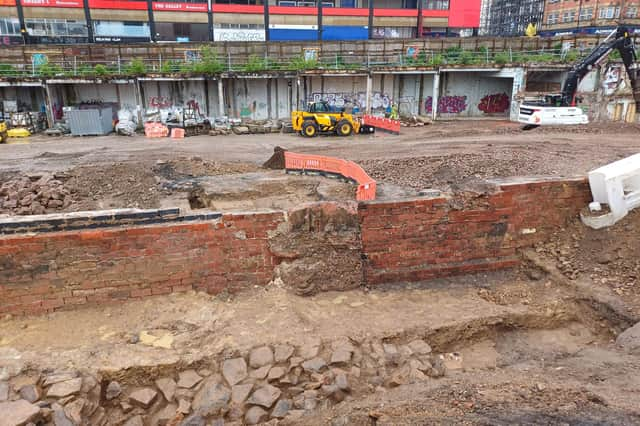

The site was originally located at the confluence of the River Don and the River Sheaf, and the Sheaf has also been buried beneath the city for over 100 years.
Recent excavations have revealed drawbridge supports, a moat, and a 200-year-old slaughterhouse.
“The moat of the castle would have run along Exchange Street and down Waingate,” says John Moreland, Professor of Medieval Archaeology at the University of Sheffield, in a video posted online.

Plans are underway to transform the site into a public park, with the aim of protecting and displaying the remains of Sheffield Castle.
In September 2026, Sheffield Council announced that Castle Hill Park is expected to open in summer 2028.
According to Friends of Sheffield Castle, the remains of the medieval castle are of national significance.
“We are re-writing the little-known story of Sheffield’s medieval history,” Martin Gorman, chair of Friends of Sheffield Castle, told The Yorkshire Post.