
Artist's immersive sculptural installation inspired by her grandfather's legacy
Most of us will have experienced a sense of connection with a certain place, somewhere that evokes fond memories or warm, positive feelings and the latest exhibition at The Art House gallery in Wakefield invites visitors to reflect on that special bond between people, place and nature.
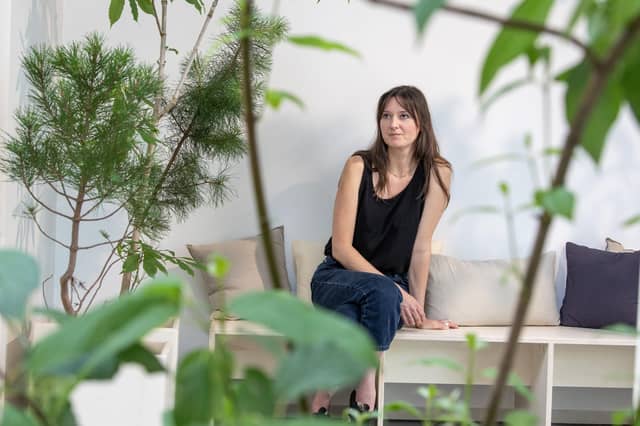


Emotional Geographies which opened at the weekend is a large-scale immersive installation by artist Charlotte Smithson which transforms the gallery into a multisensory botanical environment and reimagines sculpture as a living, growing form. Smithson’s work focusses on ecology and our relationship with nature and landscapes; this latest project explores these themes and has its origins in a touching personal story. In 1959 Smithson’s grandfather, art teacher Peter Hawkin, planted a row of flowering cherry and almond trees along his street, Belgravia Road in Wakefield. The trees are still there and blooming today, standing as a testament to a thoughtful act of community, care and creativity.
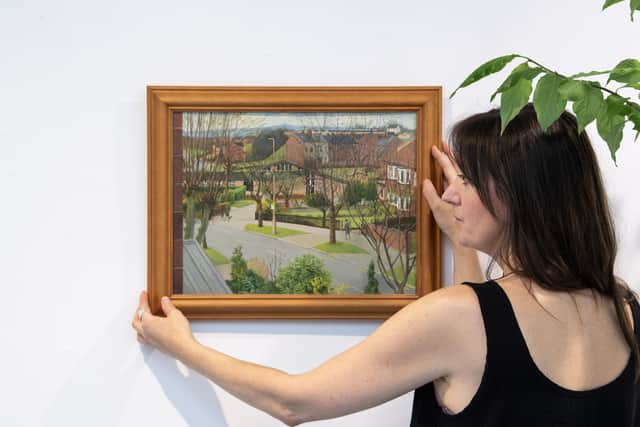
“One of my earliest memories is of leaving my grandparents’ house on Belgravia Road and seeing what I thought was ‘pink rain’ which would have been the cherry blossom being blown off the trees,” says Smithson. “When my grandpa passed away, my mum and uncles were keen that we each had one of his paintings and I chose his painting of the trees. When we were clearing his things, we found a letter from the council responding to his suggestion of planting some trees and we saw his workings out of how much it would cost and how many neighbours would contribute.”
We never tire of investigating Yorkshire’s history - so subscribe to our Heritage newsletter
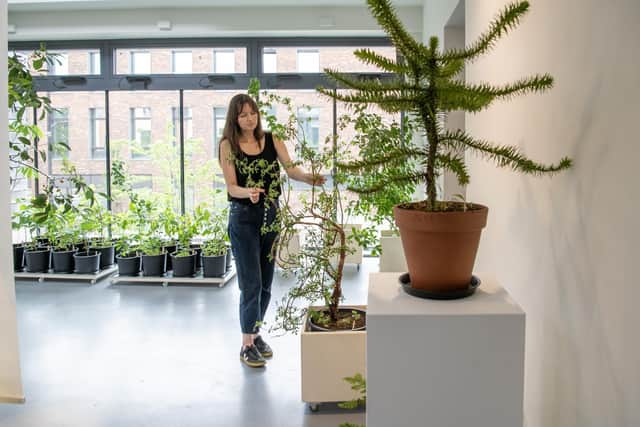
Smithson was inspired to revisit this legacy and create her artwork; a suspended sculptural installation filled with tree saplings and specimens, many nurtured by residents across Wakefield. “I really liked the idea of making an installation that was a collection of trees, bringing them into the gallery so that people could be around living things in an environment where they wouldn’t normally encounter them,” says Smithson.
Collaboration and connection with communities is an important part of Smithson’s work. As well as incorporating plants and flowers grown by local people, throughout the exhibition, volunteers will also help to care for the installation. “Mindfulness is a big part of my work so I felt it was a very natural thing for people to be involved,” says Smithson. “It’s been an organic process.” Sustainability is embedded in Smithson’s creative practice – she ensures her materials are reused or recycled – and this project is no exception. “After the exhibition has finished, all the trees will be given away,” she says. “Some will go to public spaces and some to members of the local community to put in their own gardens, all contributing to the city’s tree-planting scheme.”
Smithson describes her work as a form of ‘quiet activism’ which aims to motivate people to think about the natural world and their relationship with it and to help them feel connected to it. That sense of connection leads to a feeling of care and responsibility. As she writes in her artistic manifesto An Entangled Co-conspiracy: ‘We protect what we love.’ “All of my work is about encouraging people to notice what is around us and then they are more inclined to look after it.”
Now based in Manchester, Smithson grew up in Swaledale. “Having that upbringing in that beautiful place has made me very empathetic to the natural world,” she says. “And even though I live elsewhere now, Swaledale stays with me. All of my work is about trying to bring people closer to nature through their emotions. The environment created by Emotional Geographies is a very sensory space, gentle and quiet, away from the loudness of the world. I hope visitors to the exhibition will see it as an opportunity for mindfulness, but also to think about their own actions and legacy; to find beauty in the natural world, value it and be grateful for it.”
The exhibition connects the past, present and future in a unique and thought-provoking way, giving visitors the time and space for reflection and shared memory. Original artwork by Smithson’s grandfather provides a backdrop to her installation, underlining the profound emotional resonance of place and the ongoing positive impact of a small, generous action. “Those trees still feel like part of my family,” says Smithson. “The lovely thing about planting a tree is that it outlives us and it’s wonderful that all the trees in the exhibition will be rehomed, going on to live long, healthy lives across the region. I think my grandpa would be very touched if he knew the trees he planted here over 60 years ago had inspired this legacy.”
Emotional Geographies is at the Art House, Wakefield until August 25.