
'Absolutely phenomenal' - Hamza Yassin on his latest documentary protecting birds of prey in Kenya
British wildlife cameraman and presenter Hamza Yassin recounts his unforgettable journey across Kenya filming birds of prey for his new documentary. Lynn Rusk reports.
British wildlife cameraman and presenter Hamza Yassin, a lifelong bird lover, is thrilled to see so many others discovering the joys of birdwatching.
The pastime has surged in popularity in the UK in recent years, with participation increasing by 47%, according to a study by the RSPB (Royal Society for the Protection of Birds).
The trend is particularly pronounced among younger generations. Since 2018, the number of Gen Z birdwatchers has increased by 1,088%, while participation among millennials has risen by 216%.

The boom has also spilled onto social media, spawning trends such as “birding in your 30s” and “BirdTok”.
For Yassin, this newfound enthusiasm for the natural world comes at an opportune moment.
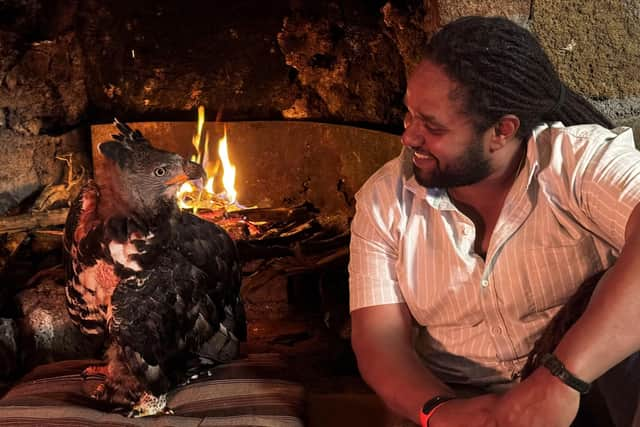
His latest project, Hamza: African Birds of Prey, sees him embark on an unforgettable journey across Kenya in search of some of Africa’s most spectacular, and most threatened, birds of prey.
Yassin, 36, best known for his role as Ranger Hamza on CBeebies and his work on shows including Countryfile and Animal Park, joins dedicated scientists, conservationists, rangers and local communities working to protect Kenya’s birds of prey.
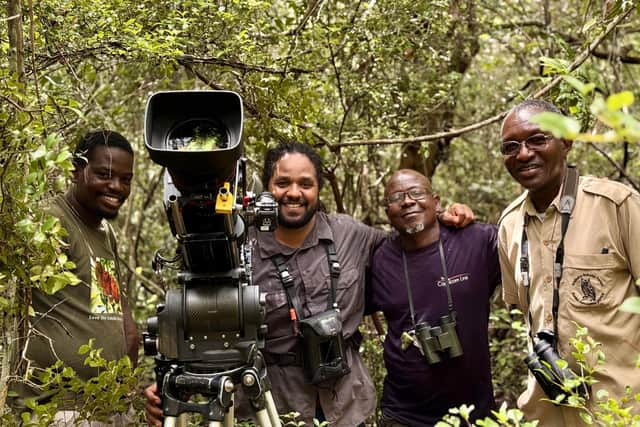
In the hour-long natural history film, he travels from the vast plains of the Maasai Mara to the shores of Lake Naivasha, the ancient forests of the Kenyan coast and the dramatic escarpments of the Rift Valley.
Along the way, Yassin encounters an extraordinary cast of raptors, including African fish eagles, secretary birds, martial eagles, scops owls, lappet-faced and Rüppell’s vultures, and the elusive African crowned eagle.
He also witnesses both the incredible resilience of Kenya’s birds of prey and the growing threats they face from habitat loss, poisoning, the illegal wildlife trade and expanding infrastructure.
“It was absolutely phenomenal to get the chance to do this. I’m like a grown child because it is amazing. As a child, that’s what I wanted to do. Now, as a grown-up, I get the chance to do it,” beams the presenter.
For the documentary, Yassin was keen to hear from local Kenyans rather than rely on a “voice of God”-style narration.
“What I love about the documentaries that we make is that there are the blue-chip, big productions that take three or four years to make, where you have the ‘voice of God’ over it, with someone narrating everything. I love those, and that’s still kind of the aim: to do those every three or four years.
“But what I love is that, if I want you to be fascinated by something, I want the people who work on the ground with these animals to tell you about them. Throughout this whole programme, you never see me saying, ‘I know all about this particular animal, so let me tell you. You guys sit there and listen.’
“No. I bring in the people who are actually there on the ground, who look after these animals, who study them and who do all of the work. If anything, I’m just a guest in their world. I’m saying, ‘Tell me about your incredible animal that you’ve worked for 20 years to look after, that you’ve done so much for, or that you’ve rehabilitated.’
Yassin, who also won Strictly Come Dancing in 2022, says the documentary is very hopeful as it shows the extent to which locals are protecting these endangered birds.
“There’s so much hope in this because, yes, we’ll go through trials and tribulations in conservation, and there will be hardship, but I see a positive end to this,” he explains.
“Everything I do, I try to see the positive side anyway. No one wants to sit and watch doom and gloom. But we touch upon it. We teach you about it. We tell you what’s happening. We say, ‘This is where it gets hard, and this is where humans have messed up.’
“But then let me show you the humans who have done absolutely fantastic things and are looking after this planet, or looking after their own neck of the woods.
Yassin also shares his admiration for the Maasai people he met who chose to forgo financial compensation in order to protect their land from loggers.
“The impressive thing that I love about that particular place, the highlands, is that they’re very fragile in Kenya. The reason is that their trees are being taken out left, right and centre. They’re just being logged,” he explains.
“The government has given each person, I think, about nine acres. And they’re like, ‘There’s your nine acres. There’s your nine acres.’
“Some people are in the middle of the Maasai Mara. Fine, cool, no problem. These guys actually have timber on their land. So they could say, ‘I like my money, please come and cut my logs.’
“But they are refusing.
“So, they’re wealthy in their land, but maybe not so much in their bank account. But they’re standing by it. And the reason we could see those animals is because of them.
“This is why there’s hope. So we can go from anywhere in the world. Corruption is always going to happen as humanity, but there is hope, and I see it. And this is what I want to do.”
Yassin hopes that the film will educate and inspire people and also advocates for natural history education in schools to foster a deeper connection with nature and conservation.
“If I was prime minister, I would make natural history compulsory, but not in the sense that I’m going to quiz you at the end of it, because we as a country are very good at putting people into boxes,” he says.
“I want to educate. I’d rather a kid tell me about five different names of trees than the five Kardashians. That for me is I know I’m winning.
“We’re all connected to nature because in summertime we’ll get the ospreys coming here. They’ll breed with us. We are only the custodians for three four months, but then they go back out to East Africa, or vice versa.
“We get humpbacks in the winter coming to us, but they go all the way down to Antarctica and Tonga in the summertime to breed. So, for me, that’s what I want to do. I want to educate people, and I’m not going to test you on it.
“I just want to educate them because the moment that someone knows information about natural history is the moment they will start caring about it. If they know they’re damaging something, they’re more likely to not do it than to do it.”
Hamza: African Birds of Prey airs on BBC One and iPlayer on Sunday, August 30.