
Evolution and Penelope Keith Night: TV highlights this week
TV highlights coming up over the next week include Evolution and Penelope Keith Night:.
The Sentinels (Saturday 11/07/26, BBC4, 9pm & 9.50pm)
Words by Rachael Popow
Saturday night on BBC4 has long been the home of acclaimed international dramas, but many people primarily associate the slot with ‘Scandi noirs’ or dark, twisty thrillers. They have often been gripping, tense and unforgettable, but some people would have struggled to call many of them fun.

So, the channel’s newest import, The Sentinels, could seem like a bit of a departure – it may be thrilling, but it arguably has more in common with superhero movies than The Killing or The Bridge.
Based on the graphic novels Les Sentinelles by Xavier Dorison and Enrique Breccia, the French series fuses history, action, espionage and sci-fi elements.
It begins during the First World War, when Private Gabriel Ferraud (Louis Peres) is gravely wounded on the battlefield. He’s officially pronounced dead, but is secretly chosen for a top-secret French military program designed to create the ultimate weapon: enhanced humans.
Gabriel is injected with an experimental drug and awakens to discover that not only have his injuries miraculously healed, but he’s also gained some new powers, including extraordinary strength, speed, and resilience.
Naturally though, there’s a catch. If he ever wants to see his family again, who are currently under the impression he died in action, he’s going to have to first serve with an elite unit known as the Sentinels – other augmented soldiers who have been designed to fight on the front lines.
As the war goes on though, Gabriel uncovers a terrifying truth that could alter the fate of the conflict.
Admittedly, the idea of a super soldier isn’t exactly unique, and neither is the concept of placing one in the middle of a real-life war – 2011’s Captain America: The First Avenger saw Steve Rogers (Chris Evans) being rejected for service in the Second World War due to his poor health until he was given a similar formula to turn him into a superhero.
For producer Lionel Uzan what makes The Sentinels different is it setting, which takes viewers not just to the brutal battlefields of the First World War but also to the Parisian underworld. He told Deadline: “We’ve seen a lot of superhero or retro-futuristic stories, but none of them were rooted in French culture or French history.”
Fellow producer Delphine Clot agrees, saying to Deadline: “It was a great opportunity to produce a genre series, but one rooted in the French culture. What is unique is the combination of genres. You have the story about augmented soldiers, you have a spy story, and you have the setting of Paris. Also, you have a very strong love story between Gabriel and his wife.”
Or as Nick Lee, Head of BBC Programme Acquisition, puts it: “The Sentinels is a fully immersive war drama, drenched in adrenaline. The graphic novel origins has been cleverly adapted into a premium television experience by CANAL+ and BBC audiences will revel in the blend of steam punk meets robo-cop. There’s also a Frankenstein-ian level of depth and empathy to this story that really grips.
“Prepare for something totally different and unforgivingly entertaining.”
The Dark (Sunday 12/07/26, ITV1, 9pm)
Words by Rachael Popow
There’s no shortage of detective dramas on TV, but Laura Donnelly admits she’s largely resisted the lure of playing a copper.
The award-winning stage actress, whose previous small-screen credits include The Fall, Outlander, Britannia and The Nevers, says: “I’ve generally avoided anything set in either a police station or a hospital, because I’ve not been very drawn to those ideas.”
So, what was it about the new thriller The Dark, in which she plays DI Monica Kennedy, that changed her mind? Laura says: “I loved the atmosphere of the script – there was something about the tone that felt very eerie. This was exactly the kind of show that would appeal to me on an evening, something I would want to get cosy for and watch on the sofa.”
Then there was the extra reassurance that this wouldn’t be a run-of-the-mill crime drama. Laura says: “I had a coffee with [executive producer] Ben Stephenson, and we got on so well. One of the first things he said to me was that we wouldn’t be filming in a police station like a typical crime procedural, and that felt so interesting to me.”
Set in the Scottish Highlands, the series gets off to an attention-grabbing start when detective Monica’s family day out is interrupted by the arrival of a face from her past. So, the cop is already feeling uneasy when she and her new partner DC Connor Crawford (Mark Rowley) are called to a disturbing case.
The naked corpse of a young man in his late teens has been discovered, posed in the middle of a remote Scottish glen, and Monica fears this could be just the start of the killer’s campaign…
So, there’s a gripping case at the heart of the series, but Laura believes there’s also plenty of human drama. She says: “I’m always drawn to characters who are putting on a front of some kind. I like exploring people who are trying to sell a version of themselves, but there’s stuff going on underneath that they don’t want to look at themselves, never mind letting other people see. That was really apparent in Monica right from the start.
“The world in which she works is her safe place, which is so interesting because for the rest of us it would seem like a very dangerous world to be in. For Monica, work is where she feels competent and in control. Outside of that, everything gets murkier for her.”
No wonder The Dark has won over Laura – in fact, she may have enjoyed being a cop more than she expected. She says: “All good dramas should be about human experiences and interactions, so I was much more interested in getting Monica’s character right than researching the work of detectives.
“Saying that I did have one scene where I did a proper police interview and I got to read someone their rights, and I have to admit that was really cool. If you’re playing a cop then you do want to do that scene at some point, and to have that quintessential detective moment!”
Evolution (Monday 13/07/2026, BBC Two, 9pm)
Words by Richard Jones
Much as we’d all love him to, Sir David Attenborough sadly can’t go on presenting the BBC’s wildlife programmes forever.
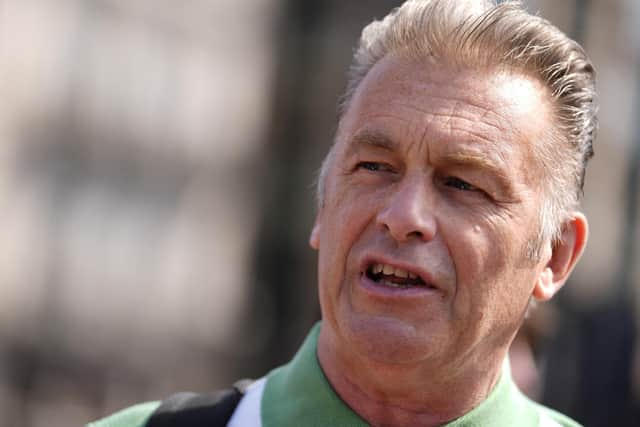
One of the people frequently dubbed a natural successor to the great man is Chris Packham. And when speaking at an event in honour of his 100th birthday in May, he described Sir David as “an enormous mentor over the years”.
The view that the 65-year-old Springwatch, Autumnwatch and Winterwatch host will one day take over as the premier face and voice of the BBC’s natural history output was given more credence when he presented Earth in 2023.
The story of the planet we call home and a guide to its “five pivotal moments” was one of the highest rating series on BBC Two that year.
Now Packham is tackling an arguably even more ambitious subject in Evolution.
All the incredible diversity of animal life sprang from a single organism. Every animal, no matter how weird, is related to every other.
And behind each species is an incredible story of the millions of generations that gave rise to it.
Over the next few weeks, Chris is unravelling five of these remarkable stories to reveal how life became so diverse and beautiful.
He says: “Our series about evolution is an introduction to a concept which to many people is quite impenetrable, because they believe that it happens very slowly over vast periods of time, and they may even think that it’s stopped.
“And we are the be all and end all of it. But it isn’t.
“Evolution is a very dynamic and interesting process. There’s a pattern. There’s a mechanism, but also it involves chance. And automatically through evolution we’ve come up with this diverse, beautiful, fascinating collection of life that we’ve got at the moment.”
In tonight’s opening edition, Chris embarks on an extraordinary journey to uncover how the African elephant came to be one of the planet’s most iconic giants.
Up close, they are extraordinary: trunks packed with tens of thousands of muscles, ears like billowing sails, and bodies built from over a quadrillion cells.
So how did life ever produce something so magnificently complex?
To find out, Chris goes back to the beginning of life itself.
In a hostile primordial world, a single resilient cell – LUCA (the last universal common ancestor) – gives rise to everything that lives today.
From this tiny spark, evolution unleashes a story driven by hunger, competition and chance.
Chris digs into zebra dung to reveal the hidden challenge of eating plants, and breaks into termite mounds to explain how unlikely alliances paved the way for giants.
Around 600 million years ago, tiny single-celled creatures like the Urchoanozoan begin the leap to animal life.
And tens of millions of years later, in ancient Africa, the elephant’s mammalian ancestors seized their moment, with strange relatives like Palaeomastodon, Platybelodon, and Deinotherium spreading across the planet.
Chris meets modern specialists like warthogs, whose tough, versatile snouts offer a playful glimpse into the evolutionary problem-solving that would ultimately produce the elephant’s extraordinary trunk.
Today, just three species of the towering giants remain – living monuments to evolution’s power to shape life in endlessly diverse ways.
It’s a story billions of years in the making – and much like the presenter’s distinguished career, it is still unfolding.
Penelope Keith Night (Tuesday 14/07/26, BBC Four, from 8pm)
Words by Sarah Morgan
On June 29, fans of classic comedy were shocked to hear of the passing of Dame Penelope Keith – as she always played such formidable characters, it felt as if she must be indestructible in real life.
Born in Sutton, Surrey, in 1940, she was sent to boarding school at the age of six, an experience she thoroughly enjoyed.
“I was an only child and my mother was divorced and therefore I was part of a single-parent family,” she once explained. “Consequently, boarding school fulfilled the need I had for a family really and I saw my mother in the holidays. She was wonderful and I adored her.
“With hindsight you could think ‘Oh yes, I probably missed this, this and this,’ but on the other hand people who haven’t ever gone away to boarding school probably feel they’re missing something too.”
Her beloved grandmother was also a major figure in her formative years: “I adored my grandmother. She was a remarkable woman. I vividly remember her looking at a table and thinking it was too high, so she used her apron to measure the legs and put a pencil mark on each of them, and then got out a saw to cut them down — and it was absolutely perfect. I thought, ‘Grandma can do anything’.”
It was perhaps the presence of such strong women in her life – as well as her height of 5ft 10 – which helped her play The Good Life’s Margo Leadbetter and Audrey Forbes-Hamilton in To the Manor Born so brilliantly. However, according to her former co-stars, the real Penelope Keith was nothing like either of them – instead, she was reputedly a giggly, joke-loving colleague (she once famously appeared alongside Morecambe & Wise), as well as being warm-hearted with a nurturing personality.
Fame had been late arriving – she was 35 when The Good Life came around, and had been a professional performer for around 15 years by that point, her first TV appearance coming in a 1961 episode of The Army Game. Other roles came in the likes of Dixon of Dock Green, The Avengers and Emergency Ward 10. But once fame did appear, she embraced it, and she went on to feature in numerous acclaimed TV and theatre roles.
She also turned presenter, most notably with several series related to Britain’s villages; her most recent project was Channel 4’s Saving Country Houses with Penelope Keith, which was broadcast earlier this year.
“All of us at BBC Comedy are deeply saddened to hear of the passing of Dame Penelope Keith,” said Jon Petrie, the department’s director, as news of her death broke. “She was one of the defining figures of British television comedy. Her iconic performance as Margo in The Good Life remains one of the nation’s most beloved sitcom roles and continues to delight audiences today.
“We send our heartfelt condolences to her family, friends and all of those who had the privilege of working with her.”
Now, in tribute, we’re being treated to an evening of programmes in which she appears – it’s a fitting tribute to a star, the like of which we may never see again.
Location, Location, Location (Wednesday 15/07/2026, Channel 4, 8pm)
Words by Richard Jones
Last year, Kirstie Allsopp and Phil Spencer celebrated a quarter of a century matching house-hunters to their perfect home.
The nation’s property experts are now, remarkably, in the middle of the 43rd run of their signature show Location, Location, Location, and are rightly proud to have helped so many people making the biggest purchase of their lives.
“However many times I hear it I still can’t believe it has been 25 years,” Kirstie, who turns 55 next month, said last summer.
“It is an enormous privilege to have the opportunity to travel around the whole country working with so many lovely house hunters and such brilliant crew.”
Spencer added: “Being able to visit every part of the four nations and support hundreds of people in their home searches has been an enormous privilege.”
So, what has made Location, Location, Location such a success over the years?
In an interview with freelance journalist Paul Kirkley at Interesting Media last year,
Allsopp suggested it may be down to the programme tapping into one of our most essential human needs.
“Home is a place that’s important to everyone, and everyone aspires to have the best possible home they can, for themselves and their family,” she said.
“Home is sanctuary, it’s health, it’s relationships, it’s education. It matters to every aspect of your life.”
Meanwhile, 56-year-old Spencer thinks it may also be down to many of us being curious, and even a little bit nosey.
“We’re all voyeurs – we all love looking around other people’s homes,” he says.
“It’s a subject everyone has an opinion on.”
Over the years, Kirstie and Phil have helped hundreds of people in their property searches. They have viewed around 2,000 homes and been entrusted with over £175million of Brits’ money.
Tonight’s edition sees them search in and around Stirling and in the outskirts of Glasgow.
This beautiful part of the world is one of the duo’s favourite areas and one where their house-hunters’ money tends to stretch a bit further.
But, as ever, that doesn’t always make finding the right home easy.
Kirstie is with nurse Gwyneth and her husband James, who have £320,000 to spend and want a house close to Glasgow that they can start a family in.
When it comes to head versus heart, they may be led by their heads more than any other couple Kirstie’s ever helped.
But when Gwyneth and James do finally get the ‘feeling’ for a house, it’s a potential budget-buster, so it’s up to Kirstie to crunch the numbers to try and secure it for them.
Meanwhile, Phil meets mum and daughter Lorraine and Emma, who have a £275,000 budget and ideally want a three-bed property so that Lorraine’s other daughter Meg has a place to stay when she returns from a gap year in Australia.
Phil’s up against it to find a home that suits all three of them, who are at different stages in their lives.
When one place does tick all the boxes, can he get the price tag to match?
With over 25 years of experience, there’s no better person for the job.
The Odyssey with Dan Snow (Thursday 16/07/26, 5, 9pm)
Words by Rachael Popow
Director Christopher Nolan’s adaptation of The Odyssey hits cinemas on July 17, and the social media reaction to everything from the casting to the costumes suggests that a lot of people have very strong feelings about Homer’s 3,000-year-old epic.
While some cynics may wonder how many of these apparent experts in Greek mythology really were familiar with the tale of Odysseus and his 10-year journey to make it home from the Trojan War before it became a talking point on X (formerly Twitter), Dan Snow can legitimately claim to have grown up with tale.
The historian says: “I knew the Odyssey since before I can remember. My mum, dad and grandparents told a lot of stories as I grew up. I was told about the cyclops, Scylla and Charybdis, in the cradle. They are stories of monsters and adventures, the first stories, the ultimate stories. They have always been there.”
So, when 5 gave him the chance to retell this epic story, he naturally jumped at the chance.
He explains: “I have made history programmes for 25 years, but I have always, always, dreamed of the big one. Sailing in the Mediterranean on the hunt for Odysseus and the Odyssey. For me it is like being a football fan and joining the commentary team for the World Cup.”
The programme finds him exploring the mythical aspects of the story, includes Odysseus’ brushes with everything from the sorceress Circe to the sirens. However, the Odyssey isn’t all gods and monsters, and in this documentary, Dan will be visiting some of the real-world locations mentioned in the tale, as well as finding out what it can tell us about life in Ancient Greece.
He explains: “The Odyssey is a fantasy story, a myth, but like all our fantasies it is rooted in the truths of the period in which it was created. JRR Tolkien was hugely influenced by his studies of medieval history and his own time in the trenches of the First World War. In the same way Homer was reflected the world in which he wrote.”
To make sure he captures the reality behind the story, Dan is taking to the Ionian sea. The presenter explains: “The Odyssey is a tale of sailing. it is a massive part of the story that I think most modern re-tellings miss out on. It was written to be enjoyed by people who lived huge parts of their lives on the sea.
“When you sail in the Mediterranean you get a sense of the challenges they faced 3,000 years ago. The sudden flurries of wind, the local conditions caused by the rocky headlands, and the heat… it is all something that you need to experience. There is only way to do justice to this epic story and that is re-tell it on the sea.”
So, this documentary finds him living like an ancient mariner, which means not only will he have no GPS, he’ll also be forgoing even a compass or charts as he learns how to navigate by the stars.
Ann Droid (Friday 17/07/26, BBC One, 9.30pm)
Words by Sarah Morgan
She’s one of the 21st century’s finest comedic voices, so when Diane Morgan launches a new series, you really should sit up and take notice.
The woman who found fame playing the wonderfully ill-informed investigative reporter Philomena Cunk in Charlie Brooker’s Weekly Wipe before venturing out in her own series, as well as the equally clueless title character in Mandy, has co-created Ann Droid with Australian stand-up and writer Sarah Kendall.
The pair have worked together before on Kendall’s comedy-drama Frayed, which ran for two seasons between 2019 and 2022, and the sitcom Motherland – while Morgan was a regular as Liz, Kendall popped up the final episode of the first run as a nanny named Lindsey. Having pooled their considerable comedic chops in Ann Droid, we can expect something very special indeed.
The series takes place in the near future, 2029, to be exact, and pokes fun at a topic that is being embraced by some, but treated with nervousness, disdain and horror by others – artificial intelligence (AI), something that is already creeping into our lives and looks set to be central to it in years to come.
Morgan says of the show: “I’m thrilled that the BBC has finally commissioned a programme about AI and how it will affect your mum,” which sums it up quite well.
Sue Johnston plays, aptly enough, a pensioner called Sue. She was widowed 18 months ago and has been living with her son Michael (portrayed by another Motherland alumnus, Paul Ready). However, he’s keen to move out in a last-ditch attempt to get his marriage back on track, but is rather worried about leaving Sue all on her own again.
So he buys Linda, a secondhand AnnDroid Z58/100 Basic Eldercare Robot. It looks and sounds human, and was created to keep lonely members of public company while also monitoring their health on behalf of an increasingly stretched NHS. The problem is that Linda is everything Sue hates – ‘she’ is overly attentive, socially inept and continually gets things wrong.
However, it seems that Linda is good at something – namely helping Sue get her own back on those she believes have wrong her, and before long, this unlikely duo have formed a bond.
“I’m pleased to be back in the heart of BBC comedy,” says Royle Family and Jam & Jerusalem star Johnston. “Diane and Sarah have created a comedy that will resonate with lots of different audiences, for different reasons.”
Ready adds: “I don’t know much, but I do know that if you get a chance to work with Diane Morgan, you take it. Immediately!”
In fact, the only people more enthusiastic about the show are those at the BBC itself. Jon Petrie, its Director of Comedy, states: “Diane Morgan’s sharp comedic genius shines in Ann Droid, co-written with Sarah Kendall, as she brings to life an unlikely friendship between a feisty pensioner and her over-attentive robot. Equal parts clever and chaotic, this six-part sitcom marries heart and high-jinks in equal measure.”
Sue and Linda’s adventures may be set in the future, but it seems they’re going to bring those of us living in the past some good, old-fashioned fun.