
AI ambitions, ISA battle and Ben Fogle's Buffalo - here's what happened in Yorkshire business world in 2025
Rachel Reeves’s increases to National Insurance contributions and minimum wage, Donald Trump’s tariffs and persistent inflation combined to create a challenging environment for Yorkshire businesses in the opening months of 2025 – but there was plenty of the region’s entrepeneurial tenacity and grit on display as well.
In January, the British Retail Consortium warned its members were anticipating falling sales and higher costs but in the same month, Yorkshire nursery brand Mamas & Papas posted record sales for the Christmas trading period and outlined plans for overseas expansion.
Doncaster-based furniture giant DFS also reported rising profits in January but said it was “cautiously optimistic” for the future.
There was also positive news for hundreds of elderly building society victims who had become entangled in an investment scandal after being introduced by their mutuals to unregulated financial advisers who sold them family trusts linked to their properties and investment schemes for their life savings.

The assets had ultimately ended up in the hands of a firm called Philips Trust Corporation, which collapsed into 2022 – leaving fears victims would be left with nothing. Four societies eventually agreed to compensate affected customers after victims shared their stories in The Yorkshire Post and other outlets.
By April, it was revealed that £43m had been repaid to victims by the Leeds, Newcastle, Nottingham and Saffron building societies.
A spokesperson for the Philips Trust Action Group, made up of affected victims and family members, said: "Had it not been for the relentless coverage by The Yorkshire Post and other media outlets – whose reporting played a crucial role in embarrassing the building societies into doing the right thing – these voluntary financial settlements may never have materialised.”
February saw Black Sheep Brewery’s new owner, Keystone Brewing Group, snap up another Yorkshire firm in the form of North Brewing Co as Keystone continued an acquisition strategy designed to make it a £100m-a-year revenue business by 2028.

There was much sadder news the same month as the Yorkshire business community was rocked by the sudden death of hugely-respected entrepreneur Dame Julie Kenny at the age of just 67.
The self-made entrepreneur was born in Sheffield but was best known as a champion for Rotherham, the town she said had forged her. It was where in 1986 she founded her company Pyronix, a manufacturer of electronic security equipment, which she grew into a multi-award-winning global business.
She became best-known for her work to rescue Wentworth Woodhouse from decay and decline as chairman of the Wentworth Woodhouse Preservation Trust, which she described as “one of the most inspiring, yet hardest, challenges of my life”. Wentworth Woodhouse subsequently announced a legacy fund in her memory, which has raised over £100,000.
March saw Bradford-headquartered Morrisons announce plans to shut down a series of loss-making operations including 52 cafes, all of its 18 market kitchens, 17 Morrisons Daily convenience stores, 13 florists, 35 meat counters, 35 fish counters and four pharmacies.
Rami Baitieh, Morrisons’ chief executive, said the changes were a “necessary part of our plans to renew and reinvigorate” the chain and invest in areas that “customers really value”.
The same month saw the boss of Tile Giant and Tile Choice blame Rachel Reeves’s “catastrophic” Budget for store closures, job losses and an administration process that is set to leave trade creditors and taxpayers millions out of pocket.
Matt Williams, founder of the Stiled group which owns the two brands, told The Yorkshire Post that the Chancellor’s 2024 Budget had damaged consumer confidence and left his tile group facing £500,000 in extra employment costs from April.
May saw thousands of real estate professionals descend on Leeds once again for the annual UKREiiF conference. Among those making the headlines was M&S chairman Archie Norman who revealed how Marks & Spencer plans to close 80 traditional stores – with those in declining town and city centres most likely to be axed.
He said: "There’s multiple examples where you have got a thriving centre, an enlightened local authority with a holistic regeneration programme to bring everything together and we really want to be part of that,” he said. “But where you have got stasis and decline and there’s no holistic plan and spending power is diminishing and accessibility is even worse, it is not going to work for us."
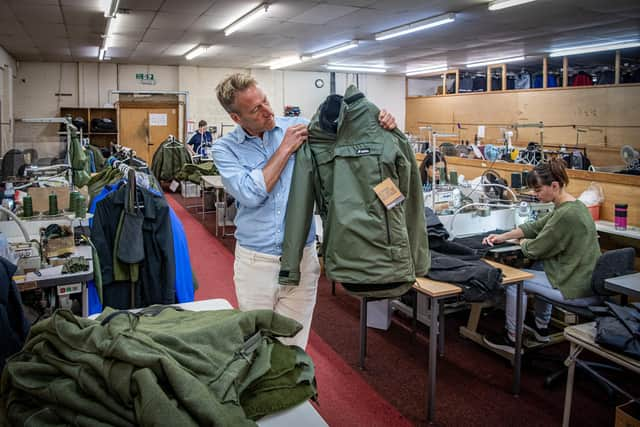
There was brighter news as adventurer and broadcaster Ben Fogle revealed he was taking over Sheffield-based outdoor clothing brand Buffalo.
He told The Yorkshire Post in June: “For me, ‘Made in Sheffield’ is synonymous with quality. It’s a very rare badge to have nowadays, but the most important thing for us is the brand’s Yorkshire and Sheffield connection.”
Months of fevered leaks, speculation and rumours dominated the run-up to the Budget in late November but all with a fairly common theme – the outlook for the public finances was bleak and the knock-on impact for workers and businesses was unlikely to be pretty.
Hopes for the Budget in the business world ended up being more about damage limitation than help with gunning for growth as Rachel Reeves followed the £40bn of tax rises set out in 2024 with a further £26bn this time around.
Building societies were among the sectors left feeling they had at least partially succeeded on the damage limitation front as long-signalled changes to cash ISA rules came to fruition – but with plenty of caveats.
It was announced that from April 2027 £8,000 of the £20,000 tax-free ISA allowance must be invested in stocks and shares, capping the annual cash ISA allowance at £12,000, except for those who are over 65 who will retain the £20,000 allowance.
The decision followed months of speculation about plans for a cut to cash ISAs, with previous reports that the limit could be set as low as £4,000.
An expected announcement in July was delayed days after the chief executives of the Yorkshire and Leeds Building Societies, as well as Skipton Group, were among more than 50 financial experts to sign an open letter to the Chancellor urging her not to go ahead with a cut to the current limit. Mutuals have argued the change would impact their ability to offer affordable mortgages and loans and the likes of Yorkshire Building Society chief executive Susan Allen welcomed the apparent Government climbdown.
She said: “While we’re disappointed to see the allowance reduced, we welcome the fact that the Chancellor listened to calls from us and the wider mutual sector not to cut it dramatically. Retaining a meaningful limit is vital for savers and economic stability. We’re also pleased the £20,000 allowance remains for those over 65, as flexibility for retirement planning is crucial.”
In advance of her ISA rule changes Rachel Reeves also announced her ‘Leeds reforms’ in July as part of broader efforts to support British businesses and encourage greater levels of retail investing.
The reforms include measures to cut red tape for businesses operating in the City while in October the Chancellor launched her a new ‘Scale-Up Unit’ in Leeds to help banks and insurers more easily navigate rules and regulations.
Meanwhile, ongoing efforts to turn Yorkshire into a leading force in the field of AI took a major step forward in November as publicly-listed technology investment company Lift Global Ventures announced an eye-catching name change to signal its determination to turn Yorkshire into “a global centre for applied AI innovation”.
The firm intends to change its name to Yorkshire AI as it builds on its ongoing working relationship with Yorkshire AI Labs, a company which invests in promising businesses in the region that have an artificial intelligence element to their work. It is seeking to create a “pipeline” of investments in this region through the partnership. That move followed a new venture and capital investment firm created out of two existing companies pledging it will prioritise expansion in Yorkshire as it looks to back more promising Northern businesses.
Manchester-based Praetura Ventures and Edinburgh-headquartered Par Equity announced a merger to become PXN Group with more than £670 million assets under management. PXN Group will focus on supporting businesses in the North of the UK and be capable of providing equity investments from £200,000 to £8 million, across multiple sectors and growth stages.
Dave Foreman, CEO of PXN Group, said in August: “With the scale and financial firepower the merger gives us, we can take a bigger, bolder bet on Yorkshire by putting more boots on the ground and making a bigger deployment of funds in the area.”
Last month’s Budget also contained some positive news for many of those affected by the loan charge scandal, which has been extensively covered by The Yorkshire Post.
Thousands of people are to have debts owed to the taxman written off or more than halved under a £365m Government deal. More than 32,000 people have been locked in a dispute with HMRC over money it is claimed they owe under the controversial loan charge policy with the average amount being pursued from most individuals in the region of £21,000 each and total outstanding liabilities of £1.7bn.
The policy - which campaigners have long claimed represented a ruinous financial penalty on people who signed up in good faith to what they believed were legitimate remuneration schemes - has been linked with at least 11 suicides.
The Government has said under its new deal, 30 per cent of those affected could have their liabilities written off entirely and ‘most individuals could see reductions of at least 50 per cent’. But campaigners and MPs said the concessions do not go far enough and repeated calls for a full independent inquiry into the matter.