
Steel tariffs are 'completely counterproductive' and could cost thousands of jobs, major UK firm says
The Government is imposing strict new quotas on foreign steel imports, increasing this by 60 per cent.

The Government’s steel tariffs are “completely counterproductive” and could cost thousands of jobs, a major North Yorkshire steel stockholder has warned.
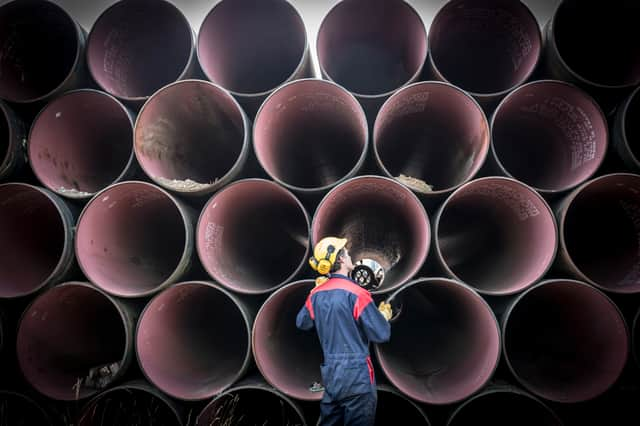
Cleveland Steel & Tubes (CST) based near Thirsk is one of the UK’s largest suppliers of repurposed steel, helping major construction and infrastructure projects to reduce their carbon footprints.
Yet from July 1, the vast majority of the steel it purchases will be subject to a new 50 per cent tariff.
This comes as the Government is imposing strict new quotas on foreign imports, increasing this by 60 per cent.
Managing director Roy Fishwick said: “These tariffs will be absolutely catastrophic for the UK economy and could cost hundreds of jobs in North Yorkshire alone, with thousands more downstream.
“The tariffs aim to protect British Steel but will be completely counterproductive while also harming huge chunks of UK’s industry.”

He said it was the “law of unintended consequences”.
Business Secretary Peter Kyle announced the measures earlier in the year, which he said committed “to strengthening and sustaining Britain as a steel-making nation”.
The announcement came after both the US and the EU revealed they were set to hike tariffs on steel imports.
The Government had previously taken control of British Steel’s Scunthorpe plant, after it emerged that Chinese owner Jingye was winding down the blast furnaces.
If they had gone offline then they would have become almost impossible to restart, leaving the UK as the only G7 country unable to produce virgin steel.
Sir Keir Starmer recently announced that the Government would nationalise British Steel.

However, Mr Fishwick said the tariffs effectively give the Scunthorpe steelworks a monopoly on domestic steel production, however this will not be enough to fulfill demand.
This means significant projects in construction will have to pay tariffs on steel, which could impact the Government 1.5m homes target.
Mr Fishwick added: “The UK doesn’t have sufficient capacity to meet domestic demand, and in some cases simply does not manufacture the grades and sizes we need.
“On top of that, the quotas before tariffs apply are laughably low. For one specific size of steel that we supply, the entire 2026 quota has been swallowed by a single infrastructure project on Merseyside.”
The worst affected industries will include aerospace, defence and producers of white goods.
“While British Steel is important to the UK, the jobs it supports will be far outweighed by the job losses these tariffs cause.
“And if our economy contracts as a result of these tariffs, British Steel will end up selling less product anyway, which is completely counterproductive.”
Mr Fishwick also made the point that certain projects require low-carbon steel to meet carbon targets.
However, this cannot be produced in the UK until either Tata at Port Talbot or British Steel in Scunthorpe transition to electric arc furnaces (EAFs) - something which is years away.
“They now cannot avoid tariffs, whether it is surplus steel imported by us or low-carbon steel from electric arc furnaces from outside the UK,” he added.
He told The Yorkshire Post that the tariffs will have a significant impact on his own business.
“We rely on importing product that is now available here, so we are going to see reductions in our activity,” he said.
“Our business volumes will fall and so that will subsequently impact the decisions the business takes.”
The Department for Business and Trade said: “We want a thriving steel sector and we also recognise how essential steel imports are for UK industry.
"That's why our new steel trade measure aims to strike the right balance between protecting domestic production and maintaining a secure supply - given steel's importance to our critical national infrastructure and defence."