
Yorkshire Dales: Turbulent forces which shaped stunning National Park come under spotlight
The gentle pastures of the Yorkshire Dales create a deceptive air of calm; this is a landscape that has been scarred by wars, industrial upheavals and the brutal forces of nature.

The author Mike Appleton, who has spent a lifetime studying the National Park’s quirks, has written a book which shows the Dales in their true glory. They are more than just a tourist honeypot. Each generation must find new ways of sustaining communities which in some cases, pre-date the arrival of the Domesday Book scribes. It was a work that could very easily have never been written. Mr Appleton had already produced five Dales-based books and believed there was a danger of repetition and people turning away.
"I was listening to an interview with British journalist and writer Anita Sethi about her book I Belong Here: A Journey Along the Backbone of Britain when she spoke about much of the northern countryside being a wounded landscape,’’ he recalled.
"Words such as scar, force, gorge and crag demonstrate the fabric of our favourite National Park being torn and worked by geological forces, with people on the land working within their constraints.”

"Anita’s words evoked an emotional response as to why I love this landscape; I am ‘hefted’ to it, and I want to continue to show people that it’s not just sheep and rolling fells. The chapters in this book celebrate some of my favourite things about the Yorkshire Dales. It’s the people of the Dales who make it special, and I celebrate every one of them.”
The wounded nature of the land is clear to anyone with knowledge of the past. Archaeology reveals a history that encompasses battles, castles and even Roman marching camps. Standing in the heart of Skipton, a castle provides a towering rebuke to anyone who believes the Dales have always been a peaceful, pastoral backwater. Robert de Romille built a timber fort here in around 1090, but that was soon destroyed by Scots who frequently raided northern England. Over time, it was replaced by a sturdier, stone fortress, but this too was put to the ultimate test during the English Civil War.
It was the last Royalist stronghold in the North, only falling after a three-year siege. Even then, the walls declined to crumble. The castle was restored by Lady Anne Clifford and the family’s livery flies on the castle today. A yew tree planted in the courtyard to celebrate the repairs still greets visitors. The book also pays tribute to the park’s colourful characters.
“I’ve come across so many people while writing my books and working in the area,’’ said Mr Appleton. “I spent a superb morning with the now late Bob Jarman, who ran Ingleborough Cave, talking about the park and caving. Then there’s Chester, who propped up the bar at the New Inn in Clapham; he had one leg but was a proficient caver and hiker who travelled the world. I hope to be able to write his biography someday.”
The Dales communities are finding new ways of re-inventing themselves, while staying true to their heritage. Recently village shows have become a focal point, including the quirky cuckoo festival in Austwick and the celebration of the 1940s up the road in Ingleton. The bustle of livestock auctions still bring noise and money to all parts of the park. Other chapters in the book look at the economic significance of films, including a focus on Hardraw Force and Aysgarth which saw regular visits from the cast and crew of Robin Hood: Prince of Thieves in 1991. The importance of railways and literature in supporting the Dales economy is also highlighted.
“It is a worked landscape, some people say a living museum – that’s a controversial phrase in itself – and looks like it does because people have been and are invested in the landscape. We don’t always get it right, but there is a common goal to ensure the viability of this rural area for future generations.
“There’s always a danger of over-commercialising a National Park and possibly moving away from the core principles of the National Park’s movement,’’ said Mr Appleton.
"There needs to be a collective effort to ensure the Dales works for everyone. We’re undergoing the biggest change in land management, and how that will be funded, since the Second World War. I think imposing a certain structure or economic model on people who have farmed or lived a certain way for generations is a tough ask.
"We need to take people with us on the journey, and that is hard to do if you haven’t got them on board from the outset or had those tough conversations.
“That said, we have some amazing things happening in this National Park with innovative people producing quality food, for instance.”
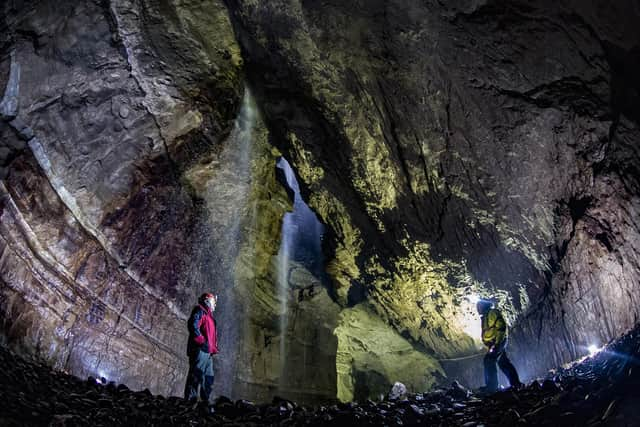
Peaceful pursuits have been shaped by the hand of nature. According to Mr Appleton, there probably isn’t a more iconic pothole in the world than Gaping Gill.
Impressive above and below ground, Fell Beck meanders along the hillside until it plunges 322 feet (98 metres) into an open chasm. There are a host of remarkable caves dotted around the Dales, providing the perfect playground for cavers like Mr Appleton.
“What is below our feet is breathtaking,’’ he said. "Underground, I was blown away by the relatively simple first pitch down Heron Pot in East Kingsdale. Southerscales in Chapel-le-Dale at sunset is amazing, as is Dent, where I ‘grew’ up as a kid coming up with my Dad on holiday. I have the grid reference of the river in Dent engraved on a knife I use at my work.
"But it’s also those little places I get to see as a woodland officer at Yorkshire Dales Millennium Trust - the wooded gills and places where water disappears for the first time - and then the more remote places..There’s magic everywhere if you take the time to look.”
Celebrating the Yorkshire Dales by Mike Appleton has been published by Amberley Books. For more information visit: https://www.amberley-books.com/celebrating-the-yorkshire-dales.html