
Estate owner hoping to create pop-up campsite launches planning appeals against North Yorkshire Council

A landowner hoping to create a pop-up campsite on the outskirts of Richmond has launched two planning appeals against North Yorkshire Council’s decisions to refuse permission.
Nicholas Green, of the St Nicholas Estate, is challenging the council’s refusal to allow the land to be used for Swalefolk Camping.
The appeals follow the council’s decision to reject two applications for certificates of lawfulness, which would allow a temporary campsite to operate for up to 60 days each year without full planning permission.
Mr Green claims the council has overlooked important evidence and relied on incorrect advice from Historic England when concluding the campsite would encroach on the protected Scots Dyke ancient monument.
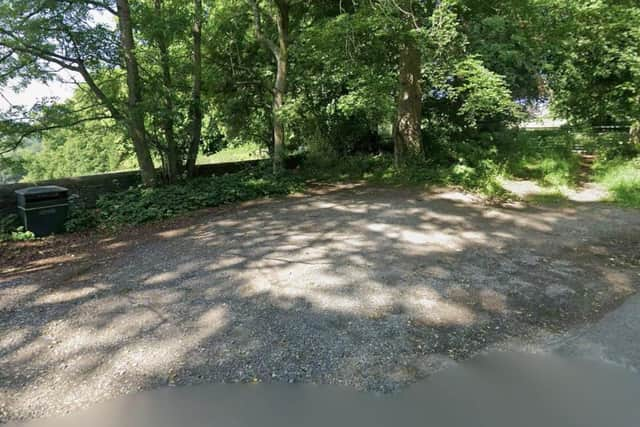

The dispute concerns land at Barn Close Field, in Maison Dieu.
The council previously ruled that permitted development rights did not apply because the proposed campsite access extended into the scheduled monument.
Planners also said insufficient information had been provided to establish whether the campsite was within the grounds of the nearby Grade II-listed St Nicholas building.
The proposals attracted objections from Richmond Town Council, Easby Parish Council and local residents, who raised concerns about highway safety, noise, archaeology and the impact on the surrounding countryside.
The council first intervened in May, issuing a temporary stop notice shortly after the campsite opened.
A revised scheme was subsequently submitted but further enforcement action followed in August.
Two applications seeking certificates of lawful development were formally refused on October 6.
Mr Green has now appealed both decisions to the Planning Inspectorate.
In a detailed statement, he argues the campsite can operate without vehicles entering the protected area of Scots Dyke.
The appeal documents cite an independent topographical survey, Historic England maps, Land Registry records and detailed analysis of vehicle movements.
They claim this evidence demonstrates that vehicles have sufficient space to enter the campsite without crossing the monument’s protected boundary.
The statement also disputes the council’s concerns about the listed building, arguing that Barn Close Field does not form part of its curtilage.
The appeal challenges advice provided by a Historic England inspector, describing it as “mistaken, incapable of being correct and directly contradicted by other sources”.
It also accuses the council of failing to properly establish the monument’s boundaries before reaching its decision.
The statement says the council’s approach was “unreasonable” and resulted in Mr Green being denied his lawful permitted development rights.
It further argues that the council applied an excessively demanding standard of proof, when applications for certificates of lawfulness should be determined on the balance of probabilities.
Mr Green is asking the Planning Inspectorate to overturn both refusals and issue certificates confirming the campsite’s lawful use.
He is also seeking an award of costs against the council and a review of application fees he believes should not have been charged.
The Planning Inspectorate will now consider the appeals and determine whether the proposed campsite qualifies for permitted development rights.