
UK has enough land for farming, renewables and nature restoration, Defra's long-awaited land use framework says
The UK has enough space for farming, increasing renewable energy capacity and restoring nature, the Government has claimed, as it unveiled its long-awaited land use framework.

The document, published yesterday by the Department for the Environment, Food and Rural Affairs (Defra), includes datasets, maps and analyses that show where the best areas are for farming, energy, infrastructure, nature restoration or housing.
It also outlines how land use needs to shift to accommodate all these competing uses in the coming decades, saying the main principle is “multifunctionality”.
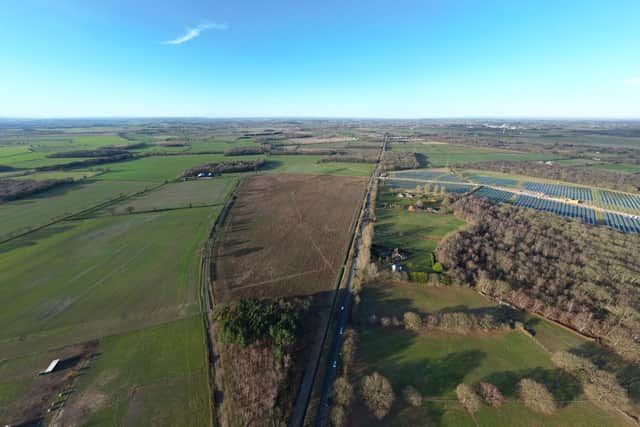
The Government wants farmers to combine agriculture with renewable energy generation, for example, highlighting how solar farms could be built alongside grazing animals.
However, ultimately it says “our analysis demonstrates that we have enough land to deliver our objectives for nature restoration and development without reducing domestic food production or compromising on these objectives”.
The document says: “We need to strategically conserve the agricultural land with the greatest long-term potential for food production, avoid development on nature reserves, introduce habitats for wildlife within farming landscapes, and expand the area of seminatural habitat.”
By 2050, the framework claims, some 4 per cent of England will be made up of land that is primarily used for food production, but also have environmental and climate benefits.

In the same year, the document says that just 1 per cent of England will be used for renewable energy, including solar farms.
Ministers say they will not force landowners to cede control and will not require planning authorities to refer to the framework when making decisions.
But instead, they called it a “basic tool” providing detailed information to help inform choices on land use, such as whether installing solar panels, developing houses, creating woodlands or building reservoirs would be the most effective use of a particular area of land.
Defra said that the most productive Best and Most Versatile (BMV) agricultural land was “not suggested” for renewable energy, habitat restoration or urban expansion.
“However, it is for farmers and landowners to decide how best to use their land and some development or habitat restoration may still be proposed on BMV land,” the document says.
Where this is the case, the Government says solar panels could be installed above crops to combine uses.
But according to Defra estimates, 9 per cent of agricultural land needs to be converted for climate and nature benefits by 2050 although small amounts of food may continue to be produced on some of it.
Farmers have expressed concerns that food production would be deprioritised in favour of nature protection or carbon sinks, ultimately affecting the amount produced and the nation’s food security.
But the Government insists production levels in England will be maintained, even with less for agriculture, because yields will increase as land is used more efficiently.
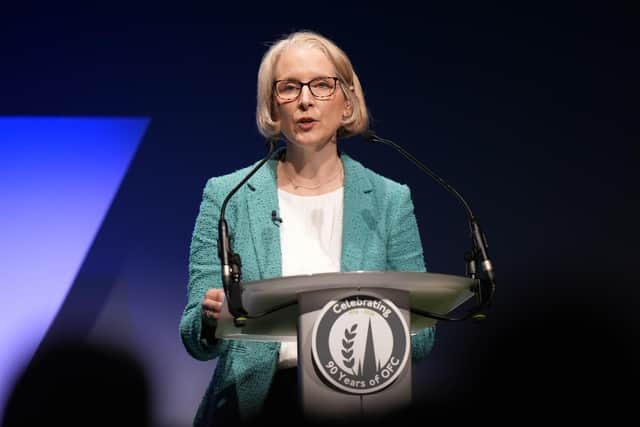
In a speech at the Royal Institute of Chartered Surveyors yesterday, Environment Secretary Emma Reynolds said: “Our land is a vital national asset, but it is finite.
“We cannot be held back by the false choices between building homes and producing food, restoring nature and supporting farmers, or delivering clean energy and protecting landscapes.
“With better data, smarter tools and strategic planning, we can meet all these needs.
“This ensures people can manage their land in the way that works best for them while unlocking growth, strengthening food security and protecting our environment.”
Farming groups warned that the Government’s plans were very ambitious, and said there would need to be clear guidance to avoid “unintended consequences”.
National Farmers’ Union President Tom Bradshaw said: “It’s positive to see an explicit recognition of multifunctional land use and a commitment to maintain food production within the framework.
“This commitment, alongside the repetition from Defra that food security is national security, is vital as the global geopolitical situation continues to become more uncertain with the war in the Middle East and ongoing war in Ukraine.
“The Land Use Framework is a step in the right direction, but challenges remain about delivering against the ambitious objectives as the first 2030 milestone approaches.
“Delivering on all objectives with existing land is an ambitious aim and will require clear guidance, the right policy framework and incentives, to avoid unintended outcomes and ensure that all farmers and growers are able to meet the ambitious productivity objectives within the framework.”
Country Land and Business Association President Gavin Lane added: “We welcome the ambition to drive more joined-up thinking, particularly on data consistency.
“But we will be watching closely how this data is used across other policies and schemes, including Local Nature Recovery Strategies.
“The framework must not, over time, become prescriptive, bureaucratic or result in zoning that could stifle economic and environmental development and innovation – now or in the future.
“Farmers know their land better than anyone. They must retain the autonomy to make the right decisions for their businesses and for nature.”