
Farmland is at risk due to 'inconsistencies' in solar planning process, sustainability group says
Farmland is at risk from the rapid expansion in solar energy due to “inconsistencies” in Environmental Impact Assessments (EIAs), a trade body has said.

The Institute of Sustainability and Environmental Professionals (ISEP), a global membership body, has said that because of this it is issuing new advice to protect agricultural land and biodiversity.
It sets out “clear expectations” for Agricultural Land Classification surveys, soils and biodiversity net gain, when assessing planning applications.
This “emphasises the importance of protecting the ‘best and most versatile’ (BMV) agricultural land and maintaining the reversibility of solar developments”, the ISEP said.
EIAs are issued in planning decisions to balance the importance of a development with its environmental impacts.
With Labour pledging that all energy will be produced with clean power by 2030, there has been a deluge of solar farm planning applications.
Energy Secretary Ed Miliband said this will end “this country’s Achilles heel” with its dependency on global fossil fuel markets.
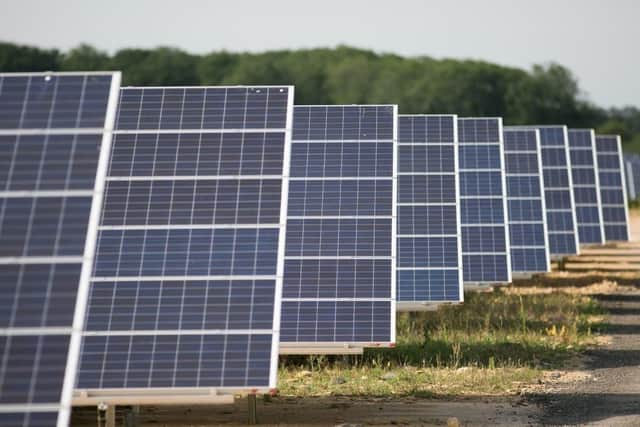

However, the east of England and Yorkshire in particular has seen a huge number of solar developments due to its terrain and access to the grid.
More than 300 solar farms are currently in the planning pipeline across the region, with Labour MPs raising concerns about developments being on BMV agricultural land.
Both York and North Yorkshire Mayor David Skaith and Selby MP Keir Mather have opposed the Light Valley Solar project (LVS), which will be formed of seven separate farms between York and Selby.
Mr Mather said he objected to the size of the project, with much of the designated land being classified as BMV for food production, the impact on wildlife and the disruption to local roads.
The ISEP’s senior policy lead Dr Rufus Howard said: “There is inconsistency in the approaches taken for Environmental Impact Assessments and planning applications for solar PV (photovoltaic) projects.
“With a significant increase in the number, size and scale of solar developments seeking planning consent expected in the next five years, there are risks for agricultural land in the UK without proper assessment.
“We need a balance between tackling energy security and the climate crisis, our need for food security and preserving biodiversity and natural habitats.
“Providing detailed best-practice guidance, will help developers, environmental consultants, and local planning authorities deliver consistent, transparent, and high-quality assessments that balance renewable energy against food production needs and the sustainability of our rural environment.
“Crucially this guidance emphasises the importance of protecting the BMV agricultural land and maintaining the reversibility of solar developments.”
A Department for Energy Security and Net Zero spokesperson said: “The biggest threat to agriculture is the climate crisis, which solar farms are helping to tackle directly.
“Solar is one of the cheapest forms of power – getting us off fossil fuels and delivering energy security so we can get bills down for good.
“All projects are subject to rigorous planning processes, and the views of the local community must be taken into account.
“Wherever possible, developers should utilise brownfield, industrial or previously developed land, and where the development of agricultural land is shown to be necessary, lower-quality land should be preferred.”