
Government ignores farmers' request to relax rules around controlled burning to tackle wildfires
The Country Land and Business Association is leading calls for the Environment Department (Defra) to relax some of the red tape and bureaucracy around controlled burning.

Requests by farmers and land managers to allow more controlled burning to tackle the rampant wildfires that are turning the countryside to ash have been brushed aside by the Government.
The Country Land and Business Association is leading calls for the Environment Department (Defra) to relax some of the red tape and bureaucracy around the measure.
Controlled burning is used on some moorlands to tackle fire risk, as the vegetation and wild fire fuel is burned away.
Land managers have carried this out for centuries, and the process does not damage peat when well-executed.
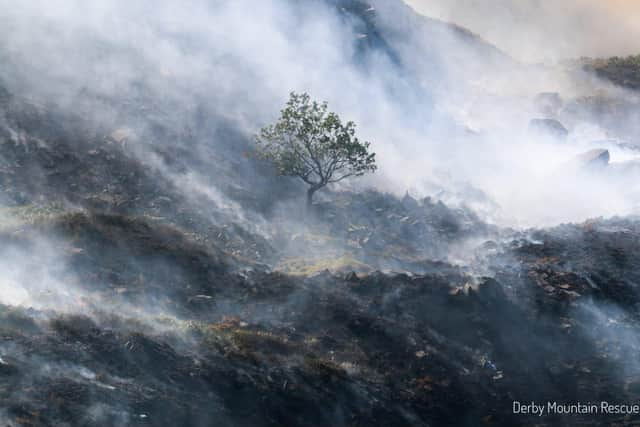
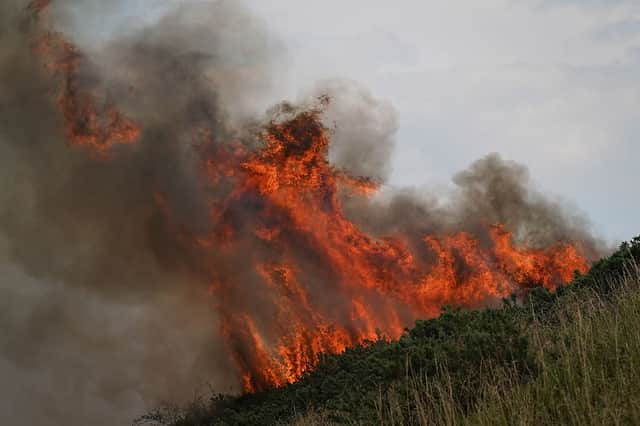
They say the current dry vegetation across moorlands is acting like a tinder box amid the scorching weather.
Legislation last year, means land owners have to apply for consent to Defra or Natural England through a licence, which the CLA says is “incredibly difficult to obtain”.

CLA President Gavin Lane said: "Fires are mostly avoidable tragedies. We know that careful and controlled burning, done in the right place, at the right time of year, can help make fires less likely to happen and easier to control.
“But the system now required to apply for a licence to burn is too complex, time consuming and unwieldy that, in practice, is counterproductive.
“We know that climate change will make wildfires more likely, more dangerous and more difficult to control so we need every tool available to prevent this escalating problem.”
The blaze started in a forestry block which was not actively managed and spread across unmanaged moorland.
CLA member George Winn-Darley, who owns and manages Spaunton Moor in the North York Moors, said: “I, along with colleagues, was involved in trying to minimise the spread of last year’s Langdale wildfire, so we have first-hand experience about the devastation it causes.
“Local gamekeepers and land owners are the experts in upland land management and what they can do to manage fuel loads to minimise the risk of wildfires.
“This includes preventative measures such as prescribed cool burning, creating fire breaks, mowing vegetation and clearing away flammable materials such as highly flammable gorse.”
“Defra continues to view controlled burning as a ‘last resort’ option. We strongly dispute the scientific basis for this.
“Controlled burning is the only reliable, proven method other than grazing that moorland managers have available to control moorland vegetation fuel loads. Land managers should remain able to choose when they use it.
“The North York Moors have shallow peat which, once alight in a wildfire, smoulders underground destroying the carbon store and unique dormant seeds and require much water to extinguish.

“At least two inches of persistent rain would be needed to sufficiently dampen the peat to bring the fire under control.”
According to the National Fire Chiefs’ Council, which objected to the Government’s changes to controlled burning of heather, there were around 400 wildfires in July, up from 17 in June.
In June, Richard Bailey, Peak District Moorland Group’s co-ordinator, issued the warning to MPs that “it’s only a matter of time before someone is getting killed” unless the Government allows land managers to remove vegetation that is rapidly going up in flames through controlled burning.
Since then, a moorland fire has burned for over a month across the Peak District, closing the Woodhead Pass between Sheffield and Manchester for more than two weeks.
A Defra spokesperson said: “Burning vegetation on moorland releases harmful smoke that can affect air quality across wide areas, which is why in September 2025 the government extended restrictions on burning, unless under licence, to nearly 700,000 hectares of deep peat.
“Wetter, healthy-functioning peatlands are more resilient to the impacts of wildfire, but licensing allows land managers to apply for a licence to burn where no feasible alternative exists.”