
Labour could abolish Natural England and the Environment Agency as part of ‘rewiring the state’

Natural England could be abolished as part of plans to streamline regulations and speed up decision-making, a senior Cabinet minister has signalled.
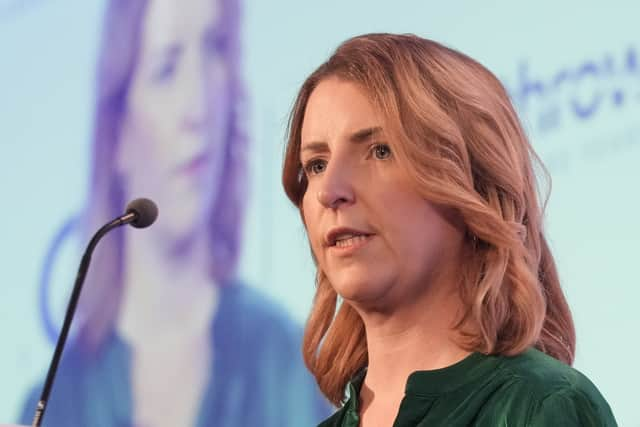
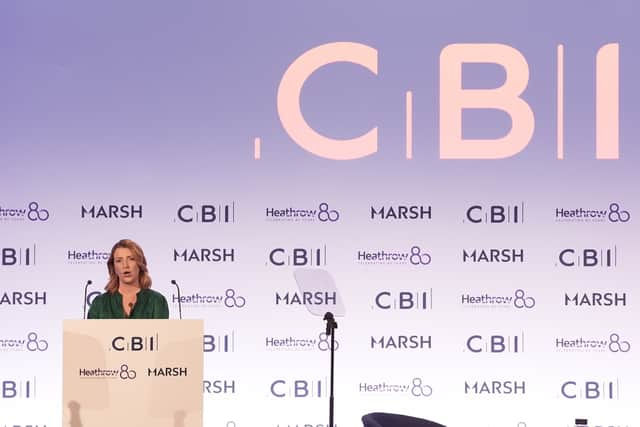
The environmental regulator was one of four singled out by First Secretary of State Louise Haigh during a speech to the CBI as she announced plans to reform so-called quangos.
Ms Haigh, effectively Andy Burnham’s deputy prime minister, said previous governments had been “content to duck accountability by giving responsibility away from ministers to a sprawling web of regulators” where “obfuscation” had “become normal”.
The Sheffield Heeley MP said: “As part of rewiring the state, we will reform arm’s-length bodies to increase public control.
“We will look at each of their functions and pose the challenge: what should be devolved, what can be dissolved, and what can be delivered by departments.”
Ms Haigh said work to review Natural England’s functions had already begun.
Critics of Natural England accuse the body of being a major blocker to plans to build more homes and infrastructure.

Sam Richards, chief executive of campaign group Britain Remade, cautiously welcomed reports that Natural England would be abolished, saying it was right to reverse a trend of “handing unelected agencies the power to veto the infrastructure we need”.
But he added that abolishing the body would be “meaningless if the rules they were enforcing remain in place”.
Tim Bonner, chief executive of the Countryside Alliance, said Natural England’s abolition would mean “greater transparency”.
Black Friday deal: get a whole year of The Yorkshire Post for just £12. That's £1 a month, saving over 80% on the usual £69.90 a year.
You'll get unlimited access to every premium article, daily puzzles and an ad-lite experience. New subscribers only. Offer ends Thursday, December 3.
He said: “Ministers should have direct control over huge decisions affecting the lives of people in the countryside and the country as a whole.
“Arms- length quangos like Natural England are not just advisers, they have decision making powers which allow Ministers to duck responsibility.
“We need to know who to hold to account for these decisions and Natural England's abolition would mean greater transparency. This can only be welcome.”
In her speech, Ms Haigh said the Government was also reviewing the Environment Agency, Ofwat and the Drinking Water Inspectorate (DWI).
Plans to merge Ofwat and the DWI with the Environment Agency’s water-related functions were announced last year as part of a wider overhaul of the water sector.
Ms Haigh also set the stage for further changes in line with the Prime Minister’s devolution agenda, saying decisions “intrinsic to the fabric of a place” should be made in that place, rather than in Whitehall.
And she criticised a culture of “risk aversion” in the public sector that thought it was “better to not let something happen than risk it going wrong”.
Ms Haigh said: “But the missed opportunities are a cost to society, and they all add up.
“So I am sending a clear message to our public servants, we accept a higher level of risk, and the buck stops with us.
“Be bold, be fast, and make things happen.”
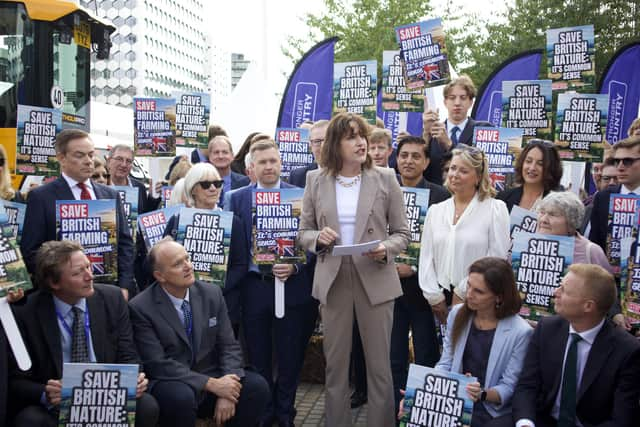
The Conservatives said Labour had “copied” their own plans to abolish Natural England and urged the Government to go further, adopting Tory policies such as scrapping the Environment Agency.
Shadow Environment Secretary Victoria Atkins said: “Seven weeks ago, the Conservatives announced the first phase of our plan to return common sense to the countryside by scrapping Natural England and the Environment Agency.
“In our plan, we will return the quango powers that work to ministers, farmers and landowners to increase transparency, accountability and outcomes for farming and nature.
"Andy Burnham has now copied part of that plan, but will he save taxpayers money by cutting the current ratio of five Defra-related [Environment Department] civil servants for every five farmers?
“Will he follow our plan to abolish the Environment Agency? And will Labour MPs who have defended these quangos in recent months accept this change?”
Ms Haigh also sought to reassure businesses over the Government’s plans to increase public control of utilities, telling the CBI’s annual conference it was “not ideological”.
She said ministers were not pursuing “full fat” nationalisation, saying: “Ownership is not a requirement.”
She added: “Public control should not alarm anyone in this room. It’s not ideological, it’s pragmatic, and it’s essential for people, for places, and for business.”
Describing Britain’s current privatised state as “the ideological position”, she argued that no other country had sought to emulate the UK’s approach.
And she said that even in America, “hardly a hotbed of state socialism”, most consumers got their water from a public utility and the government still owned one of the country’s largest power companies.
On the water industry, where ministers face pressure to nationalise struggling companies such as Thames Water, she said the Government was willing to work with the private sector where it met a “public interest test”.
She said the Government would implement the recommendations of a review of the water sector by Sir Jon Cunliffe, and added: “It will be a long-term project to right the wrong turn, to make water boring again.
“But we will partner with those in the sector who are committed to see it through.”