
MPs launch inquiry into wildfires after Langdale Moor blaze
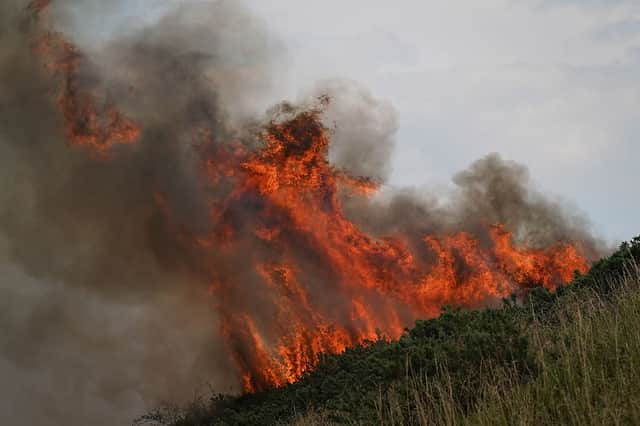
Last year’s biggest wildfire burned for more than a month on Langdale Moor, in the North York Moors, and was declared a major incident.

MPs have launched an inquiry into the growing threat of wildfires, after two major blazes have ravaged moorlands in Yorkshire in recent months.
The Environment, Food and Rural Affairs (Efra) Committee is seeking evidence on how risks are mitigated through management of land and monitoring, and which organisations and government agencies have responsibility and oversight.
It said the National Fire Chiefs Council has reported that 2025 broke the record for wildfires, surpassing the previous record in 2022.
Last August, the UK’s biggest wildfire burned for more than a month on Langdale Moor, in the North York Moors, and was declared a major incident.
The rescue effort of fire crews, farmers and gamekeepers was beset by explosions from World War Two munitions.
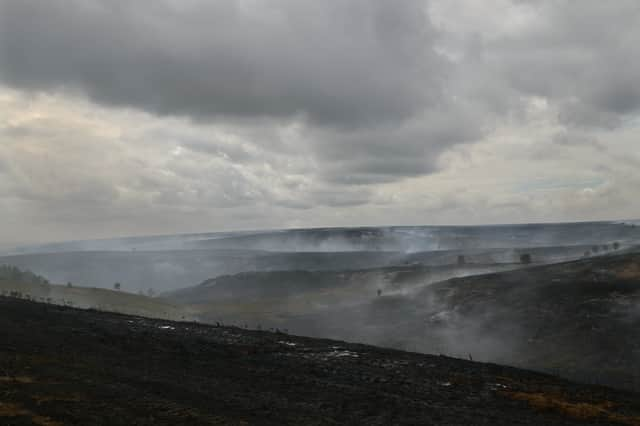
The blaze was eventually put out, but not before it had surged towards properties and businesses.
The fire started in a forestry block which was not actively managed and spread across unmanaged moorland.

Despite this, the Government pressed ahead with a peat burning ban despite repeated warnings from fire chiefs.
The Department for the Environment, Food and Rural Affairs (Defra) banned controlled burning of heather on peatland at a depth of more than 30cms rather than the previous 40cms limit.
Controlled burning is used on some moorlands to tackle fire risk, however, the Government says that banning it will help biodiversity and environmental protections. This is part of what the Efra Committee will investigate.
Chair Alistair Carmichael MP said: “From Northumberland to London, fears of wildfires are spreading as records are broken year on year.
“The wheels of government turn slowly, so it is essential that ministers get to work now on developing reliable systems that can meet these growing threats.
“We want to hear from experts in this field and organisations who care for their landscapes, as well as public services who face wildfires annually and have tools and strategies to prevent and contain them.
“The committee will also look at how other countries prepare and mitigate these risks to people, property, plant and animal life.
“With so many local and national organisations with a role to play, it is vital that we have clear lines of responsibility and joined-up thinking.”
A fire on Marsden Moor, near Huddersfield, has burned for much of the month. A spokeswoman for the National Trust, which owns 5,685 acres of the moor, said the fires were partially on their land and had coincided with the beginning of the critical bird nesting season.
Fires in this area have caused widespread devastation in recent years. The biggest, in April 2019, damaged 700 hectares and took four days to put out.
The landscape supports large numbers of moorland birds such as the golden plover, red grouse and Eurasian curlew.
The Efra Committee said these kinds of incidents can be devastating for biodiversity and agriculture, including long-term changes to soil properties.
Across England and Wales, firefighters tackled some 27,000 wildfires across the spring and summer last year.
Fire chiefs said the increased frequency and intensity of wildfires was putting a strain on resources, but praised the way their crews showed “exceptional bravery and professionalism in challenging conditions”.
But both spring and summer 2025 were the UK’s warmest on record.