
Universities' warning over 'tax' on international students which could cost Yorkshire £134m a year

Alarm bells have been raised by Yorkshire's universities over a "tax" on international students which could cost the region £134m in the first year alone.
New measures, proposed by Labour in May, could set a six per cent levy on international student fees to be "reinvested" into the system and through maintenance grants.
But these are skilled individuals who contribute £1.5bn to the region's economy each year, leading universities outline, warning today over the impact on Yorkshire's communities.
As business leaders call for the levy to be scrapped, fearing it could dampen innovation and opportunities for growth, education leaders state it could "damage" the sector.
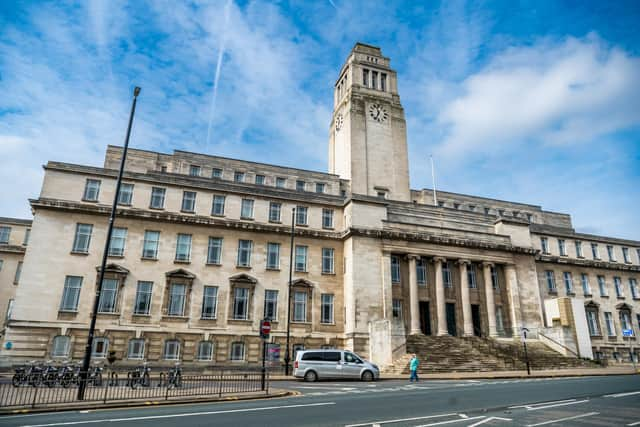

Dr Peter O’Brien is executive director of the Yorkshire Universities group, representing a consortium of institutions including the Universities of York, Leeds and Sheffield.
"This is, in effect, a tax on international students," he warned. "That plays out quite deeply in Yorkshire's constituencies and it has wider, ripple effects across parts of the region.
"We all want to see growth, in more jobs and in our economy, which pays for services and brings prosperity to our region.
"This would undermine and undercut that strategy," he told The Yorkshire Post. "It would damage a key sector in our economy in Yorkshire."
Labour's White Paper, Restoring Control over the Immigration System, has been blasted as a potential deterrent to international students who bring many millions in funding.
Not only do their fees contribute but their everyday spend, critics warn, in local shops and accommodation and in transport and taxes which feed into provision of regional services.
Then there is the potential of return to the region with future investment, added Dr O'Brien, while the cultural value they bring can be incalculable.
Home Office findings of the potential impact, the consortium argues, are based on outdated figures from 2021. Its own research, carried out by Public First, finds far worse implications.
International students are worth more than £1.5bn to Yorkshire's economy, it outlines, while the proposed levy could come at a cost of £134m lost in the first year alone.
This is particularly acute in constituency areas with a higher concentration of students, it found, including Leeds Central and Headingley which could face a £33m hit, Sheffield Central at £32m, and York Central at £15m.
Other key university areas include Bradford West, which could face a gross value added (GVA) loss of £9m, the research claims, along with £9m in Huddersfield and £8m in Hull.
This week, it was announced that tuition fees in England are to rise in line with inflation from 2026, a measure broadly welcomed by universities who have campaigned for change.
This levy now, added Dr O'Brien, would "wipe out" any benefits this might bring.
"We are supportive of introducing maintenance grants. This isn't the way to do it," he said. "We want the economy to grow, not take a hit. It feels counter-intuitive.
"On the one hand we are looking at a growth strategy and on the other hand we are taking something out of the economy which could deliver for the region and for the exchequer."
Sheffield Central MP Abtisam Mohamed is among those to have voiced her concern over "taxing one of our most successful exports".
And Dr Tim Bradshaw, chief executive of the Russell Group, also warned The Yorkshire Post that the levy would pile pressure on an already financially precarious sector "to the detriment of the very students and communities that Government is looking to support".
Now the West and North Yorkshire Chamber of Commerce joins calls on the government to withdraw its plans.
Mark Casci, head of policy and representation, said: "At a time when we are seeking to increase and sustain growth, business would be concerned at plans that could see the region's universities, as major employers and key drivers of skills and enterprise, face further financial challenges."
Duncan Johnson is chief executive of Northern Gritstone, a business leader among those driving investment in Yorkshire.
The region's universities need to be able to attract the "best and most ambitious global talent", he warned, adding: "Creating friction in attracting the best people to our universities is not in the interest of UK growth."
Final policy details have not yet been confirmed, including how any levy might be implemented or if it would stand at six per cent.
The Department for Education (DfE), in time, will publish its own impact assessment.
A spokesperson said: “The International Student Levy will fund the reintroduction of targeted maintenance grants for disadvantaged students to break down the barriers to opportunity through our Plan for Change.
“We have also taken tough decisions to put universities on firmer financial footing. We are increasing tuition fees annually in line with inflation and have refocused the Office for Students to monitor the financial health of the sector.
“Our Post-16 Education and Skills White Paper, published on 20 October, sets out how we plan to improve access for students from disadvantaged backgrounds, and restore our universities to engines of aspiration, opportunity and growth.”