
Henry Grierson ADHD & Mental Health Foundation: 'We lost our son to suicide - now a charity in his name is helping other young men'

From one of the hardest circumstances a family can face, a West Yorkshire mum has built a legacy for her son. Dr Ruth Grierson, of Brighouse, lost her youngest child Henry to suicide in April 2024, following years of ADHD-related struggle. He was just 17.
Ruth launched The Henry Grierson ADHD & Mental Health Foundation in memory of her son, and since being registered as a charity earlier this year, it has already received an award for its work in supporting young people, improving understanding of ADHD, and campaigning for earlier, better mental health support.
"We started this in the hardest circumstances a family can face, determined that other young people would be understood and supported in the way Henry should have been,” Ruth says.
“We started the foundation so that other families do not have to live through what we are living through, and everything we do is part of keeping that promise...Henry should still be here. He is not, and so the work now is making sure the boys who come after him are noticed long before anyone calls it a crisis.”
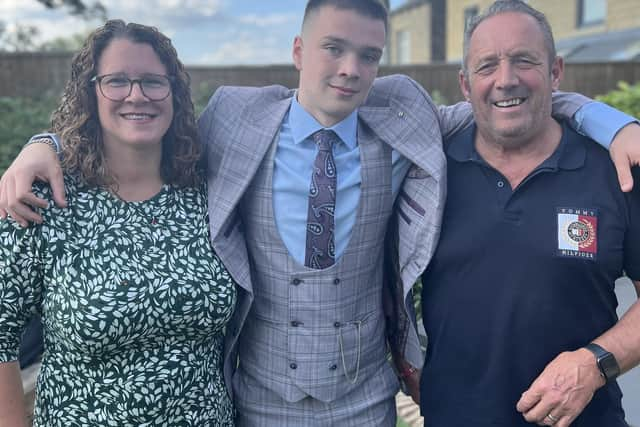

Henry, who was a keen sportsman, was diagnosed with ADHD in January 2017. Research has suggested the condition is associated with an elevated risk of suicide and Ruth says she feels Henry’s ADHD impacted his mental health and played a role in his actions leading up to and at the time of his death. The charity was set up to “break that link”, working to reach neurodivergent boys and young men through education, coaching, and advocacy for young people and their families.
Want more stories like this? Subscribe to our newsletter here.
The foundation’s offerings include a neuro-affirming coaching service, workshops on masculinity, identity, asking for help, and understanding neurodivergence, and a schools peer mentor programme teaching boys what to say when they or a friend is struggling. Ruth also speaks about how families experience ADHD and crisis care and works to highlight how to ask a young person about suicide safely and directly, and what to do with the answer.
“As a family, we were completely devastated with what happened and none of this brings Henry back but it does put my name in the rooms that I wouldn't have been able to get into without this devastating headline of his loss really,” she says. “He's not here, but our work is all about making sure that other boys that come after him are noticed before a crisis happens…

“Boys don't always turn up saying, ‘I'm struggling here.’ They're angry. They feel misunderstood, but they can't necessarily talk about that. The whole system really for safeguarding and looking after boys is waiting for them to tell people in authority or people that could do something that they're not okay. But we can't wait for that. We've got to recognise who they might be and try and put in support in advance of them feeling suicidal.”
The young people the charity works with will be encouraged to learn how to talk about their feelings, she says. “The biggest problem that is ingrained in all of these young men is the fact that they want to be independent and strong and they don't want to show any weakness.
"And that is what we're looking to reverse for them - to say it's okay to not always feel like you can be strong. And it's also a strength to be able to talk to others about what you're worried about, what you're scared about. And when you do that, you'll probably find that others are feeling the same way as you.
“Henry did talk to other people about how he was feeling. But the young people that he chose to speak to didn't really know what to do with that information or how to go about it. I think a young boy, a teenager, a young man is far more likely to talk to their peers about how they're feeling than they are to necessarily go to their parents or to tell someone at school.
"So, if we can give the people that they're likely to talk to the tools on how to approach it and deal with it and educate them all that talking to each other about how they're feeling is a is a good thing, that's going to protect their mental health, I think that will be key to saving lives in the future.”
- To find out more about the Henry Grierson ADHD & Mental Health Foundation, visit henrygrierson.org
- If you or someone you know is struggling, Samaritans can be reached free on 116 123 and Shout 85258 is a free, confidential, anonymous text support service.