
STAR-TREC: Trial co-led by University of Leeds offering hope to people with rectal cancer
A major trial is offering hope to people with cancer. Grace Hammond reports.
Patients with rectal cancer have avoided the need for major surgery and a permanent colostomy bag after taking part in a major international trial led by the Universities of Leeds and Birmingham and University College London.
The patients, who all had early-stage rectal cancer, were treated with combinations of chemotherapy and radiotherapy to see if they could safely avoid major surgery, which is the current standard of care.
Published in Lancet Oncology and funded by Cancer Research UK, the initial results suggest that organ-preserving treatment may be a realistic option for many people with early rectal cancer.
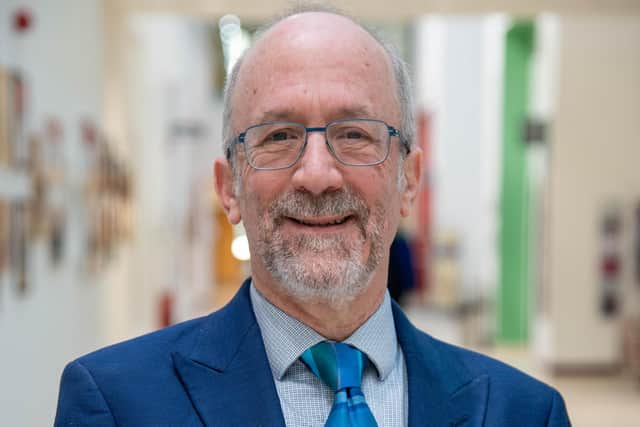

The trial, named STAR-TREC, was co-led by Professor Sebag-Montefiore in Leeds and Professor Simon Bach at UCL, and co-ordinated by the University of Birmingham. Patients were recruited to trial centres in the UK, the Netherlands, Sweden, Denmark and Belgium.
Professor Bach said: “For decades we’ve asked patients to accept the loss of their rectum – and often a permanent stoma – as the price of curing their cancer. What these results suggest is that for many people, this price no longer has to be paid.
“Four in five patients treated with chemoradiotherapy kept their rectum. The next step is to confirm these results hold over the longer term, and then to make sure the approach is available to every patient who could benefit.”
One of the patients was Hugh Chown, 65, from Harrogate. He was diagnosed with rectal cancer on December 30, 2020 at Leeds Cancer Centre and joined the STAR-TREC trial in January 2021. He was supported by his daughter Rachel Chown, 33, who is Associate Director of Research and Innovation at The Christie NHS Foundation Trust in Manchester, a specialist cancer treatment centre.
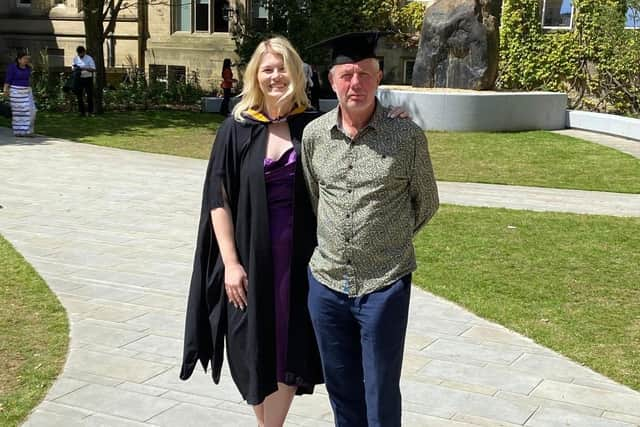
Rachel’s mum and Hugh’s wife, Janet, died aged 41 after being diagnosed with bowel cancer in 2001. Janet received surgery, chemotherapy and radiotherapy, but sadly died after 14 months.
Hugh – who is now married to Sandra and also dad to Rachel’s sister Isobel, stepdad to Rosie and Eve, and step-grandad to Ava, four – received chemoradiotherapy at Leeds Teaching Hospitals NHS Trust and has avoided the need for surgery and a colostomy bag.
Three months after treatment, his cancer had disappeared, and he remains cancer-free.
He said: “I’d had two to three months of occasional bleeding, so I contacted my GP and was sent for a colonoscopy. On 30th December, I got the diagnosis – it was totally unexpected. I was shocked but accepting of it. I knew worrying wouldn’t help, so I just focused on living life.
“Two weeks later, my consultant at Harrogate told me about a clinical trial called STARTREC. She explained that the usual treatment would be surgery and it was highly likely I’d be left with a permanent colostomy bag.
“Then she said there was a trial I might be eligible for. She thought I had a good chance of a positive outcome and explained how the trial worked. The decision wasn’t difficult. She later confirmed I was a suitable candidate. The worst case scenario was that the treatment wouldn’t work and I’d need surgery anyway, which would be delayed by about three and a half months because of the trial. But the cancer was at a very early stage."
Hugh’s treatments consisted of taking tablets morning and evening, and receiving one radiotherapy session a day, five days per week for five weeks.
"For the first two weeks, the side effects were minimal but by the middle of the third week, I started to feel run down and tired and this got worse as the treatment went on. The fatigue also continued to get worse for a few weeks after the treatment stopped. I was fortunate that at no point did I feel nauseous. The effects took about six months to wear off completely, but I was more or less back to normal after two months.
“Although I felt fatigued during the treatment, it was minimal compared to the potential alternative, which is major surgery and permanent colostomy bag - a life- changing procedure.
“As my side effects were not severe, I was able to drive myself to and from the hospital in Leeds for all of the treatment.”
At the end of 12 weeks, he had another colonoscopy.
"The consultant said I’d had a perfect result and the cancer was gone, but because it was part of the trial, I had another one at 16 weeks and all was still clear. After that, the treatment ended and I moved on to regular checks for the trial which lasted a total of three years, then standard NHS cancer checks for a further two years. My last check was in May this year and everything was fine.”
Up to 14,000 people are diagnosed with rectal cancer in the UK every year. Of these, around one in three are at an early stage.
Patients are usually treated with a complex surgical procedure called a Total Mesorectal Excision (TME), which involves the complete removal of the rectum, the surrounding fat, and lymph nodes.
The surgery has a high cure rate – but can have a significant impact on patients’ bowel, bladder, and sexual function, and may also require a temporary or permanent colostomy bag, significantly affecting their quality of life.
The 426 patients involved in the trial were initially randomised to one of three groups: receiving either long-course chemoradiotherapy, short-course radiotherapy, or standard surgery.
Longcourse chemoradiotherapy is radiotherapy delivered over five weeks plus chemotherapy tablets, while shortcourse radiotherapy is delivered over one week.
They are known as organ-preserving treatments.
Patients whose cancer was not completely eradicated by their treatment had a surgical procedure to remove the remaining areas affected by cancer.
The results show that for up to 12 months, four out of five patients treated with chemotherapy and radiotherapy avoided major surgery, compared with three out of five treated with radiotherapy alone.
Patients’ progress was followed for 30 months. These results are still being analysed, and the longer-term results are expected to be published later next year.
Trial patients whose cancer was not completely eradicated by their treatment had a surgical procedure to remove the remaining areas affected by cancer, but Michelle Mitchell, Cancer Research UK’s chief executive, said: “This breakthrough could be life-changing for thousands of people.”
Professor Sebag-Montefiore added: “These exciting results are an example of how a smarter, kinder radiotherapy treatment may allow patients to avoid the need for major surgery. It is gratifying that patients experienced a relatively low level of severe short-term side effects as a result of the smaller, more targeted radiotherapy approach that we specifically developed for STAR-TREC.”